
EPFO Automatic PF Transfer: No Separate Claim After Job Change for Eligible Members, Check How It Works
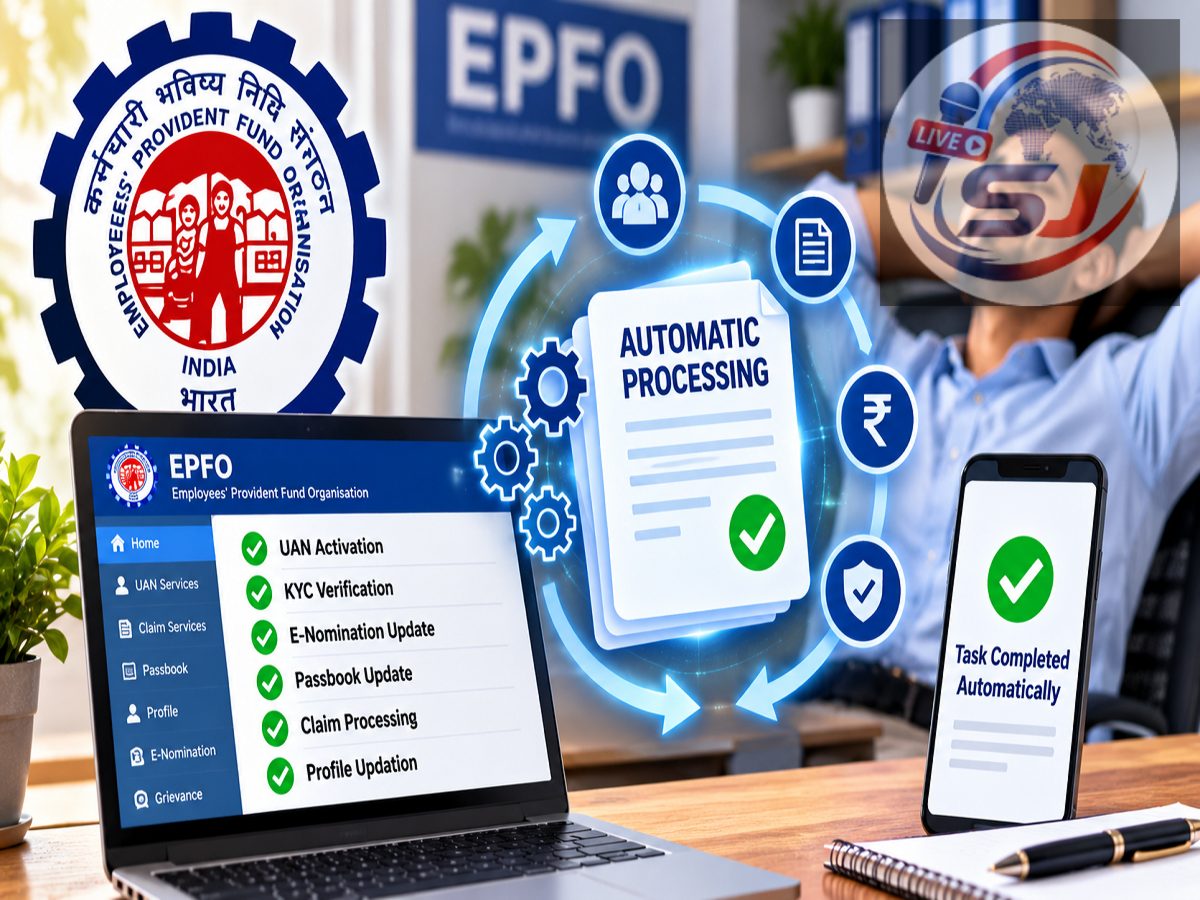
Changing jobs can involve several formalities, and transferring the provident fund balance from an old employer-linked PF account to the new one has traditionally been one of them. A streamlined EPFO system, however, can make this process easier for eligible employees by allowing the previous PF balance to move to the new account without requiring a separate transfer claim in qualifying cases.
The Employees' Provident Fund Organisation (EPFO) provides automatic PF transfer functionality for eligible members whose Universal Account Number (UAN) is linked and properly verified with Aadhaar.
This means that after an employee joins a new organisation and the new employment is linked to the same UAN, the system can initiate the transfer of the previous PF accumulation to the new member account, subject to the required conditions being satisfied.
The facility is particularly useful for employees who change jobs frequently, as it reduces the need to repeatedly submit PF transfer requests.
What Is EPFO's Automatic PF Transfer Facility?
Whenever an EPFO-covered employee changes jobs, a new Member ID may be created under the new employer.
However, an employee should normally continue with the same UAN, which serves as the common identifier connecting the member's different employment-linked PF accounts.
Under the automated transfer mechanism, EPFO can identify the member's previous PF account and initiate the process of moving the balance to the current account when the prescribed details match.
As a result, eligible employees do not necessarily have to submit a separate online transfer claim each time they move from one EPFO-covered employer to another.
Aadhaar-Linked UAN Is Important
A key requirement for the streamlined process is proper identification of the employee.
The member's UAN should be linked with Aadhaar, and the necessary employment and identity information should be consistent across EPFO records.
Correct information is important because the automated system needs to establish that the previous and current PF accounts belong to the same person.
If there is a mismatch in details such as the employee's name, date of birth or other identity information, the automatic process may not work as expected.
Employees should therefore check their EPFO profile and ensure that their KYC information is accurate.
What Happens After You Join a New Company?
When an employee joins another EPFO-covered organisation, the same UAN should be provided to the new employer rather than creating or using an unnecessary duplicate UAN.
Once the new employer reports the employee's details and the first contribution is received in the new member account, the system can identify the change in employment.
For eligible members, the previous PF balance can then be taken up for automatic transfer.
This helps maintain continuity of the employee's retirement savings instead of leaving money scattered across multiple old PF member accounts.
Do You Need to Fill Form 13?
Traditionally, Form 13 has been associated with the transfer of provident fund accumulations from a previous employment to a new PF account.
With the automated transfer system, eligible members do not need to initiate a separate transfer request in cases where EPFO's system can process the transfer automatically.
However, this does not mean that the manual or online transfer-claim mechanism has become irrelevant in every situation.
If an automatic transfer does not take place because of mismatched records, incomplete KYC, duplicate UANs or another eligibility issue, the member may still need to use the prescribed transfer process or get the underlying records corrected.
Why Is the Same UAN Important When Changing Jobs?
A UAN is intended to remain with an EPFO member throughout their working life.
While an employee can receive different PF Member IDs from different employers, these IDs can be linked under the same UAN.
For example, suppose an employee works for Company A and later joins Company B.
The PF Member ID associated with Company A and the new Member ID associated with Company B may be different, but both can remain connected to the employee's single UAN.
This makes it easier to maintain a continuous PF service history and transfer accumulated funds.
Who Can Benefit From Automatic PF Transfer?
The facility is particularly relevant for EPFO members who meet the required identity and account-linking conditions.
Broadly, employees should ensure that:
-
Their UAN is active and correctly linked to Aadhaar.
-
The same UAN is used with the new employer.
-
Personal details across Aadhaar and EPFO records are consistent.
-
Previous employment details have been properly recorded.
-
The new employer has linked the employee to the correct UAN.
-
Required EPFO contributions and employment information have been submitted.
Automatic processing remains subject to EPFO's applicable rules and system validation.
What If the PF Balance Does Not Transfer Automatically?
Employees should not assume that the money has been lost if the balance does not immediately appear in the new account.
The first step is to check the EPFO Member Passbook and verify whether the transfer has already been processed.
The member should also check whether the previous and current Member IDs are correctly associated with the same UAN.
If there are discrepancies in the employee's name, date of birth, Aadhaar details or employment records, those issues may need to be corrected.
Where an automatic transfer is not available or does not go through, the member can use the applicable EPFO transfer-claim process.
How to Check Your PF Transfer Status
Members can monitor their PF records through EPFO's digital services.
After signing in using their UAN credentials, employees can review their employment-linked Member IDs and PF information.
The EPFO passbook can also help determine whether the old balance has moved to the new member account.
Members should look for the relevant transfer entries rather than checking only the contribution made by the new employer.
Why Transferring Old PF Money Matters
Leaving PF balances scattered across different employment-linked accounts can make retirement savings harder to track.
Consolidating eligible PF balances under the current employment record helps members maintain a clearer view of their accumulated retirement corpus.
Continuity of service can also be important for benefits governed by EPFO rules, particularly where the total period of eligible service is relevant.
For this reason, employees should generally avoid treating PF as a short-term account that must be withdrawn every time they change jobs.
Don't Create a New UAN Every Time You Change Jobs
One of the most important points for employees is that a new job does not normally mean they need a new UAN.
The UAN is designed to remain the employee's permanent EPFO identifier, while Member IDs can change with employers.
Employees should provide their existing UAN when joining a new EPFO-covered company.
If a worker ends up with multiple UANs because of incorrect declarations or historical records, the situation may require correction or consolidation through the appropriate EPFO procedure.
EPFO's Digital System Reduces Paperwork
The automatic transfer facility is part of the broader digitisation of provident fund services.
By using Aadhaar-based identification, UAN and electronic employer records, EPFO can handle certain account-transfer processes with less manual intervention.
For employees, this can reduce paperwork and remove the need to repeatedly initiate the same process after every eligible job change.
Still, members should periodically review their PF passbook and UAN profile. Automation works best when the employee's Aadhaar, UAN, KYC and employment details are accurate and consistent.
What Employees Should Remember After Changing Jobs
Employees joining a new company should provide their existing UAN, ensure that it is linked with Aadhaar and verify that their personal information matches across EPFO records.
If the required conditions are satisfied, eligible members may have their previous PF balance transferred automatically after their new employment is recorded, without submitting a separate transfer claim.
However, automatic transfer should not be interpreted as a guarantee for every EPFO member or every job change. Record mismatches, duplicate UANs or other eligibility issues can still require additional action.
The safest approach is to check the EPFO passbook after joining a new employer and confirm that the previous PF accumulation has actually been transferred to the current account.