
EPFO Alert: Changed Jobs and Withdrew PF? Check Your EPS Service History to Protect Pension Eligibility
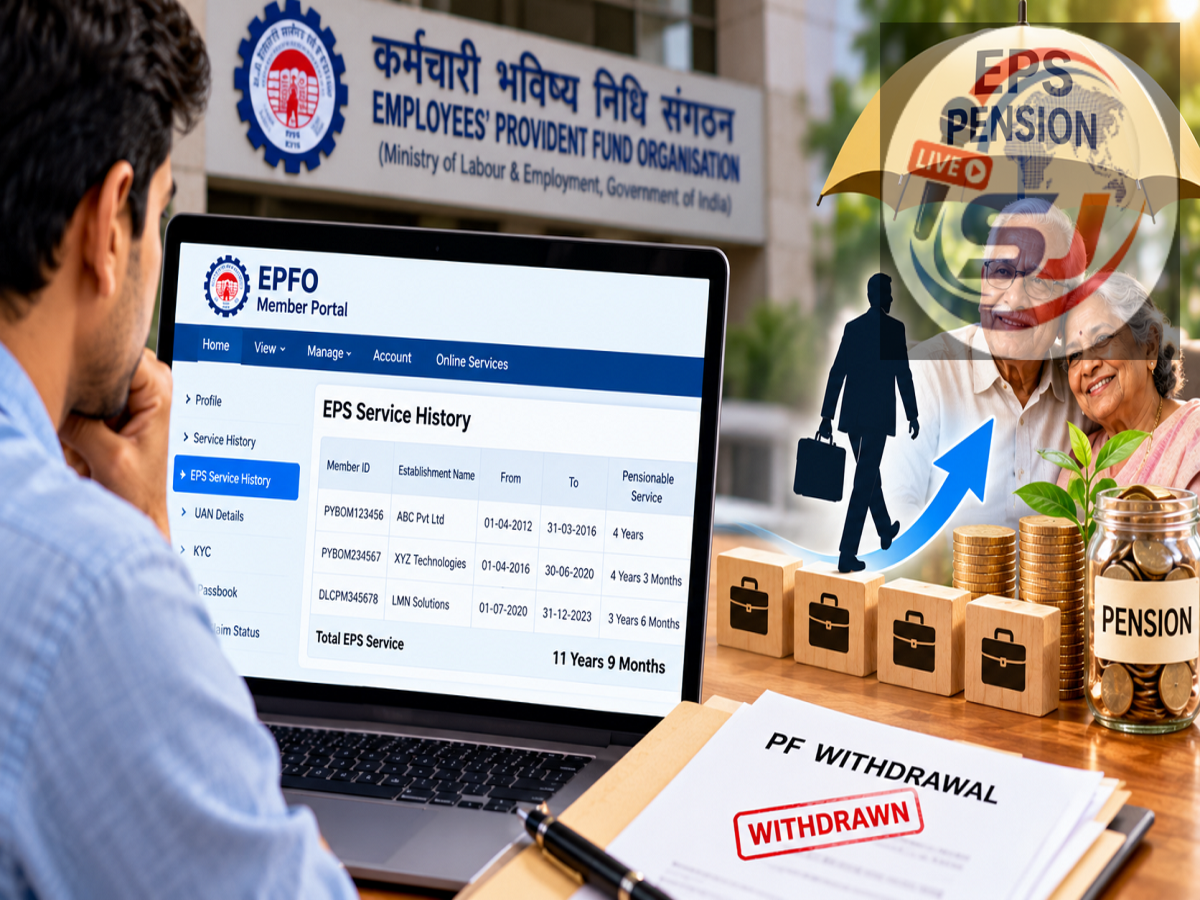
EPFO EPS Service History: Changing jobs is common, and many employees focus mainly on transferring or withdrawing the money accumulated in their Employees' Provident Fund (EPF) account. However, there is another important record that should not be ignored—the employee's Employees' Pension Scheme (EPS) service history.
Even if an employee has withdrawn the eligible EPF balance after leaving a job, the pension-related service record can remain important for determining future EPS benefits.
This becomes particularly relevant when an employee has worked for several employers and is trying to complete the required period of eligible service for pension benefits.
If previous employment is missing from the EPS service record, the employee should get the discrepancy checked instead of waiting until retirement.
EPF Balance and EPS Service Are Not the Same Thing
Employees often use "PF" as a general term for their retirement savings, but EPF and EPS serve different purposes.
EPF primarily builds a retirement corpus through contributions credited to the provident fund account.
EPS, meanwhile, is connected with pension benefits for eligible employees.
Therefore, checking only the amount shown in the EPF passbook may not provide a complete picture of a member's pension-related employment history.
The duration of eligible EPS service can become particularly important when pension eligibility is calculated.
Why EPS Service History Matters After Changing Jobs
Suppose an employee works with one company for several years, resigns and later joins another establishment covered by EPFO.
The service completed with the previous employer can be important when the employee's total eligible pensionable service is eventually determined, subject to EPS rules.
This is why maintaining continuity of employment records across different employers is important.
A person may have changed companies several times during their career, but eligible periods of service may need to be properly reflected and linked so that the pension record is complete.
If one employment period is missing or incorrectly recorded, it could create difficulties when pension eligibility is assessed later.
Why the 10-Year Mark Is Important
Under the Employees' Pension Scheme, 10 years of eligible service is an important threshold for pension entitlement.
An employee does not necessarily have to complete the entire qualifying period with one employer.
Eligible service accumulated across different EPFO-covered employments can be relevant when determining whether the required service condition has been met, provided the records and service continuity are properly established under the scheme.
This makes old employment records particularly important for people who change jobs frequently.
For example, service completed across multiple employers could collectively become important for reaching the pension eligibility threshold.
What Happens If You Withdraw Your PF?
Withdrawing EPF savings and preserving EPS service history are separate issues and should not be treated as identical transactions.
Employees who leave a job may be eligible to withdraw their EPF balance under applicable rules. However, they should also understand what happens to their pension-related service.
In particular, members should distinguish between withdrawing the EPF accumulation and taking an EPS withdrawal benefit.
The treatment of pensionable service can depend on the member's length of service, the type of claim submitted and whether an EPS withdrawal benefit or Scheme Certificate has been involved.
Therefore, employees should not assume that simply seeing an EPF withdrawal means their previous pension service has automatically been transferred, preserved or erased.
Check Your EPFO Service History
After joining a new employer, employees should check whether their previous employment is correctly reflected in EPFO records.
Members can log in to the EPFO member services using their Universal Account Number (UAN) and review the available service-history details.
Check information such as the employer's establishment details, date of joining and date of exit.
If you have worked with multiple employers, verify whether the relevant employment periods appear correctly.
Any missing employer or incorrect joining or exit date should be investigated because such discrepancies can create complications later.
UAN Plays an Important Role
The Universal Account Number is intended to provide continuity to an EPFO member's records across employment changes.
Instead of treating every job as an entirely unrelated PF relationship, the UAN helps associate multiple Member IDs generated during different periods of employment with the same member.
Employees should therefore generally provide their existing UAN when joining a new EPFO-covered employer rather than unnecessarily creating or operating multiple UANs.
If multiple UANs or disconnected Member IDs exist, members may need to take appropriate steps to consolidate or correct their records.
Where Does Form 13 Come In?
Form 13 is associated with transferring eligible EPF accumulations from a previous employment to the current PF account.
A transfer can help maintain continuity of provident fund records when an employee moves from one EPFO-covered employer to another.
Employees should check whether the transfer has been completed successfully rather than assuming that submitting a request automatically means all records are correct.
The exact treatment of EPF balances and EPS service should be understood separately because EPS does not operate like an individual cash balance in the same way as EPF.
What If Previous Service Is Missing?
If an earlier employment period is not showing correctly, the member should first verify the records available through the EPFO portal.
Check whether the date of joining, date of exit and employer details are correct.
It can also be useful to keep old salary slips, UAN details, PF account information, employment documents and previous employer records available.
Depending on the nature of the discrepancy, correction may require coordination with the previous or current employer and EPFO.
Members can also use the applicable EPFO grievance mechanism when an issue cannot be resolved through the normal process.
Don't Wait Until Retirement to Check
One of the biggest mistakes employees can make is waiting until they are about to claim pension benefits before reviewing their service history.
By that stage, old employers may have closed, records may be difficult to obtain, or employment documents from many years earlier may no longer be readily available.
Checking the records after every job change can make it easier to identify and resolve discrepancies while the relevant employment information is still accessible.
Keep Important Employment Documents Safe
Employees who change jobs should retain important documents related to their previous employment.
These may include salary slips, joining and relieving documents, UAN and Member ID details, PF transfer information and other relevant employment records.
Such documents can be useful if a mismatch appears in EPFO's records later.
Digital copies can also help preserve old records for the long term.
EPF Withdrawal Is Not the Only Thing to Check
After leaving a company, it is natural to focus on the money accumulated in the PF account. But retirement planning involves more than simply checking the EPF balance.
For employees covered by EPS, the service record can be crucial for future pension eligibility.
This is especially important for workers who have changed jobs several times and are building their qualifying service across multiple employers.
After every job change, members should therefore verify their UAN-linked service history, confirm that previous employment is correctly recorded and check whether any necessary transfer or correction has been completed.
A few minutes spent reviewing the record today could prevent difficulties when pension eligibility is calculated years later.