
EPFO 3.0 Update: PF Withdrawal via UPI and ATM, ₹5 Lakh Auto-Settlement Limit Among 5 Major Changes
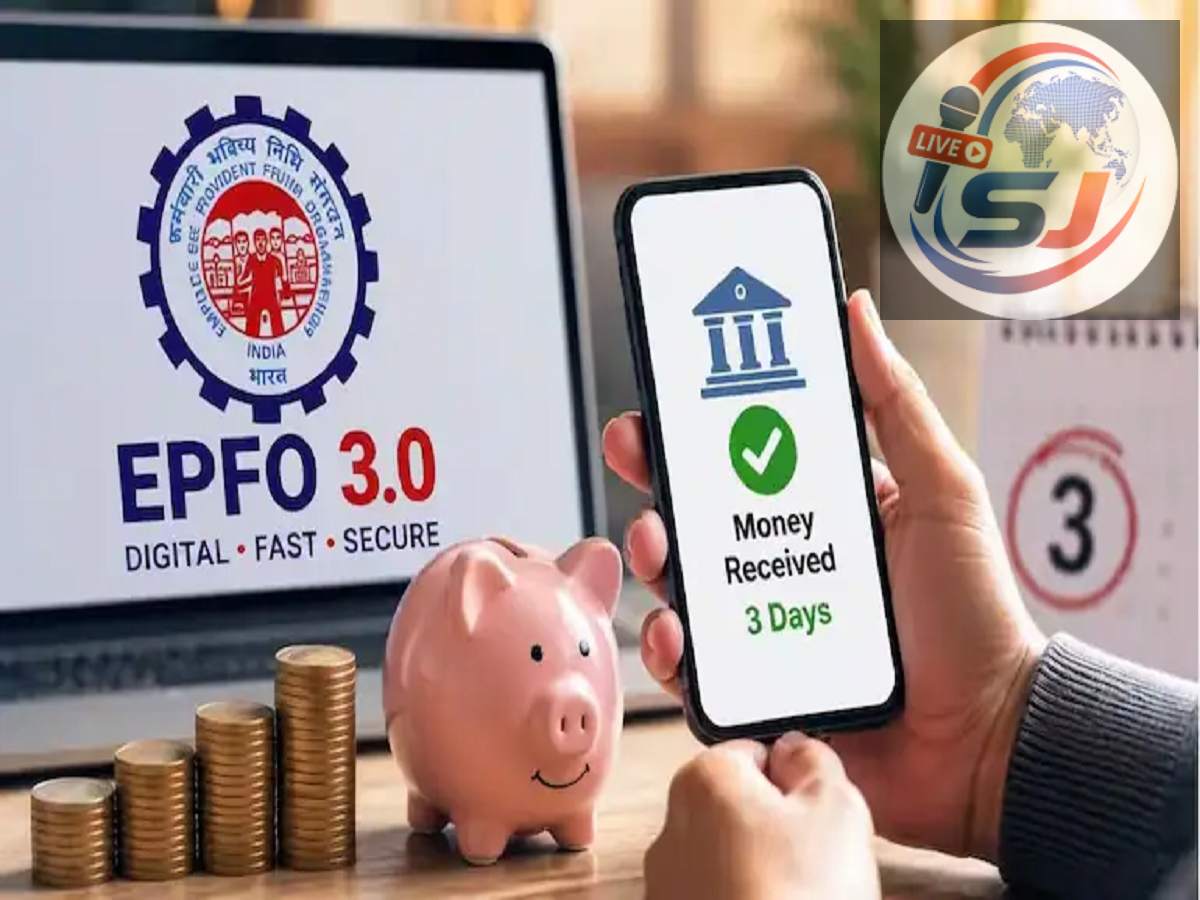
Employees' Provident Fund Organisation (EPFO) members could see major changes in the way they access and manage their provident fund accounts under the EPFO 3.0 digital reforms.
The new system is aimed at reducing the time required for PF claims and making several EPFO services more digital. According to the supplied report, members will be able to transfer eligible PF amounts through UPI and access funds using UPI-enabled ATMs, subject to applicable rules and withdrawal conditions.
Another major change concerns automatic claim settlement. The auto-settlement limit has been increased from ₹1 lakh to ₹5 lakh for eligible claims, which could make it easier for members to access funds for specified requirements such as medical treatment, education, marriage and housing.
Here are five major changes highlighted under EPFO 3.0 and what they could mean for PF subscribers.
What Is EPFO 3.0?
EPFO 3.0 represents a wider technology upgrade designed to simplify provident fund services and reduce dependence on lengthy manual processes.
According to the report, EPFO transferred its entire member database in July to a centralised IT-enabled system called the CITES platform.
The shift creates a national-level centralised database instead of relying on the earlier system.
The objective is to make PF services faster and more accessible while allowing members to complete more tasks digitally.
One of the biggest changes highlighted in the report is the ability to transfer eligible PF money to a linked bank account through UPI.
1. PF Withdrawal Through UPI and UPI-Enabled ATMs
Accessing provident fund money could become much easier under the new system.
According to the report, eligible subscribers may be able to withdraw between 50% and 75% of their EPF balance using UPI or a UPI-enabled ATM, depending on the applicable rules and conditions.
Members would first be able to see the amount of their PF balance that is eligible for transfer.
The eligible amount could then be transferred securely using a UPI PIN.
Once the money reaches the linked bank account, it can be used digitally or withdrawn as cash through an ATM.
The proposed system could reduce the need to navigate a lengthy claim process every time an eligible member needs access to PF money.
However, this should not be interpreted as permission to withdraw 75% of the PF balance in every situation. The amount available would depend on the withdrawal rules, eligibility criteria and conditions applicable to the member.
2. Auto-Settlement Limit Increased to ₹5 Lakh
Another important change concerns the automatic processing of PF claims.
According to the report, EPFO has increased the auto-settlement limit from ₹1 lakh to ₹5 lakh.
The higher limit applies to eligible claims for specified purposes.
These may include needs such as illness, children's education, marriage and buying or constructing a house, subject to EPFO rules.
Eligible claims under the automatic system could reportedly be processed within around three days.
The idea behind auto-settlement is to reduce manual intervention for claims that meet the required conditions.
For subscribers, this could mean shorter waiting periods when money is needed for an eligible purpose.
3. Face Authentication Through the UMANG App
EPFO is also expanding digital identity verification for members.
The report says members can use Face Authentication Technology (FAT) through the UMANG app to generate or activate their Universal Account Number (UAN).
The facility can make it easier for subscribers to access EPFO services without depending as heavily on physical documentation or office visits.
Members can also use digital services for functions such as accessing their passbook, correcting certain incorrect information and submitting online claims.
The objective is to bring more PF-related activities onto a digital platform that employees can access remotely.
4. Eligible Withdrawal Amount to Be Shown in Advance
Claim rejection can be frustrating for PF members, particularly when a subscriber does not know exactly how much money can be withdrawn under a particular category.
EPFO 3.0 is expected to address this problem by showing the member's eligible withdrawal amount before the claim is submitted.
Under the earlier process described in the report, members could sometimes file a claim without knowing whether the amount requested was permitted under the applicable rules.
That could lead to rejection.
Under the new system, the amount that can be withdrawn for different eligible situations would be displayed to the member beforehand.
This could reduce errors while filing claims and potentially lower the number of applications rejected because the requested amount exceeds the eligible limit.
5. Members Can Respond to Queries Online
Communication during claim processing is also expected to become more digital.
Sometimes a PF office may require additional information or clarification before completing a claim.
According to the supplied report, EPFO 3.0 will allow subscribers to respond to such requirements digitally.
Members would therefore be able to provide an online response when additional information is requested during claim processing.
This could reduce the need for offline follow-ups and potentially make it easier to resolve issues that might otherwise delay a claim.
EPFO 3.0: Five Key Changes at a Glance
| EPFO 3.0 Feature | What It Means for Members |
|---|---|
| UPI/ATM PF access | Eligible PF amount may be transferred through UPI or accessed using UPI-enabled ATMs |
| Higher auto-settlement limit | Limit increased from ₹1 lakh to ₹5 lakh for eligible claims |
| Face Authentication | UAN-related and other services accessible using FAT through UMANG |
| Eligible amount displayed | Members can see how much they are eligible to withdraw before filing |
| Digital query response | Additional information sought during claims can be submitted online |
Why a Centralised EPFO Database Matters
A major technological change behind EPFO 3.0 is the move toward a centralised member database.
The report says the member database has been shifted to the CITES platform, creating a common national database.
A centralised system can potentially simplify the way information is accessed and processed across different locations.
For employees who change jobs or move between cities, a unified technology platform may also make account-related processes more streamlined, depending on the services eventually made available through the system.
The larger objective is to reduce processing delays and move PF administration toward a more digitally integrated framework.
EPF and VPF Interest Rate Also in Focus
The report also notes that the central government had approved an interest rate of 8.25% for EPF and VPF for FY26.
The EPFO 3.0 reforms are focused primarily on improving access to provident fund services and simplifying processes rather than changing the fundamental purpose of EPF as a retirement savings instrument.
This distinction is important.
Easier withdrawal should not necessarily be treated as a reason to frequently withdraw retirement savings.
Should You Withdraw PF Just Because Access Becomes Easier?
Provident fund savings are primarily intended to help employees build a retirement corpus.
Although easier digital access can be valuable during genuine financial requirements, frequent withdrawals can reduce the amount available for long-term compounding.
For example, money withdrawn today no longer remains in the EPF account to earn interest in subsequent years.
Therefore, subscribers should evaluate whether a withdrawal is necessary and understand the applicable eligibility rules before using their retirement savings.
What EPFO Members Should Keep in Mind
The changes described under EPFO 3.0 could significantly reduce paperwork and make several services easier to access.
However, withdrawal limits and facilities remain subject to applicable EPFO rules and eligibility conditions.
Members should also ensure that important account details—including UAN information, Aadhaar-related verification and linked bank account details—are accurate whenever required for digital services.
The exact process for using individual EPFO 3.0 facilities should be followed according to the official instructions applicable when those services become available to the member.
The Bottom Line
EPFO 3.0 is aimed at making provident fund services faster, more transparent and increasingly digital.
Among the five major changes highlighted are UPI and UPI-enabled ATM access to eligible PF funds, an increase in the auto-settlement limit from ₹1 lakh to ₹5 lakh, Face Authentication through UMANG, advance display of eligible withdrawal amounts and online responses to claim-related queries.
For millions of EPFO subscribers, these changes could make dealing with PF accounts considerably more convenient.
At the same time, members should remember that PF is designed primarily for long-term retirement savings. Easier access to the money does not change the importance of preserving the corpus wherever possible.
Disclaimer: This article is based on the information provided in the supplied source and is intended for general informational purposes. PF withdrawals remain subject to applicable EPFO rules, eligibility requirements and conditions. Members should check the latest official EPFO guidelines before initiating a withdrawal or claim.