
Delhi-NCR PUC Rule From October 1: Vehicles Without Valid Certificate May Be Denied Fuel
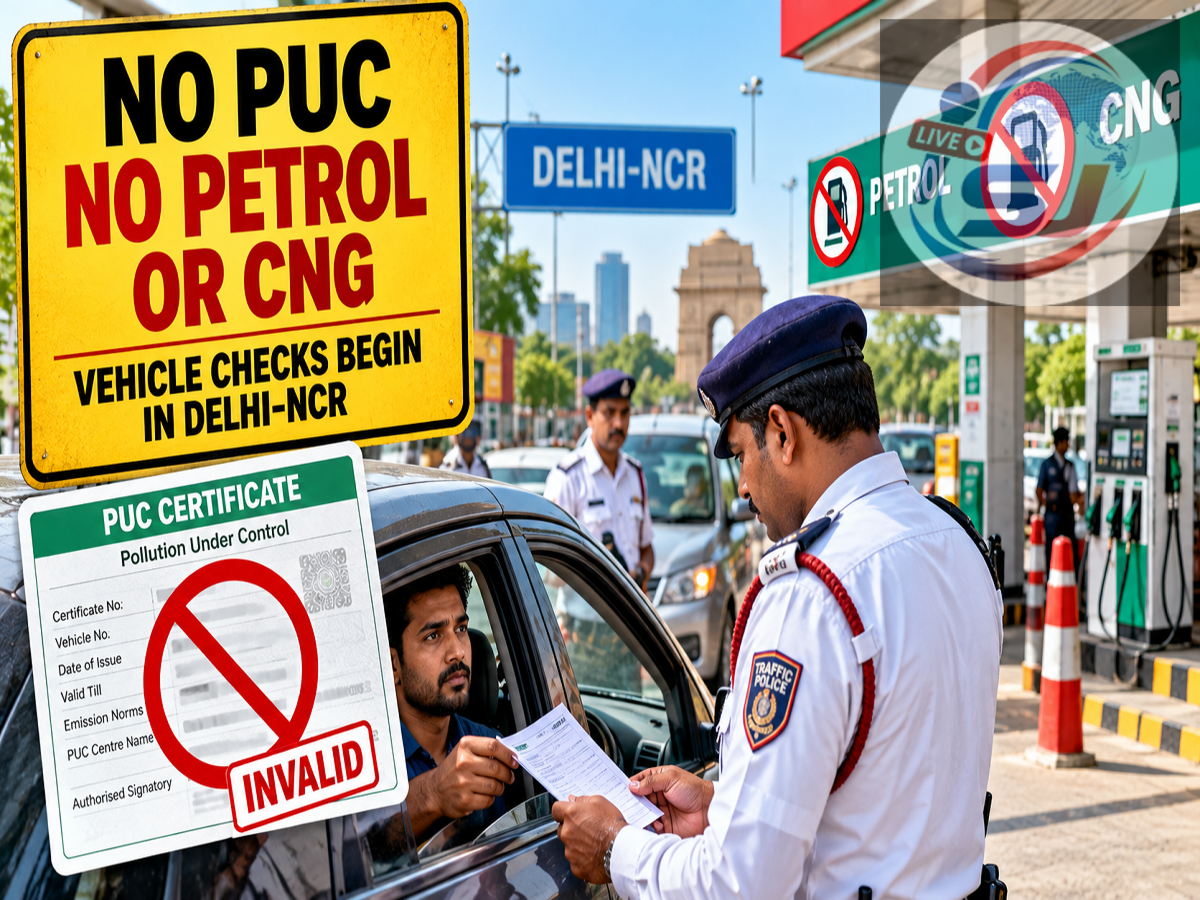
Vehicle owners in Delhi-NCR need to pay closer attention to their Pollution Under Control (PUC) certificate as authorities step up pollution-control measures ahead of the winter season. From October 1, 2026, enforcement has been tightened against vehicles operating without a valid pollution certificate.
Under the measure described in the source, vehicles without a valid PUC may be denied fuel at petrol pumps, making it important for motorists to check their certificate before heading out.
The enforcement drive is part of a wider effort to control vehicular emissions and other major sources of air pollution across Delhi and the National Capital Region.
Authorities are also increasing scrutiny of older vehicles, road dust, stubble-burning-related pollution and industrial emissions as the region approaches the period when air quality typically becomes a major concern.
No Valid PUC Could Mean No Fuel
The biggest change for motorists is the tighter enforcement linking fuel supply with PUC compliance.
From October 1, vehicles covered by the rule may be denied petrol, diesel or CNG if they do not have a valid pollution certificate.
This means motorists should not wait until their PUC has expired before renewing it.
Drivers should check the validity date of their certificate and complete the required pollution test on time to avoid problems while refuelling.
PUC Status Can Be Checked Through Vehicle Number
Fuel stations are being equipped with systems that can help verify the pollution-certificate status of vehicles using their registration or number-plate details, according to the supplied information.
The objective is to identify vehicles whose pollution certificates have expired or are otherwise not valid.
This could make enforcement more systematic than relying only on roadside checks.
Vehicle owners should therefore make sure that their PUC records are current and correctly reflected in the relevant system.
What Is a PUC Certificate?
A Pollution Under Control certificate is issued after a vehicle undergoes an emissions test and its pollution levels are found to be within the applicable standards.
The document indicates that the vehicle met the prescribed emission limits when tested.
PUC certificates have a validity period, which means vehicle owners need to renew them periodically.
Simply having obtained a PUC certificate in the past is not enough if it has already expired.
Check Your PUC Before Visiting a Fuel Station
The October enforcement makes checking the expiry date particularly important.
Motorists should verify whether their PUC certificate is still valid before travelling, especially if they have not checked it recently.
If it has expired, the vehicle should undergo the required emissions test and obtain a fresh valid certificate in accordance with applicable rules.
Keeping the certificate updated can also help motorists avoid problems during roadside pollution checks.
Petrol, Diesel and CNG Vehicles Come Under Focus
The enforcement initiative is not limited to motorists buying petrol.
According to the supplied information, vehicles without valid pollution certification could face restrictions when attempting to obtain petrol, diesel or CNG, subject to the applicable Delhi-NCR enforcement framework.
Vehicle owners should therefore not assume that using a particular type of fuel automatically exempts them from PUC requirements.
The relevant pollution-control rules and vehicle-category conditions still apply.
Older Vehicles Face Greater Scrutiny
PUC enforcement is only one part of the broader pollution-control drive.
Authorities are also increasing checks on older vehicles, particularly those falling under restricted categories.
Owners of ageing vehicles should confirm whether their vehicle is legally permitted to operate in the region and whether any age- or emission-standard-related restriction applies to it.
Having a valid PUC should not be treated as an automatic exemption from a separate restriction that may apply to an older vehicle.
Non-BS-IV Vehicles Also Under Focus
The supplied information also highlights increased scrutiny involving older and lower-emission-standard vehicles.
Motorists should therefore distinguish between two separate issues: having a valid PUC certificate and complying with any additional restrictions linked to a vehicle's age or emission category.
A PUC certificate confirms compliance with the applicable pollution test at the time of testing, but other regulatory restrictions may still apply independently.
Why Is Delhi-NCR Tightening Pollution Checks?
Delhi-NCR frequently faces worsening air quality during the colder months, when a combination of weather conditions and different emission sources can contribute to pollution accumulation.
Authorities are therefore increasing preventive measures before winter conditions intensify.
Vehicular emissions are one of several pollution sources under scrutiny.
The broader action plan also covers road dust, industrial emissions, stubble-burning-related pollution and other sources.
Action Against Road Dust and Industrial Pollution
The pollution-control drive extends beyond private vehicles.
Road dust is also being targeted because suspended particles can contribute to poor air quality, particularly on heavily trafficked roads and around construction areas.
Industrial units may similarly face closer monitoring to ensure compliance with pollution-control requirements.
The objective is to address multiple sources simultaneously rather than relying solely on restrictions involving vehicles.
Vehicle Owners Should Not Wait Until the Last Moment
For motorists, one of the simplest steps is to check PUC validity before it becomes a problem.
A vehicle owner who discovers an expired certificate only while trying to refuel could face unnecessary inconvenience.
Drivers should also make sure their vehicle registration details are correct and that any required compliance documents are readily available.
Those who regularly commute between Delhi and surrounding NCR areas should pay particular attention to local enforcement requirements.
What Motorists Should Check
Before driving in areas covered by the enforcement drive, vehicle owners should verify a few essential points:
-
Check whether the vehicle's PUC certificate is valid.
-
Renew an expired PUC through an authorised testing facility.
-
Make sure the vehicle's registration details are correct.
-
Check whether separate restrictions apply because of the vehicle's age or emission category.
-
Keep required vehicle documents readily accessible.
-
Follow official traffic and pollution-control advisories.
Motorists should rely on official information rather than viral social-media messages, particularly when determining whether a specific restriction applies to their vehicle.
Is This Just a Fine for Missing PUC?
The significance of the October 1 enforcement is that the consequences may go beyond a conventional roadside check.
A vehicle without valid pollution certification may encounter problems while trying to obtain fuel where the rule is being enforced.
Other penalties can also apply under existing pollution and motor-vehicle regulations depending on the violation.
Drivers should therefore treat PUC renewal as a regular compliance requirement rather than something to address only after being stopped by enforcement authorities.
Delhi-NCR Drivers Should Check Their Documents Now
The October 1 pollution-control measures make PUC compliance particularly important for motorists across Delhi-NCR.
The central message for vehicle owners is simple: check whether your PUC certificate is valid before you need to refuel or travel.
Petrol pumps are expected to play a larger role in identifying vehicles without valid pollution certification, while enforcement against older vehicles and other pollution sources is also being strengthened.
At the same time, motorists should remember that a valid PUC certificate does not necessarily override separate restrictions applicable to certain older or non-compliant vehicles.
With pollution-control activity intensifying ahead of winter, checking the vehicle's PUC status, registration details and other applicable requirements in advance can help motorists avoid inconvenience.
Disclaimer: Pollution-control and vehicle restrictions can depend on the vehicle category, age, emission standard and location. This article is based on the supplied information regarding Delhi-NCR enforcement from October 1, 2026. Vehicle owners should verify the latest applicable requirements through official transport and pollution-control authorities.