DA Hike Update: Could Central Government Employees Get 64% Dearness Allowance? Check Salary Impact
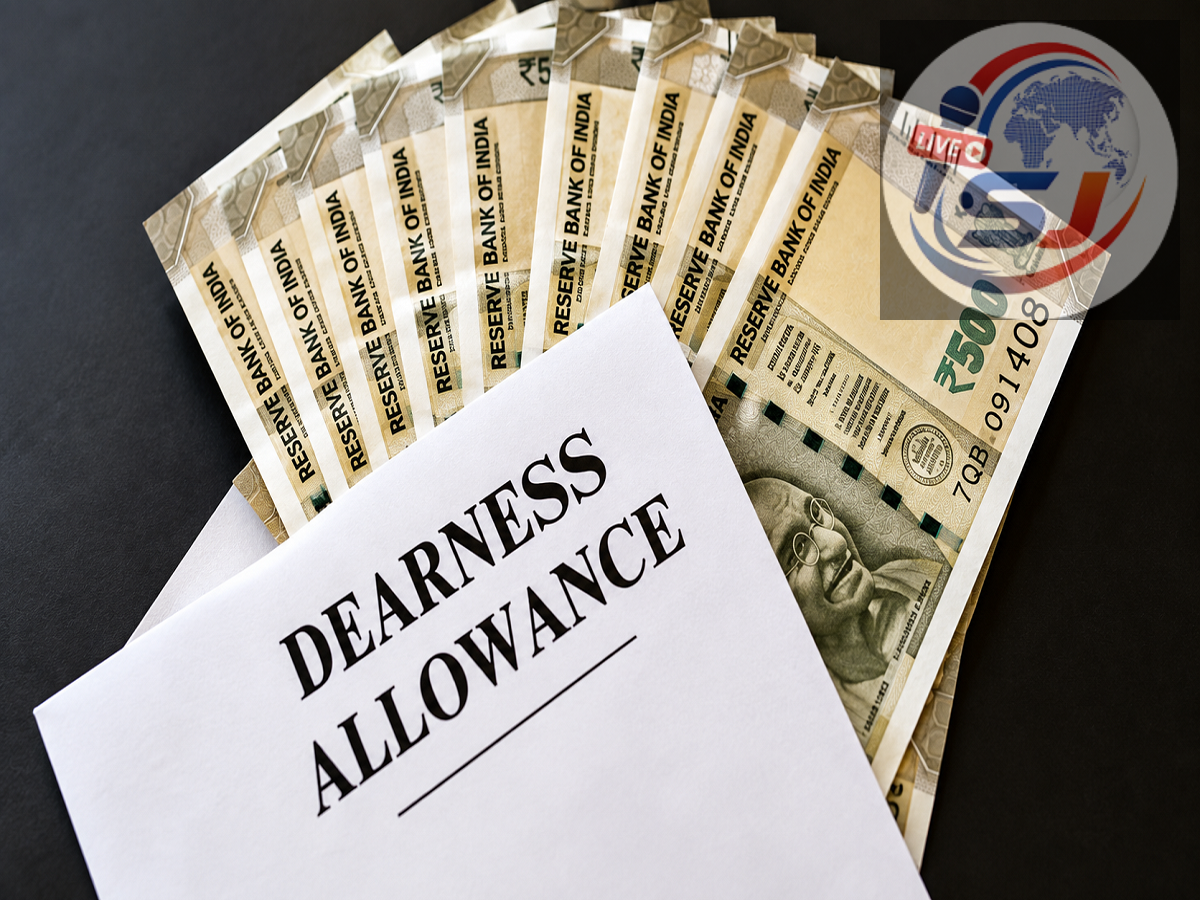
Central government employees are closely watching two major developments that could have a significant impact on their salaries — the next Dearness Allowance (DA) revision and progress surrounding the 8th Pay Commission. While the new pay commission is expected to reshape the salary structure in the longer term, attention is currently focused on the DA revision applicable from July 2026.
According to reports and estimates being discussed, central government employees could receive a 4 percentage point increase in Dearness Allowance for the July 2026 cycle. If such an increase is approved, the DA rate could potentially reach 64% of basic pay.
However, employees should remember that any projected DA figure remains an estimate until the central government officially announces the revision.
Why Is a 4% DA Increase Being Discussed?
Dearness Allowance is revised periodically to help government employees manage the impact of inflation and rising living costs. The calculation is linked to the All-India Consumer Price Index for Industrial Workers (AICPI-IW).
Movements in the index are used to determine the possible change in DA. Based on the relevant inflation data and calculations, reports have indicated the possibility of a sizeable revision for the July cycle.
If the government ultimately approves a four-percentage-point increase and the prevailing DA is 60%, the new rate would become 64%.
The final percentage, however, will depend on the applicable index data and formal government approval.
How Much Could Salary Increase If DA Reaches 64%?
The actual benefit will vary according to an employee's basic pay. Since DA is calculated as a percentage of basic salary, employees with higher basic pay receive a larger increase in rupee terms.
For example, suppose an employee has a basic monthly salary of ₹18,000. At a 60% DA rate, the monthly Dearness Allowance would amount to ₹10,800.
If DA rises to 64%, the allowance would increase to ₹11,520. This represents an additional ₹720 per month in DA.
Similarly, an employee drawing ₹30,000 as basic pay would receive ₹18,000 as DA at 60%. At 64%, this would rise to ₹19,200, resulting in an increase of ₹1,200 per month.
For a basic salary of ₹50,000, a four-percentage-point increase would translate into an additional ₹2,000 per month in DA.
These calculations are illustrative and do not represent the final take-home salary, as deductions and other applicable components may affect the amount credited to an employee.
Pensioners Could Also Be Affected
DA revisions are important not only for serving central government employees. Pensioners generally track changes in Dearness Relief (DR), which is intended to provide similar protection against inflation.
Therefore, a revision in the applicable rate can also have financial implications for eligible central government pensioners.
The exact benefit depends on the pension amount and the officially notified DR rate.
DA Hike and 8th Pay Commission Are Different
Employees should not confuse a regular DA revision with changes that may eventually emerge from the 8th Pay Commission.
DA is an inflation-linked allowance that is periodically revised under the existing pay structure. A pay commission, in contrast, reviews broader aspects of government compensation, potentially including basic pay, allowances, pension-related provisions and the overall salary framework.
This means an increase in DA can affect salaries before any future pay structure based on the 8th Pay Commission takes effect.
Why Employees Are Watching the 8th Pay Commission
The 8th Pay Commission is particularly important because its recommendations could determine the next major revision of salaries and pensions for central government employees and pensioners.
One of the key issues typically watched during a pay commission exercise is how existing pay levels will transition into a revised structure. Employees are therefore closely following developments related to salary calculations, allowances and other benefits.
However, speculation over possible salary increases should not be treated as a confirmed benefit until the relevant recommendations are finalised, accepted and officially notified by the government.
When Will Employees Know the Final DA Rate?
The final DA revision will become clear only after the government makes an official announcement. Once approved, the revised rate is generally applicable from the specified effective date.
If there is a gap between the effective date and the date on which the revised amount begins to be paid, eligible arrears may become relevant depending on the government's notification.
Employees should therefore rely on official announcements for the final percentage and payment details rather than treating projections as confirmed figures.
What Should Central Government Employees Expect?
For now, the possibility of DA reaching 64% is the key figure attracting attention. If a four-percentage-point hike is approved, employees could see a noticeable increase in their monthly allowance, with the rupee benefit depending directly on their basic pay.
At the same time, the 8th Pay Commission remains a separate and potentially much larger development for government salaries and pensions.
Until official orders are issued, however, the reported 64% DA should be viewed as a projection rather than a confirmed rate. Central government employees and pensioners should keep an eye on formal government notifications for the final decision.