DA Hike: Employees and Pensioners Get Higher DA and DR, Check New Rates and Benefits
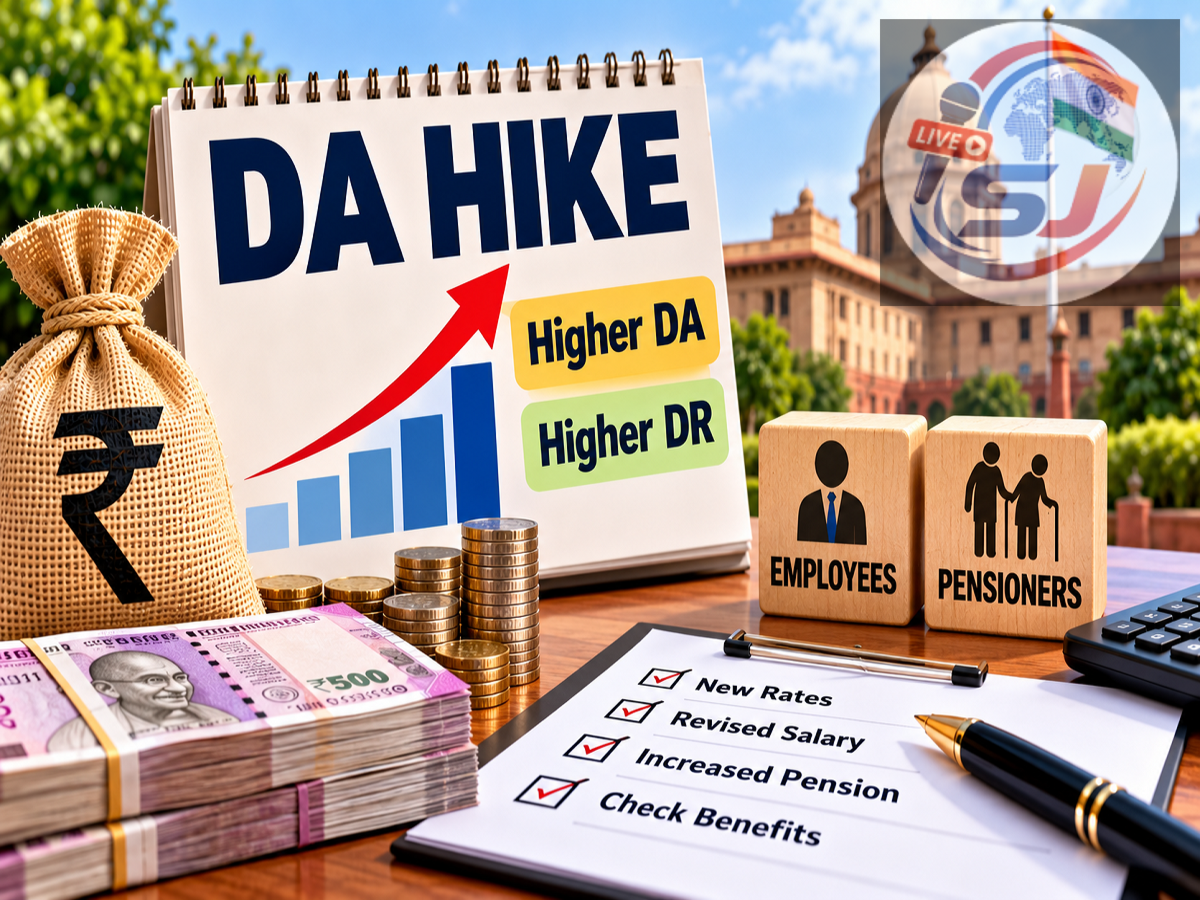
Sikkim DA and DR Hike: The Sikkim government has announced an increase in Dearness Allowance (DA) for eligible employees and Dearness Relief (DR) for pensioners, providing additional financial support amid changes in the cost of living. According to the state Finance Department circular cited in the announcement, the revised rates will be treated as effective from January 1, 2026.
The revision covers employees and pensioners under both revised and pre-revised pay structures. Certain contractual and work-charged employees covered by the applicable government pay structure will also come under the revised rates.
The decision is expected to provide financial benefits to around 50,000 employees and pensioners in the state.
Here is a detailed look at the revised DA and DR rates, who will be covered and how the increase can affect monthly payments.
DA and DR Increased From 58% to 60%
Employees drawing salary under the revised basic pay structure will now receive Dearness Allowance at 60% of basic pay, compared with the earlier rate of 58%.
Similarly, eligible pensioners covered by the revised structure will receive Dearness Relief at 60% instead of 58%.
This represents an increase of 2 percentage points.
The actual increase in an employee's monthly salary will depend on the basic pay on which DA is calculated.
For example, if an eligible employee has a basic pay of ₹30,000, DA at 58% works out to ₹17,400. At 60%, it becomes ₹18,000, resulting in an increase of ₹600 per month.
For a basic pay of ₹50,000, the corresponding increase would be approximately ₹1,000 per month, before considering other applicable components or deductions.
Pre-Revised Pay Structure Gets Higher DA and DR Too
The revision is not limited to employees under the newer pay structure.
Employees and pensioners continuing under the applicable pre-revised basic pay structure will see their DA or DR increase from 257% to 262%.
This represents a rise of 5 percentage points for those covered by the older structure.
Since the applicable percentage differs according to the pay structure, employees should check which pay scale governs their salary before estimating the monetary benefit.
Contractual and Work-Charged Employees Also Covered
The circular also extends the revised DA rates to specified contractual employees working under the state government's regular pay scales.
Eligible personnel working in work-charged establishments are also covered under the revised arrangement.
This means the benefit is not restricted solely to permanent employees. However, contractual workers should verify whether their appointment and pay structure meet the conditions specified by the state government.
DA Rates Revised for All India Service Officers
The change also covers eligible All India Service (AIS) officers serving under the applicable pay structures.
AIS officers drawing revised basic pay based on the 7th Central Pay Commission framework will receive DA at 60% instead of 58%.
For officers who continue to receive pay under the applicable 6th Central Pay Commission pre-revised pay band and grade pay structure, the DA rate has been increased from 257% to 262%.
The monetary increase for individual officers will depend on their applicable basic pay and pay structure.
How Much Can Employees Gain From the 2% DA Increase?
The easiest way to understand the impact is to calculate the additional 2% on basic pay for an employee covered by the revised pay structure.
If basic pay is ₹20,000, the additional amount works out to around ₹400 per month.
At ₹30,000 basic pay, the increase is around ₹600 per month, while a basic salary of ₹40,000 would translate into approximately ₹800 more in DA each month.
Similarly, an employee with ₹50,000 basic pay could see an increase of around ₹1,000 per month.
These are simple illustrations based solely on the two-percentage-point DA increase. Actual salary payments can differ depending on the employee's pay structure, applicable allowances, deductions and service conditions.
Pensioners Will Receive Higher Dearness Relief
Pensioners covered by the decision will benefit through an increase in Dearness Relief rather than DA.
For eligible pensioners under the revised structure, DR has moved from 58% to 60%. Therefore, the additional amount will depend on the basic pension on which Dearness Relief is calculated.
For instance, on an eligible basic pension of ₹25,000, a two-percentage-point increase would correspond to approximately ₹500 more per month.
Those covered by the pre-revised pension structure will instead have the applicable DR rate increased from 257% to 262%.
How Will Fractional Amounts Be Rounded?
The Finance Department circular also specifies a rounding-off mechanism for DA and DR calculations.
If the calculated amount contains a fraction of 50 paise or more, it will be rounded up to the next whole rupee. Any fraction below 50 paise will be ignored.
This provides a uniform method for handling fractional amounts when departments calculate revised payments.
Revised Rates Effective From January 1, 2026
One of the most important parts of the announcement is its effective date.
The revised DA and DR rates will be treated as applicable from January 1, 2026, according to the circular cited in the announcement.
Employees and pensioners should check the government's implementation instructions and their salary or pension statements to understand how the difference for the applicable period is being paid.
The announcement therefore provides a higher DA/DR rate to multiple categories of Sikkim government employees and pensioners. Those under the revised pay structure move from 58% to 60%, while eligible beneficiaries under the pre-revised structure move from 257% to 262%.
With around 50,000 employees and pensioners expected to benefit, the revision could result in a noticeable increase in monthly salary or pension payments, although the exact financial gain will vary according to each beneficiary's basic pay or pension and applicable pay structure.