
Credit Card Alert: Avoid Using Your Card for These Transactions or You Could Pay Heavy Extra Charges
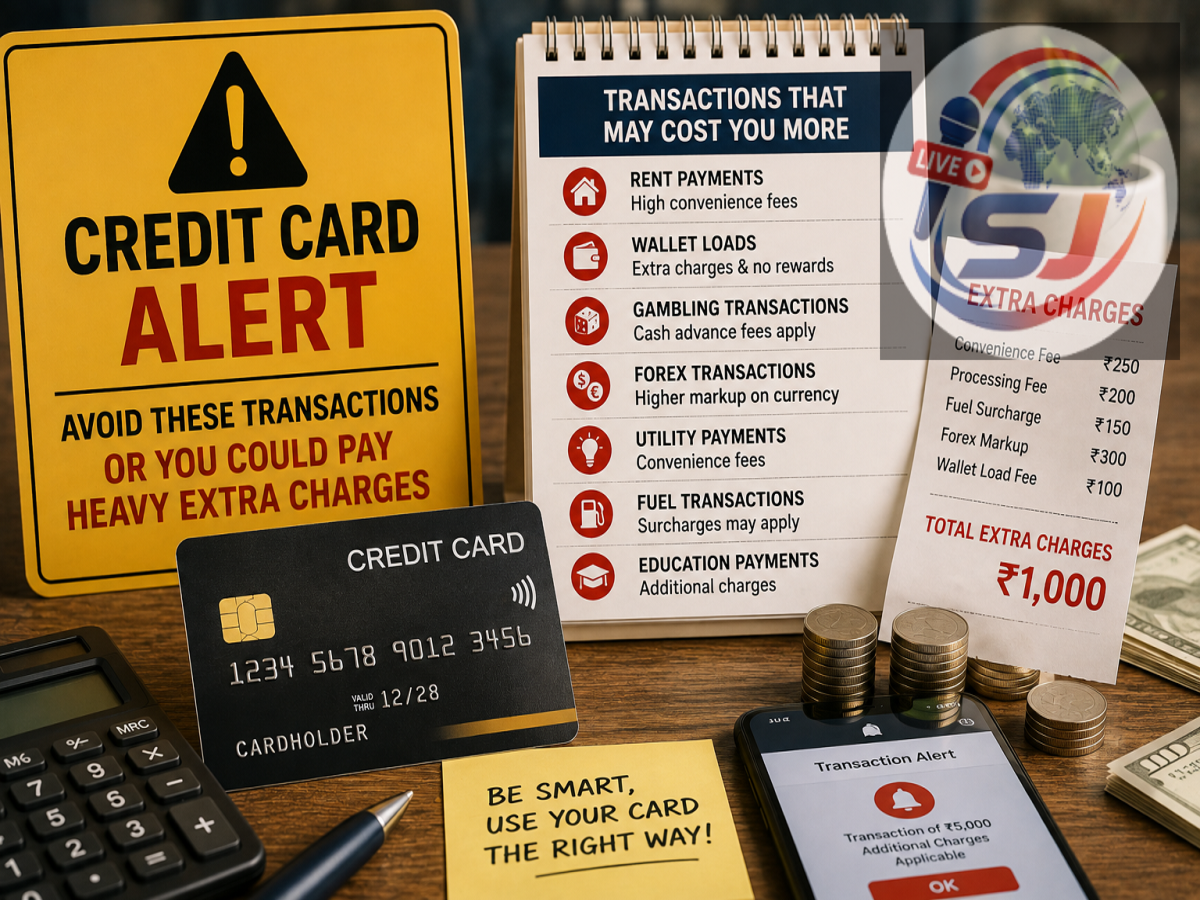
Credit cards have become an important part of everyday financial life. From shopping and travel bookings to utility bills and online purchases, they offer convenience, rewards and an interest-free credit period when used correctly. However, not every transaction is equally beneficial.
Some types of credit card payments can attract additional fees, surcharges or high interest rates. In certain cases, the extra cost can wipe out the rewards or cashback you expected to earn from the transaction.
Understanding where credit cards can become expensive can therefore help you avoid unnecessary charges and manage your monthly bills more effectively.
Credit Card Payments Can Carry Extra Charges
A common misconception is that every credit card transaction remains free as long as the bill is paid before the due date. While timely repayment can help you avoid regular finance charges on eligible purchases, some transactions carry separate fees regardless of when you pay the bill.
These charges depend on the card issuer, merchant category, transaction type and terms of the particular credit card.
That is why checking the card's schedule of charges is important before making certain high-cost transactions.
1. Be Careful When Paying for Fuel
Petrol pumps are one of the places where credit card users should pay particular attention to transaction charges.
Fuel purchases may attract a fuel surcharge, depending on the card and transaction. Many credit cards provide a fuel surcharge waiver, but the benefit generally comes with conditions.
For example, the waiver may apply only when the transaction falls within a specified value range. There may also be a maximum waiver amount available during a billing cycle or month.
Therefore, having a "fuel surcharge waiver" does not necessarily mean every fuel transaction will be completely free of additional costs.
If you frequently purchase petrol or diesel using a credit card, check the minimum and maximum transaction limits, monthly waiver cap and applicable taxes before choosing the card.
2. Avoid Withdrawing Cash From an ATM Using a Credit Card
Using a credit card to withdraw money from an ATM can be one of the most expensive ways to access cash.
Unlike regular retail purchases, credit card cash withdrawals are normally treated as cash advances.
The card issuer may charge a cash advance fee immediately. More importantly, interest can start accumulating from the transaction date itself.
This means you generally do not receive the same interest-free period that may be available on ordinary purchases.
For example, even if you repay the amount within a few weeks, you could still have to pay the cash advance fee, applicable taxes and interest.
Credit card ATM withdrawals should therefore generally be considered only when there is no practical alternative in an emergency.
3. Check Charges Before Booking Railway Tickets
Credit cards are widely used for online train bookings, but consumers should check the final payment amount before completing the transaction.
Depending on the booking platform, payment gateway and card type, additional convenience or payment-related charges may apply.
Rather than assuming that every credit card railway booking carries the same surcharge, check the fare breakup displayed on the payment page.
If another payment method offers a lower overall transaction cost, using that option may save money.
4. International Transactions Can Become Expensive
Using a regular Indian credit card abroad or on an international website can involve additional costs.
Many cards impose a foreign currency or forex markup fee on transactions processed in currencies other than the applicable billing currency.
Depending on the credit card, this markup can be a few percentage points of the transaction value, with applicable taxes adding further to the cost.
For instance, even a seemingly attractive ₹50,000 equivalent overseas purchase could become noticeably more expensive after forex markup and taxes.
Frequent international travellers or people who regularly shop on overseas websites can consider cards offering low or zero forex markup, subject to the card's other fees and conditions.
5. Watch Out for Dynamic Currency Conversion
When shopping abroad, a merchant or ATM may sometimes offer to charge your card directly in Indian rupees rather than the local currency.
This facility is known as Dynamic Currency Conversion (DCC).
Although paying in rupees may look convenient because you immediately know the approximate amount, the exchange rate or conversion charges offered through DCC may make the transaction more expensive.
Always compare the options before accepting currency conversion at a foreign merchant or ATM.
6. Paying Only the Minimum Amount Due Can Be Costly
Another expensive credit card mistake happens after the transaction rather than at the point of purchase.
Credit card statements normally show both the total amount due and the minimum amount due.
Paying the minimum amount can prevent the account from immediately being treated the same way as a completely unpaid bill under applicable terms, but it does not eliminate interest on the remaining outstanding balance.
Credit card finance charges can be very high and vary by issuer and card. On an annualised basis, the effective cost can reach roughly 30-40% or even more on some cards.
Repeatedly paying only the minimum amount can therefore turn a manageable purchase into expensive long-term debt.
How to Avoid Unnecessary Credit Card Charges
A few simple habits can significantly reduce the cost of using credit cards:
-
Pay the total outstanding amount by the due date whenever possible.
-
Avoid withdrawing cash using a credit card.
-
Check fuel surcharge waiver limits before paying at petrol pumps.
-
Compare payment charges before booking tickets online.
-
Check forex markup before using your card internationally.
-
Review convenience fees before confirming large transactions.
-
Avoid spending merely to earn reward points or cashback.
-
Read your card issuer's latest schedule of charges.
Rewards Should Not Distract You From the Actual Cost
Cashback, air miles and reward points can make credit cards attractive, but rewards should always be compared with transaction costs.
For example, earning rewards worth 1% on a transaction makes little financial sense if the same transaction attracts fees of 2% or 3%.
The correct comparison is therefore not simply how many reward points you receive, but how much the transaction ultimately costs after all fees and taxes.
Bottom Line
A credit card can be an effective payment and short-term credit tool when used carefully, but some transactions are considerably more expensive than ordinary purchases.
ATM cash withdrawals are particularly costly because cash advance fees and interest can apply immediately. Fuel purchases may carry surcharges subject to waiver conditions, while overseas transactions can attract forex markup and other conversion costs. Online bookings can also involve platform-specific convenience or payment fees.
Most importantly, paying the full credit card bill on time can prevent high finance charges from turning everyday spending into expensive debt.
Disclaimer: Credit card fees, interest rates, surcharge waivers and transaction charges vary across banks and cards and can change. Cardholders should check their issuer's latest terms and schedule of charges before making a transaction.