
Commercial LPG Rules: Storing More Than 5 Cylinders? Check When a Licence and Fire Approval May Be Needed
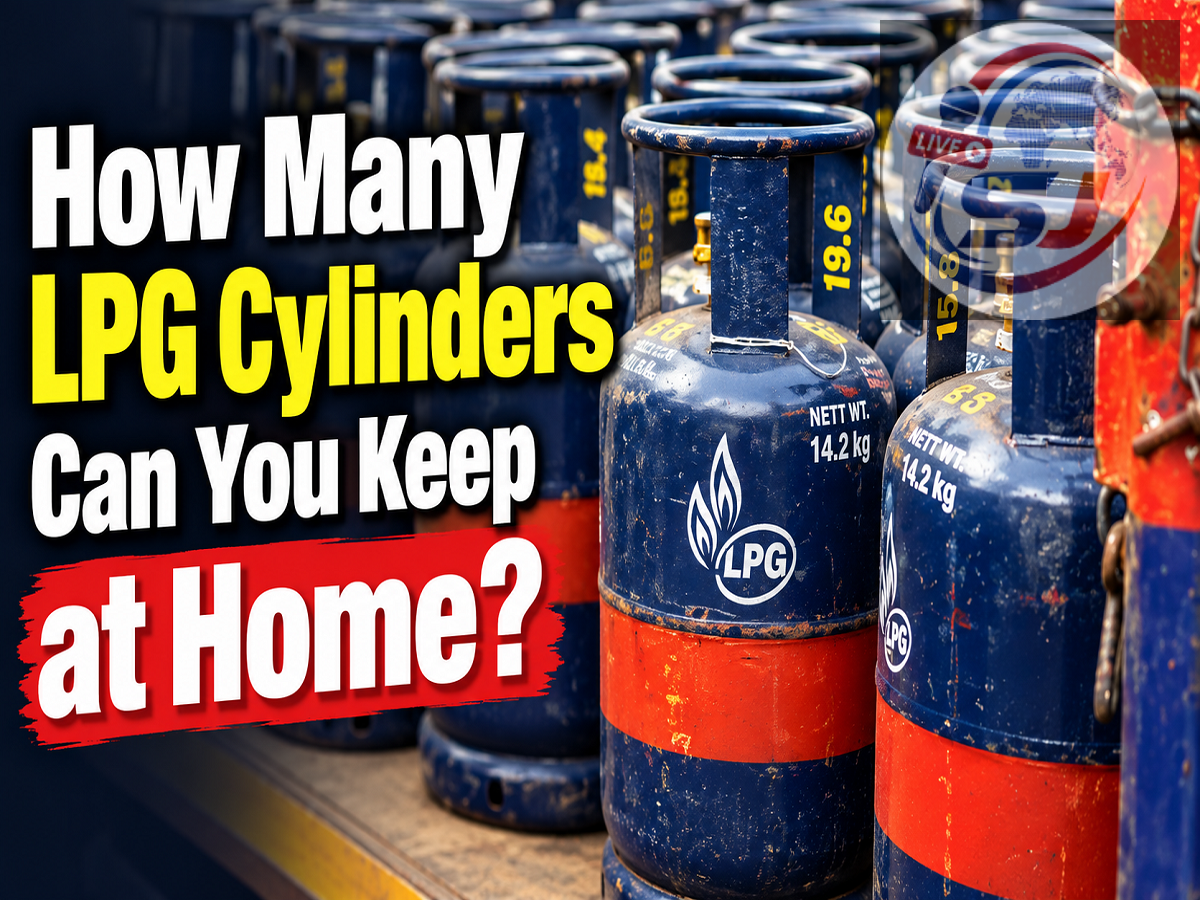
Businesses such as restaurants, hotels, sweet shops, canteens and other commercial establishments often need multiple LPG cylinders to run their kitchens and other operations. But storing several cylinders at the same premises is not simply a matter of ordering additional cylinders. LPG is a highly flammable fuel, and its storage is subject to safety and regulatory requirements.
Businesses planning to keep a larger quantity of commercial LPG should therefore check whether a storage licence, fire-safety clearance or permission from local authorities applies to their premises.
A commonly cited threshold is 100 kg of LPG, which can roughly correspond to around five standard 19-kg commercial cylinders. However, businesses should not treat “five cylinders” as a universal legal limit in every situation. Regulatory requirements are generally linked to the quantity and manner of LPG storage, along with other conditions under the applicable rules.
Is a Licence Required for More Than 5 LPG Cylinders?
The key factor is not simply the number of cylinders but the total quantity of LPG being stored and the conditions under which it is kept.
For a business using standard 19-kg commercial cylinders, five full cylinders would contain about 95 kg of LPG. This explains why a 100-kg threshold is sometimes described in simple terms as “about five cylinders.”
However, cylinder capacities can differ. Therefore, businesses should calculate the actual LPG quantity rather than relying only on the number of cylinders.
Where storage exceeds an applicable exempted quantity or falls within a category requiring licensing, permission from the Petroleum and Explosives Safety Organisation (PESO) may be required.
Local fire-safety and municipal requirements may apply separately.
Why the 100-Kg Figure Matters
Consider a restaurant using five 19-kg commercial LPG cylinders.
The total LPG quantity would be:
19 kg × 5 = 95 kg
If the restaurant adds another identical full cylinder, the total becomes:
19 kg × 6 = 114 kg
The establishment would therefore move beyond the 100-kg mark.
But this example should be used only to understand the calculation. Whether a particular business needs a PESO licence cannot be determined solely by saying it has five or six cylinders.
The applicable rules, cylinder type, storage arrangement and other regulatory conditions also need to be checked.
What Is PESO?
PESO stands for the Petroleum and Explosives Safety Organisation.
It operates under the Government of India and administers safety requirements relating to several hazardous materials and equipment, including compressed gases and gas cylinders under the applicable regulatory framework.
Because LPG is flammable and stored under pressure, businesses dealing with significant quantities must comply with prescribed storage and handling standards.
Where a licence is required, simply purchasing commercial cylinders from an authorised distributor does not replace the establishment's responsibility to comply with storage and fire-safety requirements.
What May Be Required for an LPG Storage Licence?
A business that falls within a category requiring a PESO licence may need to submit documents and technical details relating to the establishment and proposed storage facility.
Depending on the applicable licence and local requirements, these may include a site or layout plan showing the LPG storage area, documents establishing ownership or lawful possession of the premises, and a valid rent or lease agreement where the property is rented.
Business-related documents such as PAN, GST registration or a trade licence may also be required where applicable.
Permissions or NOCs from the fire department, district administration, police or other authorities can depend on the nature of the premises and the regulatory process applicable in that jurisdiction.
Businesses should check the exact document checklist for the licence or approval they actually require instead of assuming that every document is mandatory in every case.
Inspection May Be Part of the Approval Process
Submitting documents may not be the final step.
Where required under the relevant approval process, authorities may inspect the proposed LPG storage area to determine whether it satisfies safety requirements.
The inspection can involve factors such as the location of the cylinders, ventilation, separation from ignition sources, access to the storage area and arrangements for dealing with an emergency.
The purpose is straightforward: a leak in an improperly ventilated or unsafe location can create a serious fire or explosion hazard.
Why Proper Ventilation Is Important
LPG requires particularly careful handling because leaked gas can accumulate in low-lying areas.
A commercial establishment should therefore not treat an enclosed room, basement or poorly ventilated corner as an ordinary storage space for multiple LPG cylinders.
The exact design requirements must follow the applicable regulations and the conditions specified by the competent authority.
Businesses should also ensure that cylinders are protected from physical damage and excessive heat and are handled only through authorised arrangements.
Fire NOC May Also Be Required
A PESO-related approval and a Fire NOC are not necessarily interchangeable.
Depending on the size, occupancy, use and location of the commercial premises, the local fire department may have separate requirements.
Restaurants and hotels can already be subject to fire-safety rules because they involve cooking equipment, electrical systems, customers and staff. Storing LPG adds another potential hazard that must be considered in the establishment's fire-safety arrangements.
Where a Fire NOC is required, authorities may inspect the premises and assess the applicable firefighting and emergency-safety provisions.
What About a Trade Licence?
A restaurant, hotel, sweet shop or other commercial establishment may also require a trade licence or other local-business permissions under municipal or state rules.
A trade licence should not be confused with permission to store LPG.
Similarly, an LPG storage approval does not automatically satisfy every municipal, food-business or fire-safety requirement applicable to the establishment.
Businesses may therefore have to comply with multiple regulatory frameworks simultaneously.
Commercial Cylinders Should Be Used for Commercial Activities
Businesses should use LPG connections and cylinders appropriate for their authorised commercial use.
Domestic LPG cylinders are intended for eligible domestic consumers and should not be treated as a substitute for authorised commercial LPG arrangements merely to reduce operating costs.
Commercial establishments should obtain cylinders through authorised LPG distributors and maintain the required records and safety arrangements.
Using an authorised supply chain also reduces the risks associated with illegally refilled, tampered or improperly handled cylinders.
Don't Rely Only on the 'Five-Cylinder Rule'
For business owners, the most important takeaway is that “more than five cylinders requires a licence” is an oversimplification.
The underlying issue is the quantity of LPG stored and the conditions prescribed under the applicable safety and licensing rules.
Five standard 19-kg cylinders contain approximately 95 kg of LPG, while six contain approximately 114 kg. That is why the number five is frequently used when explaining a 100-kg threshold.
But businesses using cylinders of another capacity will reach the same quantity at a different cylinder count.
What Should Business Owners Do Before Increasing LPG Storage?
Before keeping additional cylinders, the establishment should calculate the total LPG quantity and determine which regulatory requirements apply to its specific premises.
If the proposed storage exceeds the applicable exemption or falls within a licensed category, the business should obtain the required approval before increasing its stock.
It is also important to check requirements imposed by the local fire department, municipal authority and any other competent authority relevant to the business.
Businesses should not wait for an inspection or accident before checking compliance.
The Bottom Line
Hotels, restaurants, sweet shops and other businesses using commercial LPG need to pay attention to both the quantity of LPG stored and the safety conditions of the premises.
Five standard 19-kg commercial cylinders contain about 95 kg of LPG, while six contain about 114 kg. This is why the 100-kg figure is often explained as a limit of “around five cylinders.”
However, business owners should not assume that the cylinder count alone determines whether a licence is required.
Depending on the quantity, type of storage and applicable regulations, a PESO licence or approval, Fire NOC and local permissions may be required. Before storing a larger quantity of LPG, businesses should verify the exact requirements applicable to their premises and obtain necessary approvals rather than relying on a general five-cylinder rule.