
Bank FD Rules Change From October 1: RBI Brings New Rate Disclosure Norms for Bulk Deposits
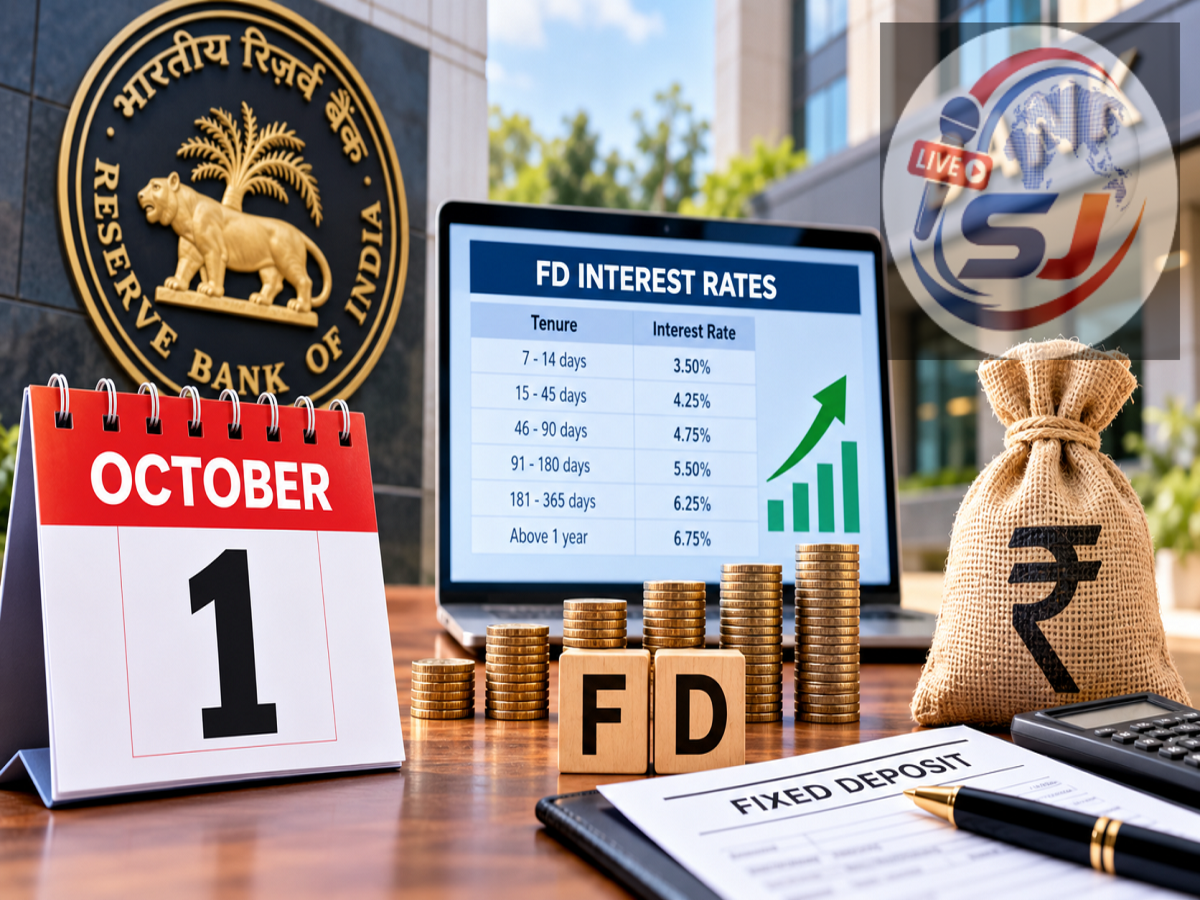
Bank FD New Rules From October 1: A new Reserve Bank of India (RBI) framework for bulk fixed deposits has come into effect from October 1, 2026. The changes are particularly important for customers and institutions placing large term deposits with banks, as lenders will now have to disclose applicable bulk deposit interest rates within a specified time every working day.
According to the rules outlined in the article, banks will be required to publish the applicable interest-rate schedule for bulk deposits on their official websites by 10:00 AM on every working day, with a grace period of 10 minutes. This means the rates should be publicly available by 10:10 AM.
The move is intended to make pricing of large deposits more transparent and reduce the possibility of inconsistent rates being offered across branches for comparable deposits.
Here's what depositors should know before opening a new fixed deposit under the revised framework.
What Changes for Bank FDs From October 1?
The new framework focuses primarily on the way banks disclose and apply interest rates on bulk term deposits.
Banks will now have to make their applicable bulk deposit interest rates publicly available on their websites at the beginning of each working day. Once the rate schedule is published, customers will have a clearer reference point before approaching a branch to place a large deposit.
This is particularly relevant because bulk deposits can involve substantial sums of money, and even a small difference in the interest rate can have a significant impact on the total return.
Bulk FD Rates Must Be Published by 10:10 AM
One of the most notable changes is the daily disclosure requirement.
Banks are required to publish their bulk fixed deposit rate schedule by 10:00 AM on working days. A 10-minute grace period has been provided, effectively setting 10:10 AM as the latest time for the disclosure.
As a result, customers planning to place a bulk deposit can check the bank's official website before visiting a branch.
This also creates a documented reference for the rate applicable on a particular day instead of leaving depositors dependent only on information provided verbally at a branch.
Greater Consistency Across Bank Branches
Another important aspect of the revised system concerns the consistency of interest rates.
For comparable deposits made on the same day, banks are expected to follow their disclosed rate structure rather than allowing arbitrary differences from one branch to another.
Earlier, large depositors could sometimes negotiate rates with individual bank branches, depending on the size of the deposit and the bank's funding requirements. Under the new disclosure-based framework, the applicable rate structure must be made public in advance.
This should make it easier for depositors to compare available rates and understand what a bank is offering before committing a large amount of money.
What Is Considered a Bulk Fixed Deposit?
The new requirements are particularly relevant to bulk deposits, not ordinary retail FDs.
According to the framework described in the article, a single rupee term deposit of ₹3 crore or more with a scheduled commercial bank falls under the bulk deposit category.
This means an investor placing ₹3 crore or more in a single qualifying term deposit should pay close attention to the bank's daily bulk deposit rate schedule.
The threshold is important because the interest rates and pricing practices applicable to bulk deposits may differ from those offered on standard retail fixed deposits.
Can Banks Still Offer Different Bulk Deposit Rates?
Yes. The new framework does not mean that every type of bulk fixed deposit must carry exactly the same interest rate.
Banks can continue designing different bulk deposit products and determining rates within the applicable regulatory framework. The article states that differentiation may be based on the run-off rates under the Liquidity Coverage Ratio (LCR) framework.
Similar flexibility may also apply to eligible NRI rupee-denominated bulk term deposits.
The major change is therefore not the complete elimination of different rates. Instead, it is the requirement that the applicable rates be disclosed transparently within the prescribed time.
Once a bank decides its rates for the day, customers should be able to see the relevant schedule on its official website.
Will Regular FD Customers Be Affected?
For most retail depositors, there is no major direct change simply because these bulk deposit disclosure rules have taken effect.
If you normally invest amounts such as ₹1 lakh, ₹5 lakh, ₹10 lakh or ₹25 lakh in a bank FD, these deposits remain well below the ₹3 crore bulk deposit threshold mentioned in the framework.
Therefore, ordinary FD customers do not need to check their bank's website at 10:00 AM every morning because of this particular rule.
However, greater transparency in deposit-rate disclosures can still make it easier for customers to compare rates and understand how banks are pricing different deposit products.
What Large Depositors Should Do Before Booking an FD
Anyone planning to place ₹3 crore or more in a qualifying term deposit should consider checking the bank's official website before finalising the investment.
The applicable bulk deposit rate schedule should be available by 10:10 AM on a working day. Comparing the disclosed rates across banks can also help investors understand the available options before committing their funds.
It may also be useful to retain a copy or screenshot of the rate schedule displayed on the day the deposit is booked. This can serve as a reference for the rate that was publicly disclosed at the time.
Key Takeaway for FD Investors
The change effective from October 1, 2026 is primarily a transparency measure for large fixed deposits. It does not mean that the basic rules for every retail FD have suddenly changed.
For bulk depositors, however, the daily disclosure requirement provides a clearer way to verify interest rates before investing. Banks can still structure different deposit products and offer different rates where regulations permit, but those rates will have to be disclosed according to the prescribed schedule.
For anyone preparing to make a large bank deposit, checking the official rate card before visiting the branch can now become an important part of the investment process.