
Ayushman Bharat Update 2026: New Digital Rules for PM-JAY Hospitals
PM-JAY Hospital Guidelines 2026: Hospitals empanelled under the Ayushman Bharat Pradhan Mantri Jan Arogya Yojana (AB PM-JAY) have been asked to strengthen their digital healthcare systems and maintain accurate hospital information.
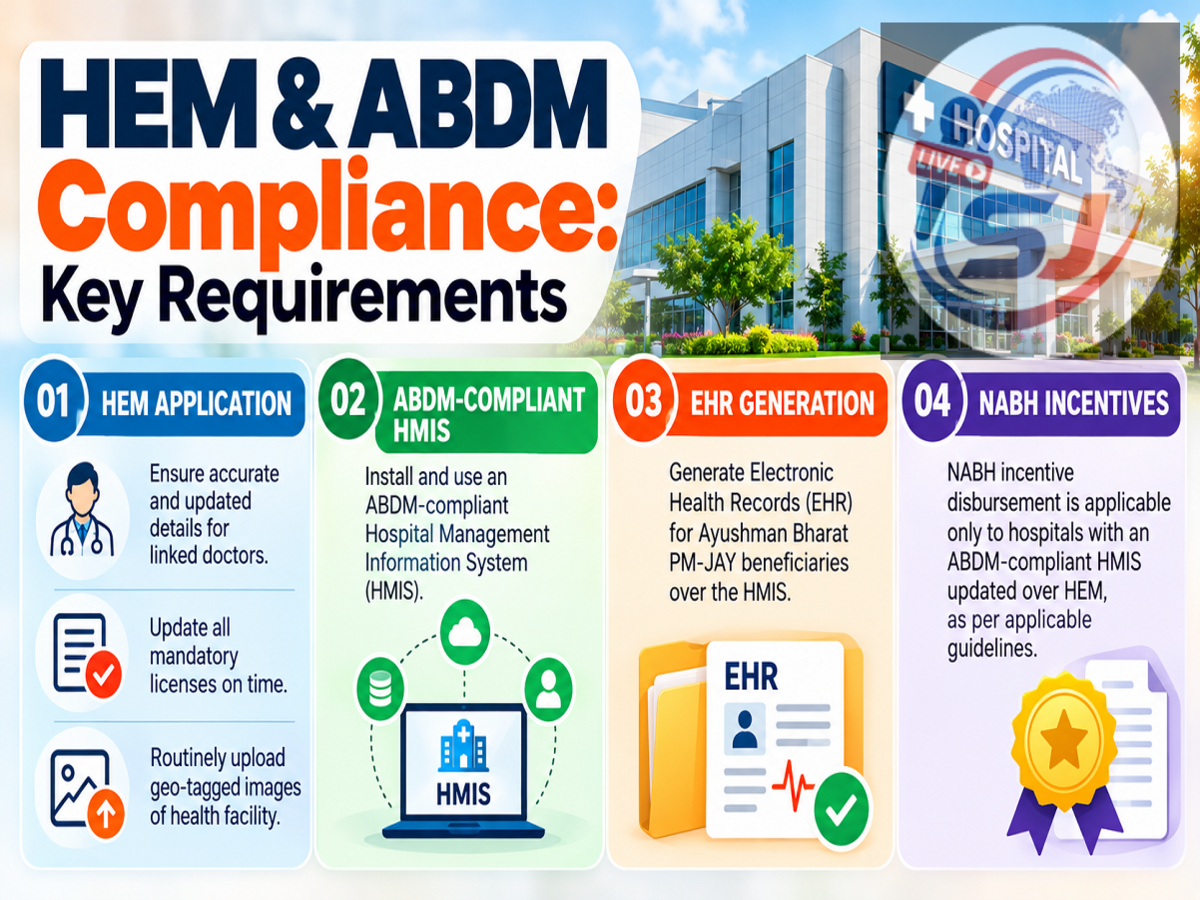
According to the advisory shared, empanelled hospitals must ensure that their Hospital Empanelment Module (HEM) details are updated, facility photographs are geotagged, Hospital Management Information Systems (HMIS) comply with Ayushman Bharat Digital Mission (ABDM) standards, and Electronic Health Records (EHRs) are generated regularly.
These requirements are intended to improve hospital data accuracy, strengthen digital record management and support better coordination within the healthcare system.
All PM-JAY empanelled hospitals must ensure updated HEM details, geotagged facility photos, ABDM-compliant HMIS and regular EHR generation. @archana_ias2014 https://t.co/l2yaZQO2Yq
— PMJAY-UP (Ayushman Uttar Pradesh) (@PmjayP) October 23, 2026
What Are the Requirements for PM-JAY Hospitals?
The advisory highlights four important responsibilities for empanelled hospitals:
-
Update HEM information: Hospitals must maintain accurate and current details in the Hospital Empanelment Module.
-
Upload geotagged photographs: Healthcare facilities must provide photographs containing location information to support facility identification and verification.
-
Use ABDM-compliant HMIS: Hospital information systems should follow applicable Ayushman Bharat Digital Mission standards for digital health interoperability.
-
Generate EHRs regularly: Hospitals must maintain digital health records as required under the applicable framework.
Why Are These Digital Requirements Important?
Accurate hospital information helps authorities maintain reliable records of empanelled healthcare facilities.
Geotagged photographs can assist in verifying the location and identity of hospitals.
ABDM-compliant information systems are intended to support secure, standards-based exchange of health information, subject to applicable consent and privacy requirements.
Regular Electronic Health Record generation can also improve the availability and continuity of patient information.
For patients, better digital record management may support more coordinated treatment and reduce repeated paperwork where interoperable services are available.
What Is ABDM?
The Ayushman Bharat Digital Mission is a government initiative aimed at strengthening India's digital healthcare infrastructure.
It promotes interoperable health information systems so that authorised healthcare providers can access and exchange relevant medical information through approved mechanisms.
The initiative includes digital health identifiers and systems designed to support electronic health records.
However, access to personal health information must follow applicable privacy, security and consent requirements.
What Should Empanelled Hospitals Do?
Hospitals covered by the advisory should review their existing HEM entries, confirm that their facility photographs meet geotagging requirements and assess whether their HMIS software complies with applicable ABDM standards.
They should also examine their EHR generation procedures and address any gaps identified during internal reviews.
The shared advisory does not specify a compliance deadline, penalty or new patient eligibility condition. Hospitals should consult the National Health Authority or their State Health Agency for detailed implementation instructions.
Final Takeaway
The latest PM-JAY advisory emphasises accurate hospital records, verified facility information and improved digital health infrastructure.
All empanelled hospitals are being directed to maintain updated HEM details, geotagged photographs, ABDM-compliant HMIS and regular EHR generation.
These measures are intended to strengthen transparency, data quality and digital healthcare delivery under Ayushman Bharat.
Disclaimer: This article is based on the advisory text supplied. Specific compliance deadlines and enforcement provisions should be verified through official National Health Authority communications.