
AC, TV and Washing Machine Prices May Rise From October 1: Appliances Could Cost Up to 8% More
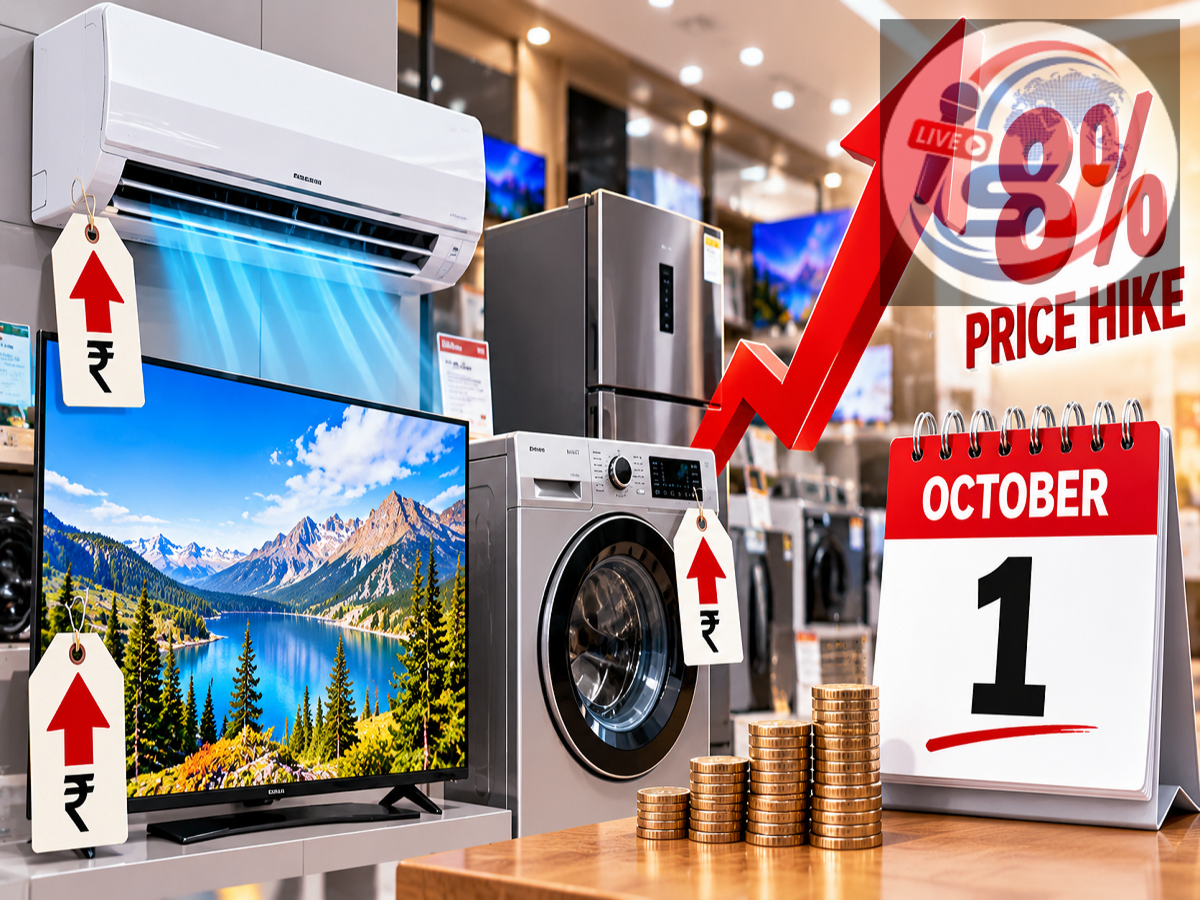
Electronics Price Hike From October 1, 2026: Consumers planning to buy a new television, air conditioner, refrigerator or washing machine during the festive season may need to prepare for higher prices. Several consumer electronics and home-appliance companies are reportedly preparing to increase prices from October 1, 2026, with hikes potentially reaching as much as 8% for some products.
Companies including LG, Godrej and Blue Star have reportedly indicated price revisions as manufacturers deal with higher input and component costs.
The timing is significant because October falls in the middle of India's major festive shopping season, when consumers typically look for discounts on appliances and retailers roll out large promotional campaigns.
However, an "up to 8%" increase should not be interpreted as an automatic 8% hike on every appliance. The actual revision can vary depending on the company, product category, model and input-cost impact.
Which Appliances Could Become More Expensive?
The reported price revisions could affect several major home-appliance categories.
These include:
-
Air conditioners
-
Televisions
-
Washing machines
-
Refrigerators
-
Other selected consumer electronics and appliances
The size of the increase is unlikely to be identical across every category or manufacturer.
Premium products that depend more heavily on expensive imported components could experience different revisions from entry-level models. Individual companies may also absorb a portion of the additional cost instead of passing the entire increase on to customers.
Prices Could Rise by Up to 8%
According to the reported industry indications, appliance prices could increase by as much as 8% in some cases.
To understand the possible impact, consider a product currently priced at ₹40,000. An 8% increase would theoretically add ₹3,200, taking the price to ₹43,200 before considering discounts or promotional offers.
Similarly, an appliance priced at ₹60,000 could become ₹4,800 more expensive if the full 8% increase were applied.
| Current Price | Increase at 5% | Increase at 8% |
|---|---|---|
| ₹25,000 | ₹1,250 | ₹2,000 |
| ₹40,000 | ₹2,000 | ₹3,200 |
| ₹50,000 | ₹2,500 | ₹4,000 |
| ₹75,000 | ₹3,750 | ₹6,000 |
| ₹1,00,000 | ₹5,000 | ₹8,000 |
These figures are only illustrations. They do not mean that every product will become exactly 5% or 8% more expensive.
Why Are Appliance Companies Raising Prices?
Manufacturers are facing pressure from higher input costs, according to the reported industry explanation.
Consumer appliances require a wide range of components and raw materials, including metals, plastics, compressors, electronic parts, display panels and other specialised components.
Changes in international component prices, logistics expenses and currency movements can influence the cost of producing or importing these products.
When costs rise beyond what manufacturers can absorb, companies may pass part of the increase on to customers through higher retail prices.
LG, Godrej and Blue Star Among Companies in Focus
Several major appliance brands have been named in reports concerning the October price revisions.
LG, Godrej and Blue Star are among the companies reported to have indicated increases or adjustments in product prices.
Consumers should nevertheless check the actual price of the model they intend to purchase rather than assuming that every product sold by these brands will receive the same percentage increase.
Price revisions can differ across categories, models and sales channels.
Retailers may also have existing inventory purchased at earlier prices, which can create temporary differences between stores and online platforms.
Festive Discounts Could Complicate the Price Picture
The timing of the price revision makes the situation particularly interesting for consumers.
October is an important month for appliance sales because of the festive season. Online marketplaces and physical retailers typically offer discounts, exchange bonuses, cashback and bank-card offers during this period.
As a result, even if a manufacturer's listed price increases, the effective amount paid by a customer may depend on available discounts.
For example, a product's base price could rise while a retailer simultaneously offers a festive discount. In such a situation, the final price may not increase by exactly the same percentage as the manufacturer's revision.
Consumers should therefore compare the final payable price, rather than focusing only on the MRP.
Should You Buy an Appliance Before October 1?
People who were already planning an immediate purchase may want to compare current prices with the offers available after October begins.
However, buying a television, AC or washing machine solely because of reports of an upcoming price increase may not always produce savings.
Festive-season discounts, exchange benefits, no-cost EMI offers and card promotions can significantly affect the final cost.
The better comparison is between the total amount payable now and the total amount payable after considering future discounts and price revisions.
Consumers should also consider warranty, energy efficiency, installation costs and after-sales service instead of selecting a product only on the basis of its headline discount.
Old Inventory Could Still Be Available at Lower Prices
A price revision does not necessarily mean every appliance in every shop will become more expensive overnight on October 1.
Retailers may still have older inventory purchased before the revised pricing takes effect.
Some stores may continue selling those units at existing prices, particularly during promotional sales.
On the other hand, high-demand models could move to revised pricing more quickly if older inventory sells out.
This is another reason consumers may see different prices for the same or similar appliances across online marketplaces and physical retailers.
Compare Energy Efficiency Along With Purchase Price
When purchasing a major appliance, the upfront cost is only one part of the total expense.
Air conditioners and refrigerators, for example, can operate for several hours every day. Their electricity consumption can therefore make a significant difference to long-term ownership costs.
A slightly more expensive energy-efficient model could potentially cost less to operate over several years than a cheaper but less efficient alternative.
Consumers should check the applicable energy-efficiency rating, warranty coverage, installation charges and expected usage before making a decision.
Don't Assume Every Product Will Become 8% Costlier
The most important point is that the reported increase is up to 8%.
That does not mean every television, refrigerator, washing machine or air conditioner will automatically become 8% more expensive from October 1.
Some products may see smaller increases, while individual models may experience no immediate change depending on the company's pricing strategy and available inventory.
Festive promotions could also offset part of the increase for certain buyers.
What Buyers Should Watch From October 1
Consumers planning an appliance purchase should keep an eye on both manufacturer price revisions and festive-season promotions.
Before buying, compare prices across multiple authorised retailers and online platforms, check whether bank or exchange offers genuinely reduce the final cost and look carefully at warranty and installation terms.
With companies reportedly preparing price revisions from October 1, 2026, TVs, ACs, washing machines, refrigerators and other appliances could become more expensive, with increases potentially reaching 8% in selected cases.
But the actual impact on consumers will depend on the brand, model, retailer, inventory and discounts available at the time of purchase.
Disclaimer: This article is for informational purposes only. The reported price increases may differ across brands, appliance categories, models and retailers. An increase of "up to 8%" does not mean every product will become 8% more expensive. Consumers should check the latest official price and applicable offers before making a purchase.
Tighten repetitive sections and paragraphsAdd a sharper reader-focused opening