
Aadhaar Card Loan at 2% Interest? Government Warns People About Fake Loan Message
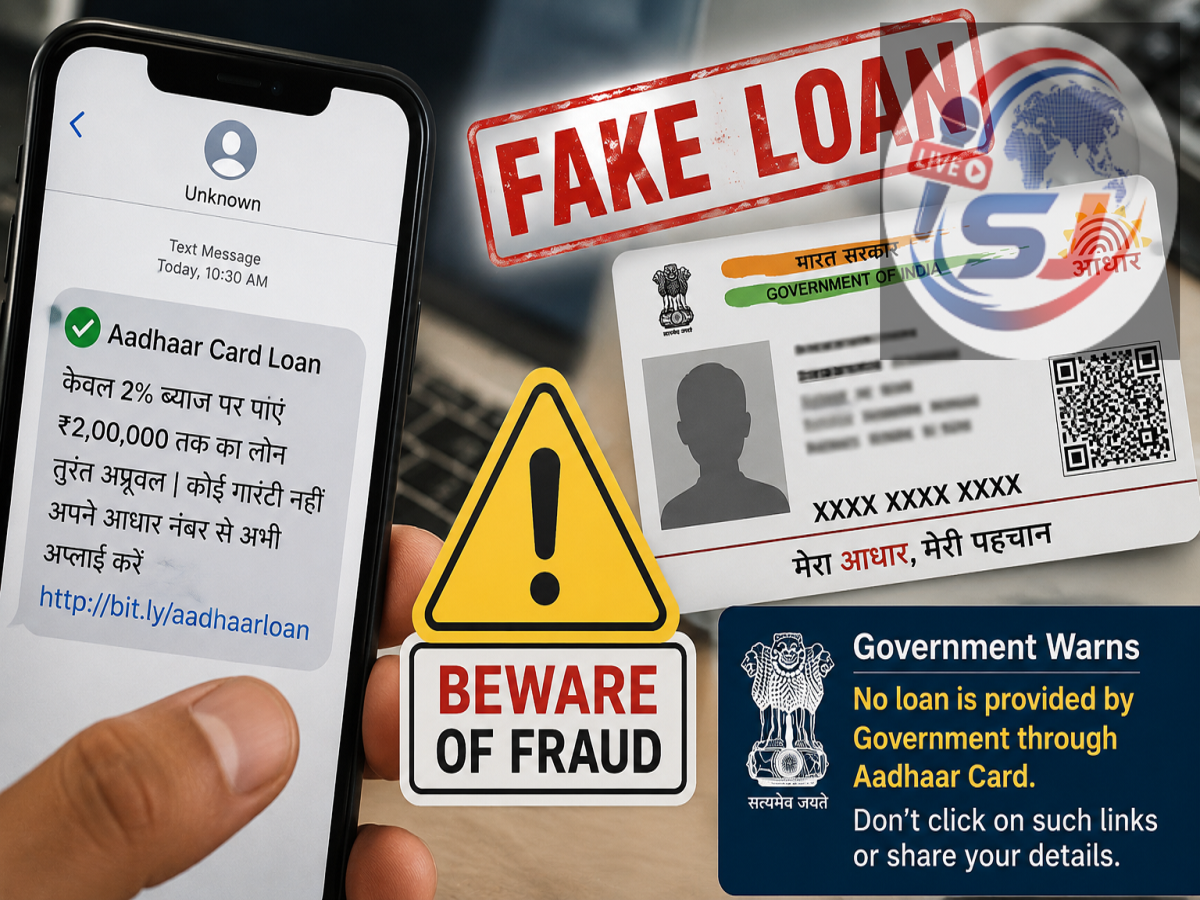
Aadhaar Card Loan Scam Alert: Have you received a message claiming that you can get a government-backed loan at just 2% annual interest by using your Aadhaar card? If yes, do not call the number mentioned in the message or share your personal information. The government has warned that the viral claim is fake and could be an attempt to trap people in a cyber fraud.
The message being circulated through SMS and other digital channels claims that a loan is available under a "Pradhan Mantri Yojana" at an annual interest rate of only 2%. It also reportedly promises that 50% of the loan amount will be waived.
PIB Fact Check has clarified that no such scheme is being run by the Prime Minister or the Government of India.
What Does the Viral Loan Message Claim?
The suspicious message is designed to look like information about a government welfare programme.
It reportedly uses phrases such as "Pradhan Mantri Yojana Aadhaar Card Loan" and claims that people can borrow money at just 2% annual interest. Another eye-catching promise in the message is that borrowers could receive a 50% loan waiver.
A phone number is also provided, encouraging recipients to call for more information about the supposed loan.
Such attractive promises can easily catch the attention of people looking for affordable credit, particularly when the message uses words such as "Pradhan Mantri", "government scheme" or "Aadhaar" to appear trustworthy.
However, the government has made it clear that this particular offer is not genuine.
Government Says the Aadhaar Loan Message Is Fake
PIB Fact Check, the government's fact-checking unit, flagged the circulating message as fake.
According to the clarification, there is no government scheme offering an Aadhaar-based loan at 2% annual interest with a 50% waiver as claimed in the viral message.
People have therefore been advised not to trust the offer.
The warning is particularly important because fraudulent messages often imitate government schemes to convince recipients to provide personal information or make payments.
Aadhaar numbers, bank account details, OTPs, PAN information and other financial credentials can be valuable to cybercriminals.
Why You Should Not Call Numbers Given in Such Messages
A major warning sign in the viral message is the inclusion of an unknown phone number asking people to call for loan-related information.
Calling such a number can expose consumers to several risks.
Fraudsters may ask for Aadhaar details, PAN numbers, bank account information or OTPs under the pretext of verifying loan eligibility. In some cases, victims may also be asked to pay a "registration fee", "processing charge", "GST", "insurance fee" or another advance payment before the loan can supposedly be released.
Once money or sensitive information is shared, recovering it can be difficult.
Consumers should therefore avoid contacting unknown numbers simply because a message claims to represent a government loan programme.
Aadhaar Alone Does Not Guarantee a Cheap Government Loan
Another misleading element of such messages is the suggestion that merely having an Aadhaar card automatically makes someone eligible for a low-interest loan.
Aadhaar is primarily an identity document and can be used for identity verification in various financial and government services. It does not, by itself, guarantee approval for a loan or a particular interest rate.
Genuine loan programmes generally have defined eligibility conditions, application procedures, documentation requirements and authorised channels.
Borrowers should verify these details through the relevant government department, bank or official portal before applying.
How to Identify a Fake Government Scheme Message
Fraudulent messages often use similar tactics to create urgency and gain trust. Be particularly cautious when a message promises unusually low interest rates, guaranteed approval or a large loan waiver without clearly explaining eligibility conditions.
Spelling mistakes, unofficial links, unknown mobile numbers and demands for immediate action can also be warning signs.
Consumers should never assume a scheme is genuine simply because a message contains the Prime Minister's name, a government logo, an Aadhaar reference or photographs of public officials.
These elements can easily be copied and used in fraudulent advertisements.
Never Share OTP or Banking Information
If you receive a suspicious loan offer, avoid sharing sensitive information with the sender.
Do not disclose your OTP, UPI PIN, debit or credit card PIN, CVV, internet banking password or other confidential banking credentials.
You should also be cautious about sharing copies of Aadhaar and PAN with unknown individuals or through unverified websites and messaging applications.
Legitimate banks and government departments do not require customers to disclose confidential passwords or PINs to approve a loan.
Verify Government Schemes Through Official Sources
The safest approach is to verify any government scheme independently before submitting an application.
Instead of clicking a link contained in a forwarded SMS, WhatsApp message or social media post, visit the concerned ministry or department's official website directly.
Consumers can also check suspicious claims through PIB Fact Check when a message claims to represent the Government of India.
If a scheme is genuine, important details such as eligibility, benefits, application procedure and official registration links should be available through authorised government channels.
What Should You Do If You Receive This Loan Message?
If you receive the message promising an Aadhaar-based loan at 2% interest, do not respond, call the provided number or make any payment.
Avoid forwarding the message to friends and relatives as a genuine opportunity. Instead, warn them that the claim has been flagged as false.
If you have already shared banking information or made a payment after interacting with a suspicious loan offer, contact your bank immediately and report the incident through the appropriate cybercrime reporting channels.
Bottom Line
The promise of a 2% annual-interest loan through Aadhaar with a 50% waiver is fake, according to the government's fact-checking clarification.
No such "Pradhan Mantri" scheme is being operated by the Government of India as described in the viral message.
Consumers should treat unusually attractive loan offers with caution, particularly when they arrive through unsolicited messages and ask them to contact unknown numbers. Before applying for any government benefit or financial scheme, always verify the information through official sources and never share confidential banking credentials with an unknown person.