8th Pay Commission: Railway Employees Raise 9-Hour Duty, Overtime and TA Issues in Key Discussions
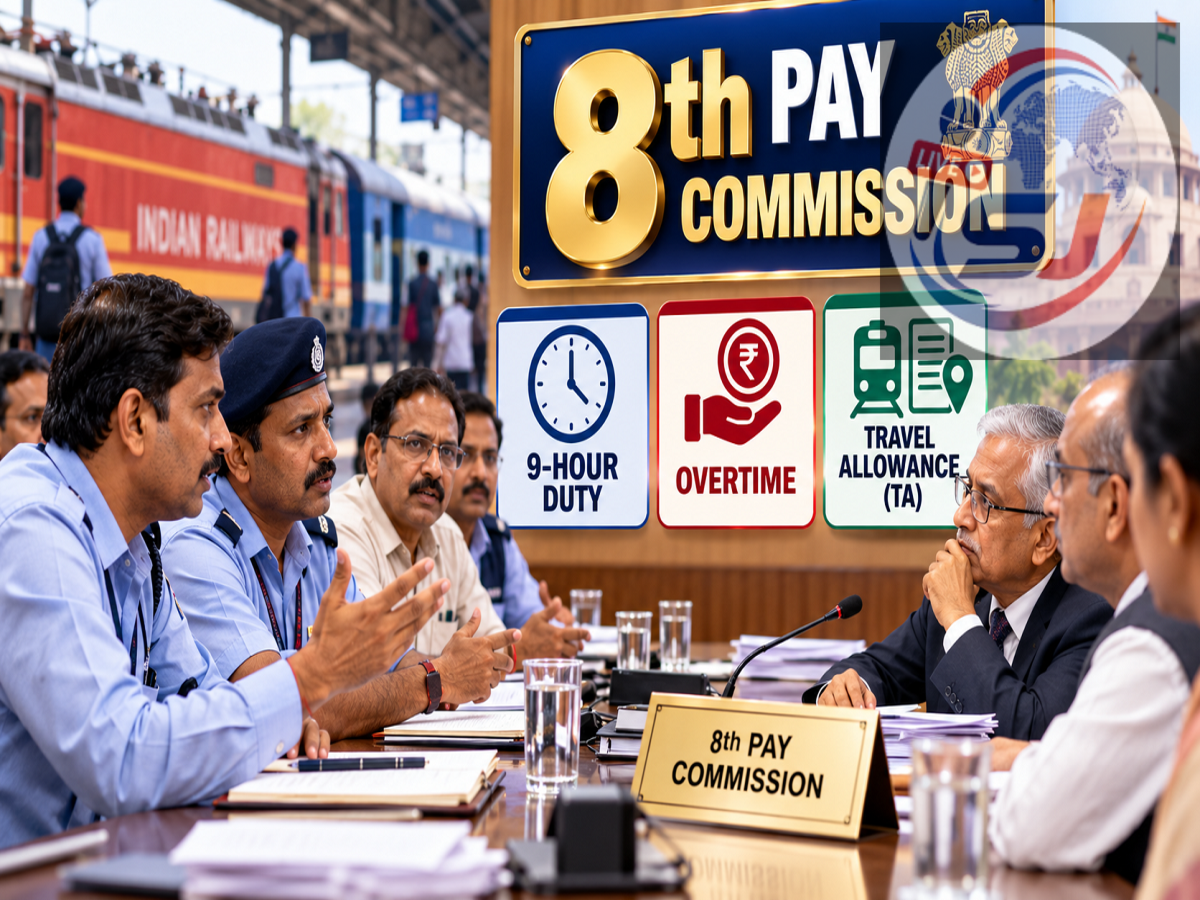
8th Pay Commission Update: Discussions surrounding the 8th Pay Commission are no longer limited to basic salary, pension and fitment factor. Railway employees have also raised concerns related to long working hours, overtime (OT), travelling allowance (TA) and working conditions, bringing service-related issues into focus.
One of the key concerns involves the working hours of railway staff, particularly loco pilots. Employee representatives have questioned why some workers are reportedly required to remain on duty beyond prescribed limits and how additional working hours should be compensated.
The issues have emerged as employee organisations present their views and demands in connection with the 8th Pay Commission process.
However, these discussions should not be confused with final recommendations. No new TA or overtime structure should be considered approved merely because these matters have been raised.
Railway Employees Raise Duty-Hour Concerns
Working hours have emerged as an important issue for railway employees.
The concern is particularly significant for operational staff such as loco pilots, whose jobs involve substantial responsibility and require sustained attention.
Employee representatives have reportedly raised questions over situations where railway personnel are required to work beyond stipulated duty hours.
The discussion centres on whether existing working-hour rules are being followed consistently and how employees should be compensated when duty extends beyond the prescribed period.
The matter is important because railway operations require round-the-clock staffing, but employee groups argue that operational requirements should also be balanced with appropriate rest and compensation.
Why Is the 9-Hour Duty Issue Being Discussed?
A major point raised in the discussions relates to the nine-hour duty norm associated with certain railway operating staff.
Employee representatives have questioned instances where duty hours reportedly extend beyond the prescribed limit.
For loco pilots in particular, long working hours are not simply a salary-related concern. Employee groups have linked the matter with fatigue, adequate rest and working conditions.
Their argument is that when employees are required to perform duty beyond the prescribed period, the additional work should be appropriately recognised under the applicable rules.
The precise rules can differ according to category, duty conditions and operational requirements, so the nine-hour reference should not be interpreted as a universal working-hour rule for every railway employee.
Overtime Payment Also Comes Into Focus
Along with duty hours, overtime allowance has become another important subject.
Employees performing additional work beyond prescribed duty periods may be eligible for compensation according to applicable rules and their employment category.
Railway employee representatives are seeking attention to how such overtime is calculated and compensated.
They want the issue to be considered as part of the wider examination of pay and service conditions.
This could become particularly relevant if the 8th Pay Commission reviews the structure of allowances alongside basic pay.
However, no revised overtime rate has been finalised merely because the subject has entered the discussions.
Travelling Allowance Is Another Key Issue
Railway employees have also raised the issue of Travelling Allowance (TA).
For many railway personnel, travelling and operational duties are an integral part of their work. Employee representatives want allowances to adequately reflect expenses and working conditions associated with such duties.
TA-related demands can include questions about reimbursement levels, eligibility and whether existing allowance structures remain adequate after changes in living and travel costs.
Any modification, however, would require consideration through the appropriate process before becoming applicable.
Employees should therefore distinguish between a demand presented during consultations and a final government-approved allowance.
8th Pay Commission Debate Goes Beyond Salary Hike
Much of the public discussion around the 8th Pay Commission has focused on how much basic salary could increase.
Fitment factor estimates, minimum pay projections and possible pension revisions have attracted significant attention.
But employee organisations are also focusing on a much wider set of workplace concerns.
These include working hours, overtime compensation, travelling allowances, pension-related issues and other service conditions.
For railway employees, such matters can have a substantial practical impact because the nature of railway operations differs significantly from a conventional office schedule.
Why Loco Pilots Are in Focus
Loco pilots perform a safety-sensitive role in the railway system.
Their duty schedules can be influenced by train operations, route conditions, delays and other operational requirements.
This is why questions surrounding working hours and rest periods have received attention from employee representatives.
The issue being raised is not simply whether an employee works an additional hour on a particular day, but how repeated extended duty affects working conditions and how such additional duty should be recognised.
Employee organisations want these concerns to receive attention as the government examines broader pay and service-related matters.
TA and OT Are Not Yet Approved Changes
Railway employees should be cautious about reports suggesting that new overtime or travelling allowance benefits have already been granted under the 8th Pay Commission.
At this stage, the issues being discussed represent demands, representations and matters placed for consideration.
There is an important difference between an employee organisation raising a proposal and the government accepting it.
The final outcome would depend on the formal recommendations and subsequent government decisions.
Until that process is completed, specific increases in TA, overtime rates or other allowances should not be treated as confirmed.
Fitment Factor Remains a Separate Issue
The fitment factor remains one of the most discussed aspects of the 8th Pay Commission, but several numbers circulating publicly are based on demands or estimates rather than a final government decision.
The fitment factor is important because it can influence how existing basic pay is translated into a revised pay structure.
However, railway employees' latest concerns demonstrate that the Pay Commission debate is much broader than a single multiplication factor.
Employees are seeking changes that could affect both monthly compensation and day-to-day working conditions.
What Could the 8th Pay Commission Examine?
A Pay Commission typically examines the compensation structure of central government employees and pensioners within its mandate.
As employee organisations submit representations, multiple issues can enter the consultation process.
Railway-related submissions can therefore include pay as well as allowances and service conditions that have a financial component.
But raising an issue does not guarantee that it will be accepted exactly as proposed.
Recommendations can be modified, rejected or subjected to further government consideration.
What Railway Employees Should Watch Next
Railway employees should watch for formal documents and official announcements rather than relying on figures circulating through unofficial channels.
The important developments will include what demands are formally submitted, which issues are taken up for detailed examination, what the Commission ultimately recommends and which recommendations the government accepts.
Until then, reports about new TA rates, overtime payments or revised duty-hour benefits should be treated cautiously.
8th Pay Commission Discussions Expand to Working Conditions
The latest developments show that expectations from the 8th Pay Commission extend well beyond a salary increase.
For railway staff, questions surrounding long duty hours, the nine-hour norm for relevant categories, overtime compensation, travelling allowance and working conditions are becoming important parts of the discussion.
Loco pilots and other operational employees are particularly in focus because of the demanding nature of their work.
For now, however, these remain issues raised for consideration. Railway employees will need to wait for the formal recommendations and subsequent government decisions to know whether any changes to TA, overtime payments or other service-related benefits will actually be implemented.