8th Pay Commission: How Much Could Salary and HRA Increase? Here's What Employees Should Know
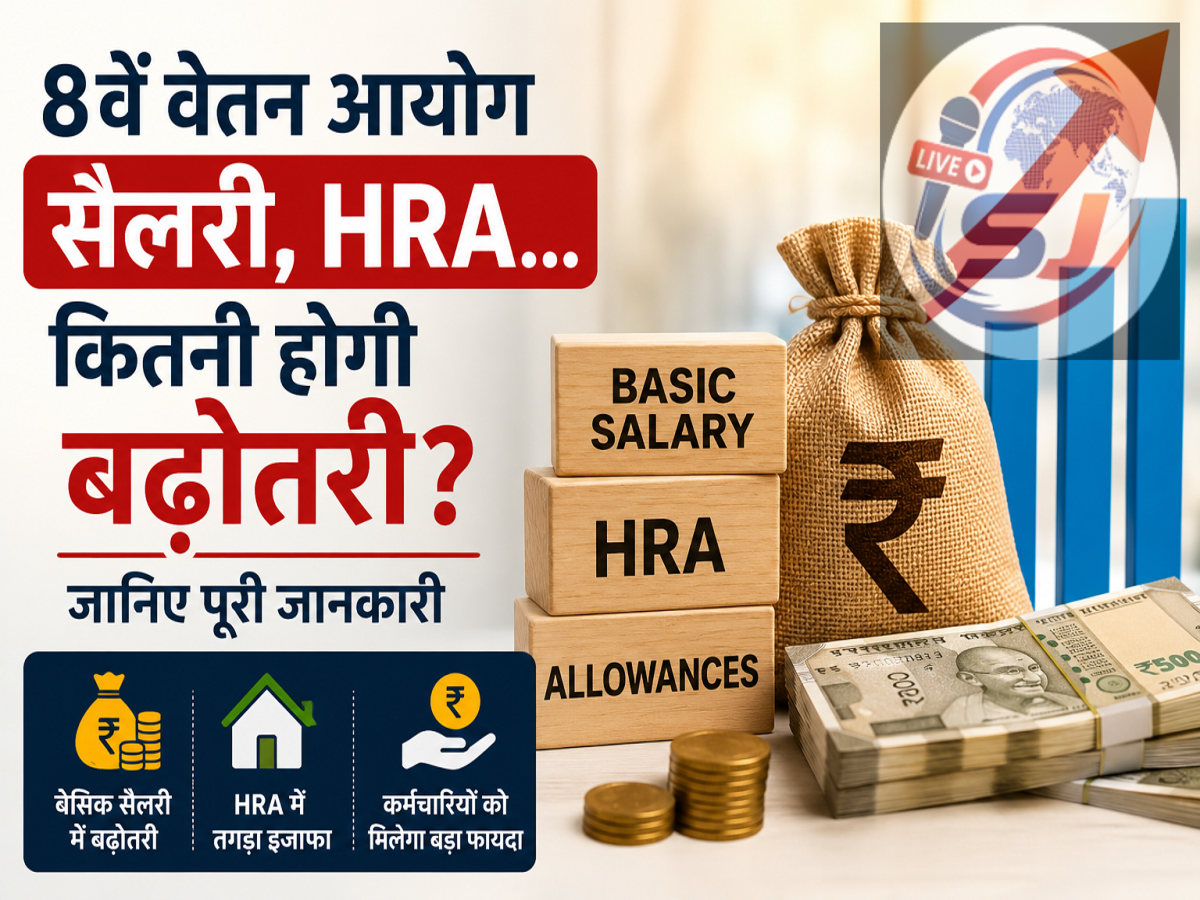
8th Pay Commission: Millions of central government employees and pensioners are eagerly awaiting the recommendations of the 8th Pay Commission. While the final report is yet to be released, discussions around a higher fitment factor and revised House Rent Allowance (HRA) have raised expectations of a significant increase in overall salary. Here's a closer look at how the proposed changes could affect employees.
8th Pay Commission Expected to Revise Salary Structure
The Government of India has announced the formation of the 8th Central Pay Commission, which will recommend revisions to the pay structure, allowances and pension benefits for central government employees and retirees.
Although the commission has not yet submitted its recommendations, employee unions and market experts have been discussing possible revisions based on previous pay commissions and current economic conditions.
The biggest areas of interest remain the basic salary, fitment factor, and House Rent Allowance (HRA).
What Is the Fitment Factor?
The fitment factor is the multiplier used to calculate the revised basic salary of government employees.
For example, under the 7th Pay Commission, the fitment factor was fixed at 2.57, which resulted in a substantial increase in minimum basic pay.
For the 8th Pay Commission, several employee organizations have demanded a higher fitment factor. While no official figure has been approved, various estimates suggest that the multiplier could range between 2.1 and 3.0, depending on the commission's recommendations and the government's decision.
If implemented, this could lead to a considerable rise in employees' basic salaries.
How Could Basic Salary Change?
The actual salary revision will depend on the fitment factor eventually approved.
Illustrative estimates indicate:
| Proposed Fitment Factor | Estimated New Minimum Basic Salary |
|---|---|
| 2.10 | Around ₹37,800 |
| 2.50 | Around ₹45,000 |
| 3.00 | Around ₹54,000 |
These figures are only projections and should not be considered official until the government announces the final recommendations.
Why HRA Could Also Increase
House Rent Allowance (HRA) is directly linked to an employee's basic salary. As the basic pay increases, HRA generally rises as well because it is calculated as a percentage of the revised basic pay.
At present, HRA is provided under different slabs depending on the city classification:
-
X Category Cities: 30% of basic salary
-
Y Category Cities: 20% of basic salary
-
Z Category Cities: 10% of basic salary
If the revised basic salary becomes effective under the 8th Pay Commission, employees are likely to receive higher HRA automatically even if the percentage rates remain unchanged.
Example of Possible HRA Increase
Suppose an employee currently receives a basic salary of ₹18,000 and works in an X-category city where HRA is 30%.
-
Current HRA: ₹5,400 per month
-
If the revised basic salary becomes ₹45,000, the HRA at 30% would increase to approximately ₹13,500 per month.
The exact increase will vary depending on the revised pay, city classification, and any future changes to HRA rates approved by the government.
Other Allowances May Also Be Revised
Apart from HRA, several other allowances are expected to be reviewed once the commission submits its report.
These may include:
-
Dearness Allowance (DA) adjustments
-
Transport Allowance
-
Travel-related benefits
-
Pension revisions
-
Other service-related allowances
However, no official announcement has been made regarding the revised amounts.
When Will the New Pay Structure Be Implemented?
The 8th Pay Commission has begun its work, but its recommendations are expected to take time as they involve detailed consultations and financial assessments.
After the commission submits its report, the central government will review the recommendations before making a final decision on implementation.
Until then, all figures regarding salary and allowance revisions remain estimates based on discussions and publicly available projections.
Final Takeaway
The 8th Pay Commission is expected to bring meaningful changes to the salary structure of central government employees. A higher fitment factor could significantly increase the basic salary, while the linked House Rent Allowance (HRA) may also rise proportionately. Although the final recommendations are still awaited, employees can expect greater clarity once the commission completes its review and the government announces its decision.