
8th Pay Commission Completes One Year on November 3: Five Major Updates Employees Should Know
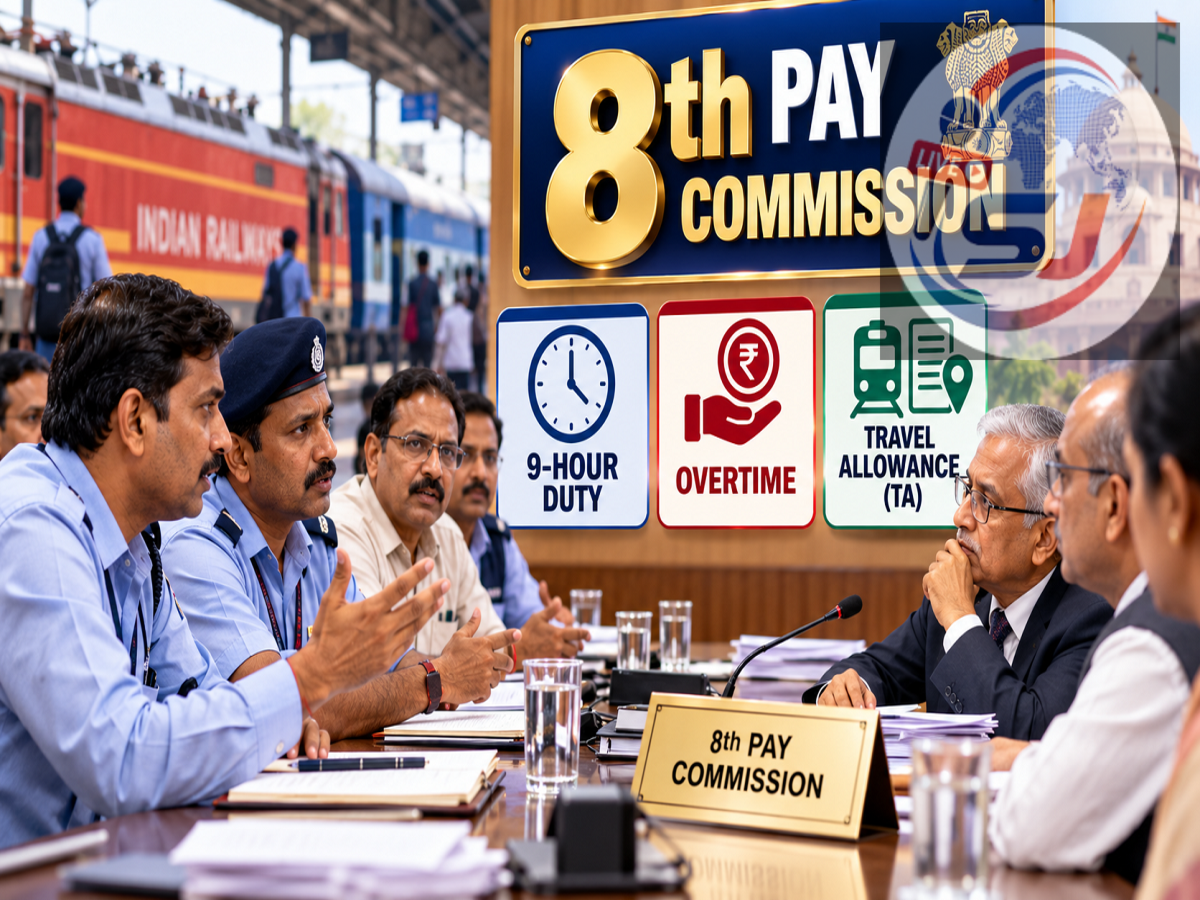
8th Pay Commission Latest News 2026: The 8th Central Pay Commission is approaching an important milestone. On November 3, 2026, it will complete one year since its constitution, bringing renewed attention to the expected revision of salaries, allowances and pensions for central government employees and pensioners.
The commission was constituted on November 3, 2025, and has been given 18 months to submit its recommendations to the Central Government.
This means that 12 months of its stipulated period will be completed on November 3, 2026, leaving approximately six months until the original reporting deadline in May 2027.
Although employees and pensioners are eagerly awaiting announcements about the fitment factor, minimum basic salary, Dearness Allowance (DA) and pension revisions, no final recommendations have been announced in the supplied report.
Meanwhile, the commission continues to release notices concerning meetings, consultations, recruitment of advisers and administrative arrangements.
Here are five important developments reported as of October 13, 2026, along with the expected timeline for the commission's report.
1. 8th Pay Commission Prepares for Mumbai Visit
One of the latest developments concerns the commission's upcoming visit to Mumbai.
According to the report, information related to the visit and administrative preparations has been published through the commission's official communication channels.
The Mumbai programme is part of the broader consultation process involving employee organisations and other stakeholders.
Such meetings provide an opportunity for representatives to present their views on pay structures, allowances, pensions and working conditions.
The commission is reportedly scheduled to hold meetings in Mumbai on October 22 and 23, 2026.
However, a consultation meeting should not be confused with the announcement of a revised salary structure.
The final recommendations will emerge only after the commission evaluates the submissions and completes its review.
2. Consultant and Adviser Recruitment Process Updated
The second important development involves the appointment of consultants and advisers.
The commission has reportedly updated information about the procedures and conditions for engaging professional support.
Consultants may assist with research, data analysis, financial assessments and other technical aspects of the commission's work.
Pay revision exercises involve examining several interconnected issues, including existing salary structures, pension obligations, allowances and the financial implications of proposed changes.
The appointment of advisers is therefore part of the commission's administrative and analytical preparations.
However, these recruitment-related updates do not indicate that a particular fitment factor or salary increase has been approved.
3. Employee Unions and Stakeholders Continue Submitting Suggestions
The commission is also receiving representations from employee unions, pensioner organisations and other stakeholders.
These submissions are important because different groups may have different priorities.
Some organisations are demanding a higher fitment factor, while others are focusing on DA merger, pension revisions, allowances and the structure of future wage reviews.
For example, employee representatives have reportedly proposed fitment factors such as 3.61 and 3.833.
There have also been demands to merge DA with basic pay at specified thresholds.
However, these remain proposals submitted for consideration.
The commission is expected to evaluate stakeholder demands alongside economic conditions, existing pay structures and the broader implications of any recommended revision.
4. Notices Issued for Visits to Different Cities
Another major update concerns the commission's consultations in different parts of the country.
According to the report, notices relating to city visits, meeting dates and stakeholder participation are being published.
This process allows the commission to interact with representatives from different departments, services and employee groups.
A geographically wider consultation process may help it understand concerns across different categories of central government employment.
Employees should check official notices for accurate details about scheduled meetings and participation requirements.
Not every meeting will necessarily be open to individual employees, and eligibility or representation procedures may differ.
5. Administrative Arrangements and Meeting Schedules Updated
The fifth development involves administrative preparations.
The commission is reportedly updating information concerning meeting arrangements, schedules and other organisational requirements.
Although these developments may appear routine, they are part of the process required to prepare a comprehensive report.
The commission must gather information, review representations and examine financial and policy implications before making recommendations.
These updates show that administrative and consultation activities are continuing.
However, they should not be interpreted as confirmation that the final report is ready or that revised salaries will be implemented immediately.
8th Pay Commission: Important Dates and Timeline
| Event | Date or Status |
|---|---|
| Commission constituted | November 3, 2025 |
| One-year milestone | November 3, 2026 |
| Reported Mumbai meetings | October 22–23, 2026 |
| Time allowed for recommendations | 18 months |
| Original reporting target | Around May 2027 |
| Final fitment factor | Not announced |
| Revised salary implementation date | Not confirmed |
The May 2027 timeline is based on the reported 18-month period from the commission's constitution.
It does not guarantee that revised salaries will begin from that month.
Who Are the Members of the 8th Pay Commission?
The report identifies a three-member commission headed by former Supreme Court judge Justice Ranjana Prakash Desai.
The other members are Professor Pulak Ghosh and Pankaj Jain, who serves as Member-Secretary.
The commission's responsibility is to examine the relevant pay and pension matters under its terms of reference and submit recommendations to the government.
These recommendations will then be reviewed before any implementation decision is taken.
When Will the 8th Pay Commission Report Be Submitted?
According to the reported terms of reference, the commission has 18 months from its constitution to submit its recommendations.
Since it was constituted on November 3, 2025, the original reporting target falls around May 2027.
The commission's first anniversary on November 3, 2026, will therefore mark the completion of two-thirds of that period.
However, the actual date of submission may depend on the progress of consultations, analysis and other administrative requirements.
The report does not confirm that the commission will submit its recommendations before the original deadline.
Will Employees Receive Revised Salaries in May 2027?
Not necessarily.
The submission of a Pay Commission report and the implementation of its recommendations are two separate stages.
Once the commission submits its report, the Central Government must review the recommendations.
The government may accept, modify or reject individual proposals.
It must also determine the implementation arrangements, including any applicable effective date and treatment of arrears.
Therefore, even if the report is submitted around May 2027, employees may not receive revised salaries immediately.
The actual payment schedule will depend on official government decisions.
Fitment Factor Remains the Biggest Question
The fitment factor is one of the most closely watched issues under the 8th Pay Commission.
It is a multiplier used to determine revised basic pay from an existing salary structure.
For example, if an employee currently receives ₹18,000 as basic pay, a hypothetical fitment factor of 2 would produce a revised basic pay of ₹36,000.
Similarly, a factor of 2.57 would produce ₹46,260.
However, the fitment factor cannot be treated as a direct measure of the percentage increase in take-home salary because the new pay structure may involve changes in DA and other allowances.
How Much Could Basic Pay Increase?
Several possible fitment factors are being discussed, including 1.83, 2.00, 2.57 and 3.83.
The following table illustrates how these figures would affect an existing basic pay of ₹18,000.
| Illustrative Fitment Factor | Calculated Revised Basic Pay |
|---|---|
| 1.83 | ₹32,940 |
| 2.00 | ₹36,000 |
| 2.57 | ₹46,260 |
| 3.83 | ₹68,940 |
These calculations are purely illustrative.
They are not official salary figures approved by the government.
The actual revised pay will depend on the fitment factor recommended by the commission, the final pay matrix and the government's implementation decision.
What About DA, Allowances and Pension Revisions?
Alongside the fitment factor, employee organisations are raising demands relating to Dearness Allowance and pension benefits.
Some groups have proposed merging DA with basic pay once it reaches a specified percentage.
Others want a more frequent mechanism for reviewing salaries in response to inflation.
Pensioner organisations have also raised concerns about Dearness Relief and basic pension calculations.
However, no final decision on these proposals has been announced in the supplied report.
The commission's recommendations and subsequent government approval will determine whether any such changes are introduced.
What Should Central Government Employees Do Now?
Employees and pensioners should distinguish between official developments and speculative salary calculations.
Meeting notices, consultation schedules and administrative updates are important, but they do not establish the final pay revision.
Similarly, figures circulating on social media may represent demands, estimates or hypothetical calculations rather than approved government decisions.
Employees should follow official commission notices and government communications for verified information.
They should also be cautious about messages claiming that revised salaries, pension amounts or arrears have already been finalised without supporting official orders.
8th Pay Commission 2026: What Happens Next?
As the commission approaches its first anniversary, attention will remain focused on the progress of consultations and the expected report.
The five reported updates as of October 13 concern the Mumbai visit, consultant appointments, stakeholder submissions, city-level consultations and administrative arrangements.
These developments indicate continuing work, but they do not reveal the final fitment factor or revised pay matrix.
The key milestone remains the commission's recommendations, targeted for around May 2027 under the reported 18-month timeline. The actual salary and pension increases will become clear only after the Central Government reviews and approves the relevant proposals.
Disclaimer: This article is based on the October 13, 2026 report. The salary calculations are illustrative, and no final fitment factor, revised minimum basic pay or implementation date has been confirmed in the supplied information.