
10 Major Rule Changes From October 1: LPG, ATM, Aadhaar to TV-AC Prices—What Consumers Should Watch
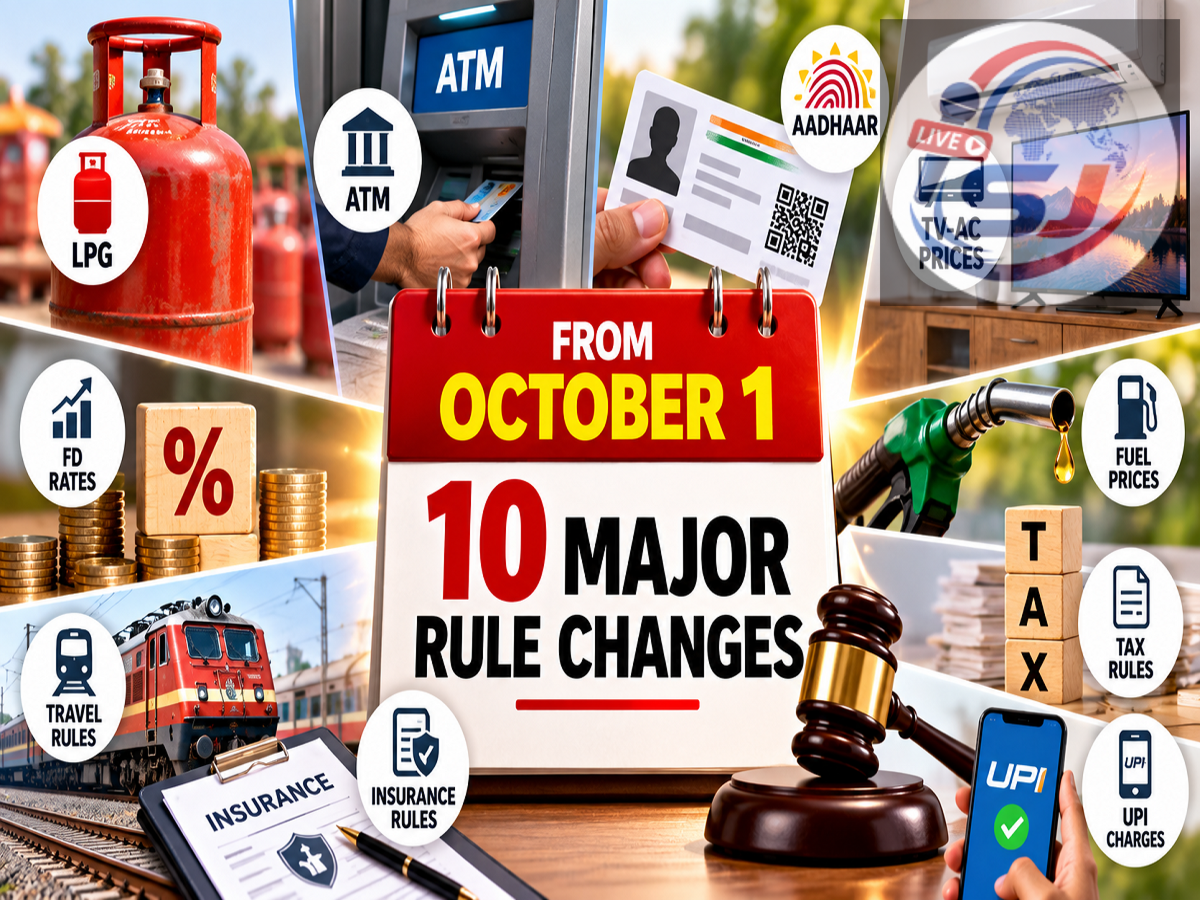
October 2026 is set to begin with several financial and consumer-related changes that could affect household budgets across India. From LPG cylinders and banking services to ATM transactions and the prices of electronic appliances, a number of revised rules and rates may come into focus from October 1, 2026.
Some of these changes could directly influence monthly expenses, while others may require consumers to complete verification or pay closer attention to their banking transactions.
For households, the beginning of a new month is particularly important because oil marketing companies generally review LPG prices periodically, while banks and other service providers can also introduce revised charges or operational rules.
Here are the key areas consumers should keep an eye on as October begins.
1. LPG Cylinder Prices Could Be Revised
LPG cylinder prices are among the most closely watched changes at the beginning of every month.
Oil marketing companies periodically review the prices of domestic and commercial LPG cylinders. Therefore, consumers should check the rate applicable in their city when booking a refill from October 1.
Domestic and commercial cylinders have separate pricing structures, and rates can also vary between cities because of local costs.
Customers should check the latest official price applicable to their location instead of relying on an older cylinder bill.
2. LPG Subsidy and Aadhaar Verification Could Become Important
Consumers receiving LPG-related benefits may also need to pay attention to Aadhaar and e-KYC requirements.
Verification of eligible beneficiaries is intended to ensure that subsidies and other benefits reach the correct customer.
Anyone whose verification remains incomplete should check the latest instructions issued by their LPG distributor or oil marketing company.
Consumers should also remain cautious about fraud. Aadhaar OTPs, banking passwords, UPI PINs and card credentials should never be shared with callers claiming to complete LPG verification.
3. ATM Transactions May Become More Expensive for Some Customers
Bank customers should review the ATM transaction rules applicable to their accounts from October.
Banks provide a certain number of free ATM transactions depending on the account type, location and whether the customer is using the bank's own ATM or another bank's machine.
Once the permitted free limit is exhausted, additional charges may apply.
Therefore, customers who make frequent cash withdrawals should check their bank's latest schedule of charges instead of assuming that every ATM transaction will remain free.
4. Banking Charges Need Closer Attention
ATM withdrawals are not the only banking service that can involve charges.
Depending on the bank and account category, customers may encounter charges associated with services such as alerts, cash transactions, debit cards or other account facilities.
Not every revised charge necessarily applies to every customer.
The impact can depend on factors including the type of savings account, minimum-balance requirements, transaction frequency and the bank's individual pricing policy.
Customers should therefore check official communication from their own bank before October.
5. FD Investors Should Check Revised Rates and Conditions
Fixed deposit investors should also keep an eye on interest rates and special deposit schemes.
Banks periodically revise FD rates based on liquidity requirements, market conditions and their own funding strategies.
Special-tenure deposits can sometimes offer different rates from conventional one-, two- or three-year FDs.
However, investors should not choose an FD based solely on the headline interest rate. Premature-withdrawal penalties, tenure, liquidity requirements and taxation can materially affect the actual return.
6. Aadhaar-Linked Services Could Require Updated Details
Aadhaar continues to play an important role in several financial and government-linked services.
Consumers should make sure that details required for services such as subsidies or account verification are accurate wherever Aadhaar authentication is mandatory under the applicable rules.
At the same time, users should distinguish between an official Aadhaar requirement and fraudulent messages that create artificial urgency.
Verification should be completed only through authorised channels.
7. TV Prices Could Affect Household Shopping Budgets
Consumers planning to purchase a new television in October should compare prices carefully.
Changes in manufacturing costs, components, logistics, taxes, currency movements or company pricing strategies can influence retail prices.
A headline suggesting that TVs will become more expensive does not necessarily mean that every television model will increase by the same amount from October 1.
Festival discounts and retailer-level offers can also affect the final price paid by customers.
8. AC Buyers Should Also Watch for Price Changes
Air-conditioner prices can similarly change because of manufacturing costs, component prices, energy-efficiency requirements and individual company decisions.
Consumers planning an AC purchase should compare the final effective price rather than focusing only on the listed MRP.
Discounts, installation charges, extended warranties and energy efficiency can substantially change the total ownership cost.
Any October price increase should therefore be checked at the brand and model level.
9. Household Expenses Could See Multiple Small Changes
The impact of October's rule changes may not come from one major expense alone.
A change in LPG cost, an additional banking fee or a higher price for a planned appliance purchase can individually appear small but collectively affect a household's monthly budget.
This makes the beginning of October a useful time to review recurring payments, banking charges and major planned purchases.
Consumers should also check whether any verification or KYC-related requirement needs to be completed.
10. Check Official Notifications Before Taking Action
The most important point is that not every change applies universally.
An ATM rule announced by one bank may not apply to another. An LPG-related requirement may depend on the consumer's subsidy or verification status, while appliance prices are determined by individual manufacturers and retailers.
Similarly, some changes reported ahead of October 1 may be proposed, expected or company-specific rather than universal nationwide rules.
Consumers should therefore verify important financial changes through the relevant bank, oil marketing company, government department or service provider before making a payment or changing an account.
October 1 Could Bring Changes Across Several Areas
The start of October 2026 could be important for consumers because several financial and household-related developments are expected to converge around the same time.
LPG prices and subsidy-related verification will be particularly important for households, while banking customers should review ATM and account-service charges applicable to them.
People planning to invest in an FD or purchase expensive appliances such as a television or air conditioner should also compare the latest rates and prices before making a decision.
Most importantly, consumers should avoid assuming that every reported October 1 change applies to everyone. The actual impact will depend on the bank, service provider, product, location and individual eligibility.
Checking the latest official notification before taking action can prevent unnecessary charges as well as misinformation.
Disclaimer: This article is for general informational purposes. Rules, prices, banking charges, LPG rates and product prices can vary by provider, location and customer category. Consumers should verify the latest applicable terms with the relevant bank, government authority, oil marketing company or service provider.