
Petrol Car Demand Slips as CNG, EV and Diesel Gain Ground Amid E20 Concerns
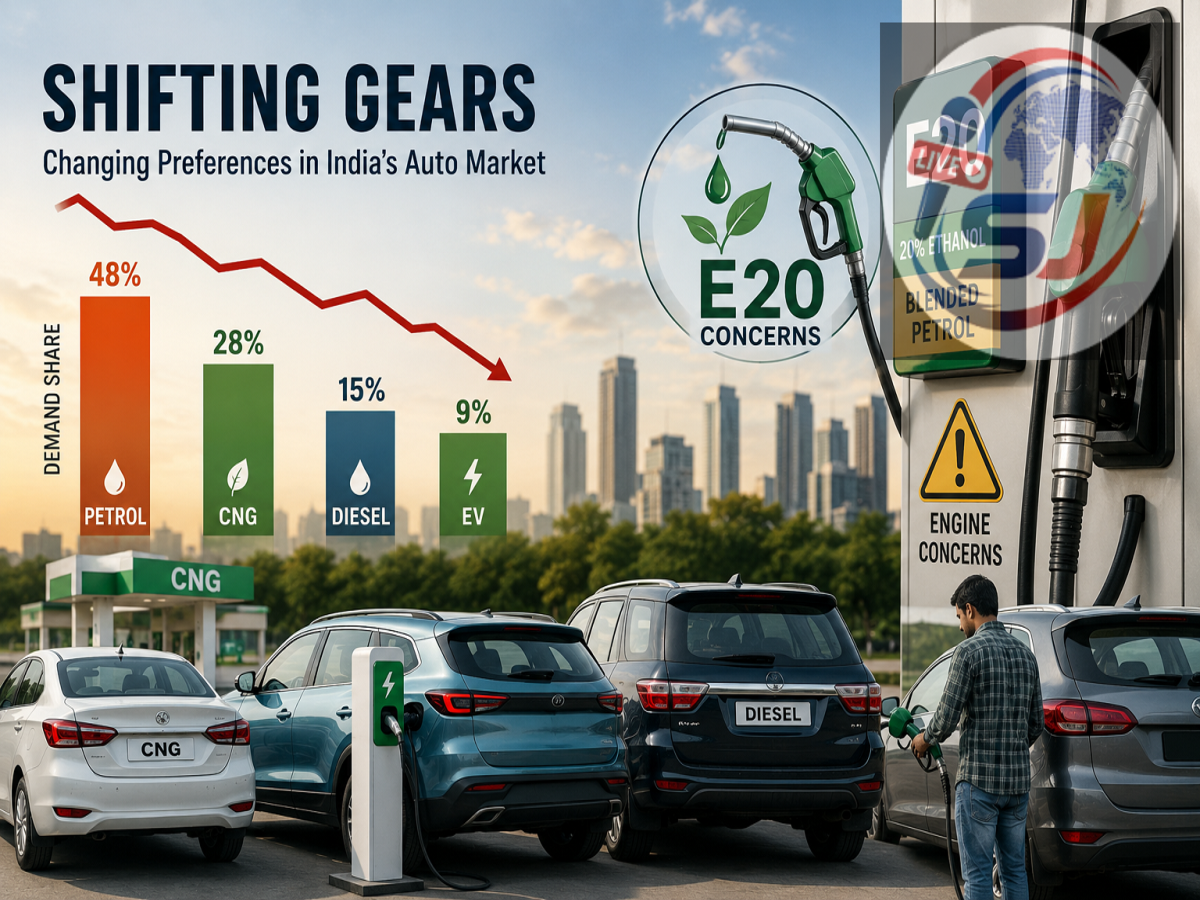
India’s passenger vehicle market appears to be witnessing a gradual shift in buyer preferences, with conventional petrol cars facing stronger competition from CNG, electric and diesel alternatives. Recent July sales trends indicate softer demand for petrol-only models, while other powertrain options have attracted greater customer interest.
The development comes amid an ongoing debate surrounding E20 petrol, a fuel containing 20% ethanol blended with 80% petrol. Questions about mileage, compatibility and the long-term impact of higher ethanol content on some vehicles have become a talking point among motorists.
At the same time, changing running costs, wider availability of factory-fitted CNG cars and the growing selection of electric vehicles are giving buyers more options than before.
Industry data cited in reports linked to the Federation of Automobile Dealers Associations (FADA) also points toward changing fuel preferences in the passenger vehicle segment. As petrol demand softens, dealerships could face pressure from higher inventories of certain petrol-powered models.
What Is E20 Petrol?
E20 is petrol blended with 20% ethanol. India has been progressively increasing the use of ethanol-blended petrol as part of its broader effort to reduce dependence on imported crude oil and promote alternative fuels.
Ethanol is generally produced from agricultural feedstocks such as sugarcane and grains. Increasing its share in petrol can potentially reduce the amount of conventional fossil fuel required.
However, the transition has also led to questions among vehicle owners, particularly those with older cars that may not have been designed specifically for higher ethanol blends.
Consumers have raised concerns around fuel efficiency, engine components and vehicle compatibility, although the actual impact can differ substantially depending on the model, manufacturing year and whether the vehicle was engineered for E20 fuel.
Owners should therefore rely on guidance from their vehicle manufacturer rather than assuming that E20 will have the same effect on every petrol car.
Are Buyers Moving Away From Petrol Cars?
July market trends suggest that the share of conventional petrol vehicles has come under pressure as customers increasingly consider alternative powertrains.
This does not necessarily mean buyers are abandoning petrol vehicles altogether. Petrol cars continue to represent a major portion of India's passenger vehicle market and remain popular because of their widespread fuel availability, relatively straightforward maintenance and extensive model choices.
However, buyers now have considerably more alternatives.
Factory-fitted CNG models are available across multiple price categories, while electric cars are gradually expanding beyond the premium segment. Diesel continues to appeal to certain buyers, especially those with high monthly driving requirements.
The result is a more fragmented market in which petrol no longer has the same level of dominance it once enjoyed.
CNG Cars Attract Cost-Conscious Buyers
CNG has emerged as an increasingly important option for customers concerned about everyday running expenses.
Manufacturers have expanded factory-fitted CNG offerings beyond basic entry-level hatchbacks. Buyers can now find CNG options in sedans and SUVs as well, widening the potential customer base.
For motorists covering significant distances every month, the lower running cost associated with CNG can make the higher initial purchase price easier to justify over time.
However, CNG ownership also involves compromises. Boot space can be affected by the cylinder, refuelling infrastructure varies between cities, and queues at busy filling stations can be inconvenient.
Despite these limitations, CNG's cost advantage remains an important factor for many urban and fleet buyers.
Electric Vehicles Are Becoming a Serious Alternative
Electric cars are another beneficiary of changing consumer preferences.
The Indian EV market now offers a broader range of models than it did just a few years ago. Improvements in battery range, charging networks and consumer awareness have made electric vehicles a realistic option for a growing number of buyers.
The absence of petrol or diesel expenses is particularly attractive to people who can charge their vehicles at home.
EVs can also offer lower routine running costs because electric drivetrains have fewer moving components than internal combustion engines.
Still, purchase price, charging availability, highway infrastructure, battery range and resale value remain important considerations.
For buyers with predictable daily travel and access to reliable charging, however, an EV may increasingly compete directly with a petrol vehicle.
Why Is Diesel Still Finding Buyers?
Diesel passenger cars have declined considerably from their earlier dominance in India, particularly in the small-car segment. Several manufacturers have discontinued diesel engines entirely.
Nevertheless, diesel remains relevant for certain customers.
Buyers who travel long distances frequently may still prefer diesel because of its fuel economy and strong highway performance. Larger SUVs also continue to be an important market for diesel engines.
As a result, while diesel is unlikely to regain the market position it once held, it continues to have a dedicated customer base.
Higher Petrol Car Inventory Could Pressure Dealerships
Changing buyer preferences can create another challenge for automobile dealers: inventory management.
If manufacturers dispatch more petrol vehicles than customers are purchasing, unsold stock can accumulate at dealerships.
High inventory levels increase financial pressure because dealers must manage storage, financing costs and ageing stock. This can eventually lead to higher discounts or promotional offers on models that are difficult to clear.
For consumers, this could potentially create opportunities to negotiate better deals on selected petrol cars, although discounts will vary by manufacturer, model, city and dealership.
Is E20 Alone Responsible for the Change?
It would be difficult to attribute a decline in petrol-car demand entirely to E20.
Vehicle purchase decisions are influenced by several factors, including fuel prices, financing costs, model availability, running expenses, resale expectations and individual driving patterns.
The growing availability of CNG and electric vehicles itself gives consumers more reasons to look beyond conventional petrol cars.
E20-related discussions may influence sentiment among some buyers, but broader market and economic factors also need to be considered when interpreting sales trends.
What Should You Check Before Buying a New Car?
Consumers planning to purchase a vehicle should choose the powertrain according to their actual usage rather than focusing only on current market trends.
Petrol cars may remain suitable for people with relatively moderate driving requirements who want broad model choice and easy refuelling. CNG can make sense for high-mileage users with good access to filling stations, while EVs may be attractive to customers who have convenient home charging.
Diesel can still be worth considering for heavy highway users, particularly in vehicle categories where diesel engines remain available.
For anyone purchasing a petrol vehicle, checking whether the model is officially E20-compatible is especially important.
India's Car Market Is Entering a Multi-Fuel Era
The latest market trends highlight a broader transformation taking place across India's automobile sector.
Petrol remains an important fuel, but buyers are increasingly evaluating vehicles based on total ownership cost, efficiency and future fuel compatibility rather than simply choosing the traditional default.
CNG is expanding rapidly, EV adoption continues to develop and diesel retains relevance among high-mileage customers. Meanwhile, the E20 transition has added another consideration for petrol-car buyers.
If these trends continue, India's passenger vehicle market could become increasingly diversified, with petrol, CNG, electric and diesel vehicles competing more closely for customers rather than one fuel type dominating the market.