
Ethanol-Blended Diesel Put on Hold in India as Safety Tests Raise Fire Risk Concerns
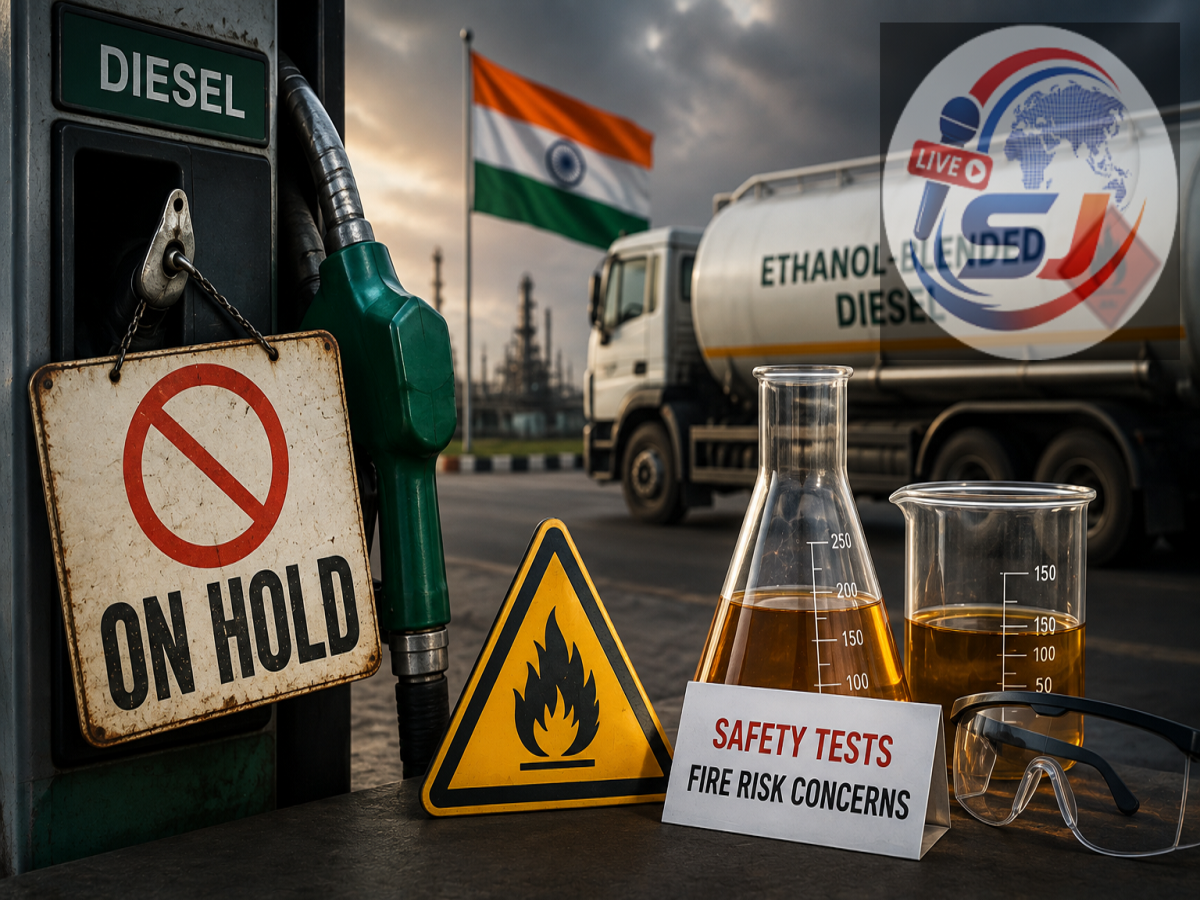
Ethanol Diesel Blending Update: The Indian government has decided not to move ahead with ethanol blending in diesel after technical evaluations raised concerns over fuel safety. Tests conducted by public sector oil marketing companies found that adding ethanol significantly reduced diesel’s flash point, preventing the blended fuel from meeting the required specifications.
The development comes at a time when ethanol blending in conventional fuels has attracted considerable attention in India. While ethanol-blended petrol is already a major part of the country's alternative fuel strategy, extending a similar approach to diesel has encountered an important technical hurdle.
Minister of State for Petroleum and Natural Gas Suresh Gopi informed the Rajya Sabha that different ethanol-diesel combinations had been scientifically evaluated. The results, however, were not considered satisfactory enough to proceed with broader implementation.
Government Clarifies Position on Ethanol-Diesel Blending
Public sector oil marketing companies carried out research into the possibility of mixing ethanol with diesel through their respective research and development facilities.
These evaluations were not conducted in isolation. Accredited laboratories and automobile manufacturers were also involved in examining how the fuel mixture performed under required parameters.
One of the most significant problems detected during the testing process involved the flash point of diesel.
According to the government's explanation in Parliament, the presence of ethanol caused the flash point of diesel to fall sharply. As a result, the blended product could not meet the prescribed flash-point specifications applicable to diesel fuel.
Considering these findings, the government has ruled out moving ahead with ethanol blending in diesel under the present conditions.
What Is Flash Point and Why Does It Matter?
Flash point is an important safety characteristic of a fuel. In simple terms, it refers to the lowest temperature at which a liquid can produce sufficient vapour to form an ignitable mixture with air.
A substantial reduction in flash point can make a fuel easier to ignite under certain circumstances.
This becomes particularly important because diesel must pass through several stages before reaching a vehicle. It is stored at refineries and terminals, transported through fuel distribution networks, kept at filling stations and ultimately handled by consumers.
If a blended fuel has a considerably lower flash point than required under existing specifications, it can create additional challenges involving storage, transportation and handling.
Therefore, the government's decision is not simply about whether ethanol can physically be mixed with diesel. The resulting fuel must also satisfy established technical and safety requirements before it can be considered suitable for widespread commercial use.
Oil Companies Conducted Detailed Evaluations
The government's response indicates that ethanol-diesel blending had undergone scientific assessment rather than being rejected without testing.
Public sector OMCs examined different blending combinations through their research and development centres. The testing process also involved accredited laboratories and automobile manufacturers, providing an opportunity to assess the fuel from different technical perspectives.
However, the flash-point issue emerged as a major obstacle.
Because the ethanol-blended diesel did not meet the required specification, authorities have decided against proceeding with its wider introduction.
The decision means motorists should not expect ethanol-blended diesel to become a standard fuel at Indian filling stations based on the current test results.
Ethanol-Blended Petrol Remains a Different Programme
The decision concerning diesel should not be confused with India's existing ethanol-blended petrol programme.
Ethanol blending with petrol has been promoted as part of India's broader energy strategy. The programme is intended to reduce dependence on imported crude oil, support domestic ethanol production and encourage the use of alternative fuel sources.
Diesel, however, has different technical characteristics from petrol. A blending formula that works for one type of fuel cannot automatically be applied to another.
That distinction is important because discussions surrounding ethanol have intensified as its share in petrol has increased. The latest statement in Parliament makes it clear that ethanol-diesel blending faces a separate set of technical requirements and, based on the tests conducted so far, has not cleared a key safety parameter.
What Does the Decision Mean for Diesel Vehicle Owners?
For diesel vehicle users, there is no immediate change resulting from the ethanol-blending discussions.
The government's current position means ethanol-blended diesel will not be rolled out as a regular fuel unless the technical and safety concerns identified during testing are adequately addressed.
Diesel vehicle owners can therefore continue using fuel available under the existing specifications without expecting an ethanol component to be introduced because of these trials.
The announcement is also significant for commercial transport operators, truck owners, agricultural users and industries that depend heavily on diesel.
Any large-scale modification to diesel composition could potentially have implications for engines, fuel systems, storage facilities and distribution infrastructure. Technical evaluation therefore becomes essential before a new blend can be introduced across the country.
Why the Government's Decision Is Significant
India has been trying to diversify its energy mix while reducing its dependence on imported fossil fuels. Ethanol has become an important part of that strategy, particularly through its use in petrol.
Expanding ethanol use to diesel could theoretically have opened another major market for the alternative fuel. However, the latest tests demonstrate that increasing the use of biofuels also requires meeting strict performance and safety standards.
The government's position suggests that fuel safety will remain a key consideration before any new blending programme is introduced.
For now, ethanol blending in diesel is off the table because the tested blends failed to satisfy the required flash-point specification. Unless future research produces a technically viable solution that meets the necessary standards, conventional diesel will continue without the proposed ethanol component.
The development also highlights a broader point about India's transition towards alternative fuels: new technologies and fuel combinations may offer potential benefits, but large-scale adoption will depend on whether they can meet safety, performance and compatibility requirements.