
Why Do Devotees Avoid Seeing the Moon on Ganesh Chaturthi? Know the Story Behind the Tradition
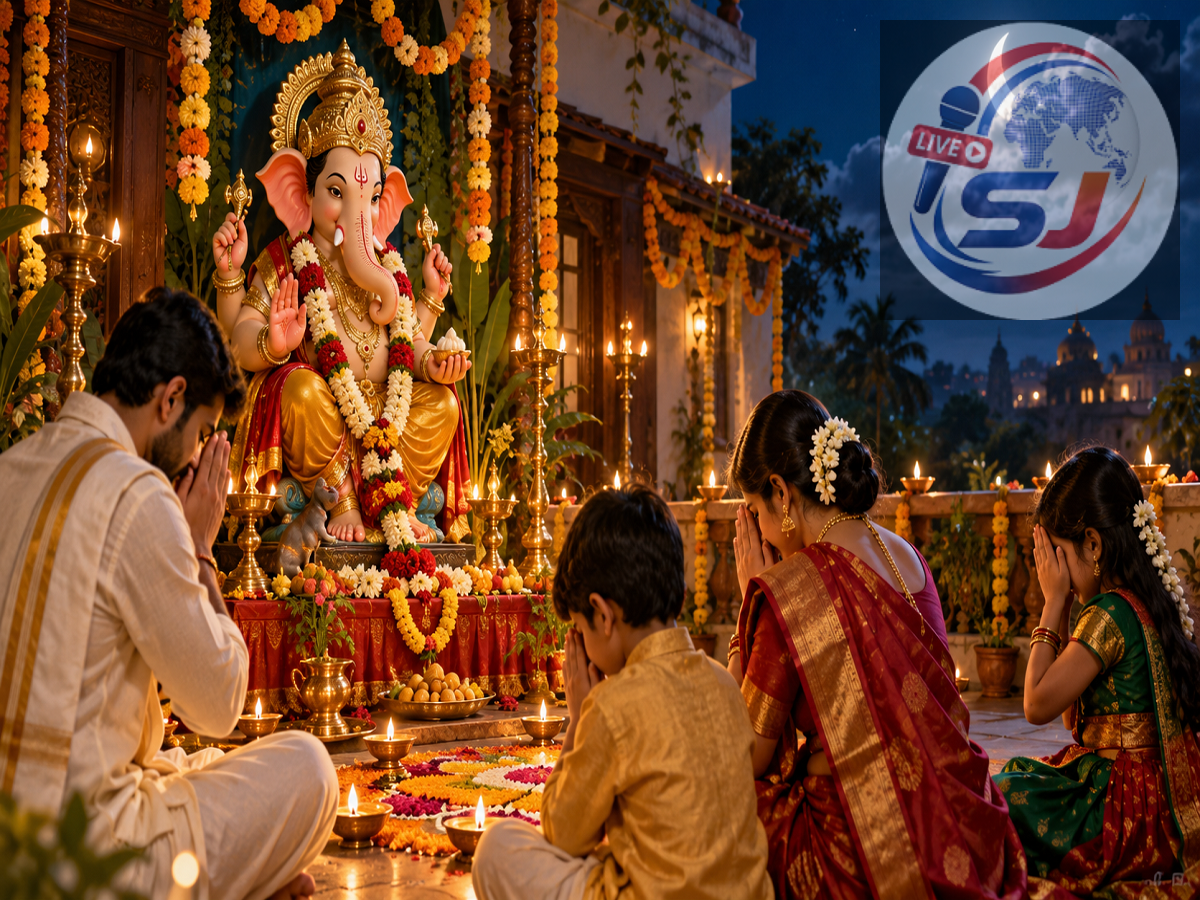
Ganesh Chaturthi is one of India’s most widely celebrated religious festivals. Dedicated to Lord Ganesha, the deity traditionally associated with wisdom, prosperity and the removal of obstacles, the occasion marks the beginning of Ganeshotsav.
Devotees install Ganesha idols in homes and community pandals, perform prayers, offer modaks and participate in cultural programmes. While many celebrations continue for ten days until Anant Chaturdashi, some families immerse the idol after one-and-a-half, three, five or seven days according to local and family customs.
One unusual tradition connected with Ganesh Chaturthi advises devotees not to look at the moon during a specified period. The practice originates from a Hindu mythological story and the belief that moon sighting on this particular occasion may cause “Mithya Dosha,” or the misfortune of facing a false accusation.
When is Ganesh Chaturthi in 2026?
Ganesh Chaturthi will be observed on Monday, September 14, 2026. The festival falls on Shukla Paksha Chaturthi in the Hindu month of Bhadrapada.
According to commonly cited Panchang calculations, the Chaturthi Tithi begins at approximately 7:06 am on September 14 and ends at about 7:44 am on September 15. The commonly reported Madhyahna Ganesha Puja Muhurat is from around 11:02 am to 1:31 pm.
Ganesh Visarjan on Anant Chaturdashi will be observed on Friday, September 25, 2026. Ganesh Chaturthi 2026 calendar
Puja and moon-avoidance timings can differ between cities because Panchang calculations depend on location, sunrise, sunset and local lunar movements. Devotees should therefore confirm the exact time for their city through a trusted local Panchang or priest.
Why is seeing the moon considered inauspicious?
The custom is connected to a traditional story involving Lord Ganesha and Chandra Dev, the moon deity.
According to one popular version, Lord Ganesha was travelling on his small mouse vehicle when he stumbled and fell. Chandra, proud of his beauty and brilliance, reportedly laughed after seeing Ganesha’s appearance and the unusual contrast between the deity and his tiny vehicle.
Ganesha considered this laughter an expression of arrogance and disrespect. He is then said to have cursed the moon, declaring that anyone who saw it on Bhadrapada Shukla Chaturthi could suffer Mithya Dosha.
In religious tradition, Mithya Dosha does not necessarily mean that the person has committed an offence. It represents the possibility of being wrongly suspected, falsely accused or subjected to undeserved criticism and damage to reputation.
Some versions of the story say that Chandra later realised his mistake and sought forgiveness. Ganesha reduced the effect of the curse but retained the restriction associated with the Chaturthi Tithi. This became the basis for the custom of avoiding moon sighting on Ganesh Chaturthi.
The story is understood as a lesson against mocking another person’s appearance and allowing beauty, status or talent to produce arrogance.
How is Lord Krishna connected to this belief?
Another well-known legend links the moon-sighting tradition with Lord Krishna and the Syamantaka jewel.
According to the story, Krishna once saw the moon on Ganesh Chaturthi and later became the target of a false allegation involving the valuable Syamantaka Mani. The jewel had belonged to Satrajit and was associated with prosperity and extraordinary powers.
When Satrajit’s brother Prasena went hunting while wearing the jewel and failed to return, suspicion fell on Krishna. Determined to clear his name, Krishna followed the trail and discovered that Prasena had been killed by a lion. The lion had subsequently been defeated by Jambavan, who had taken the jewel to his cave.
After a long encounter, Jambavan recognised Krishna and returned the Syamantaka jewel. Krishna then took it back and established that the accusation against him had been false.
The episode is traditionally associated with the effect of Mithya Dosha. Devotees believe that listening to or reading the Syamantaka jewel story can help counter the symbolic consequences of accidentally seeing the moon.
What should you do if you accidentally see the moon?
Religious traditions generally advise devotees not to panic if they unintentionally see the moon. Different regions and families follow different remedies.
Common practices include:
-
Offering prayers to Lord Ganesha
-
Reading or listening to the Syamantaka Mani story
-
Performing Ganesh Puja with sincerity
-
Chanting a traditional verse connected with the episode
-
Seeking forgiveness for an accidental moon sighting
A verse commonly recited in this context is:
Simhah Prasenam Avadhit, Simho Jambavata Hatah;
Sukumaraka Ma Rodis, Tava Hyesha Syamantakah.
The verse briefly recalls the chain of events involving Prasena, the lion, Jambavan and the Syamantaka jewel. Its recitation is a matter of religious faith and family tradition rather than a scientifically established remedy.
How long should devotees avoid the moon?
The moon-avoidance period is calculated according to the Chaturthi Tithi and local moonset. It is not always limited to the hours after sunset.
For Jaipur, one Panchang calculation lists the suggested moon-avoidance period on September 14, 2026, from approximately 9:09 am to 8:13 pm. The same source gives the city-specific Madhyahna Puja time as 11:08 am to 1:36 pm. Jaipur Ganesh Chaturthi timings
Since local timings vary, readers should not apply the schedule of one city to every location.
A tradition carrying a wider message
The practice of avoiding the moon on Ganesh Chaturthi is based on faith, mythology and inherited custom. Beyond the literal restriction, the associated story communicates a broader moral lesson: physical appearance should not become a reason for ridicule, and pride can lead to undesirable consequences.
For devotees, observing the tradition is an expression of respect for Lord Ganesha and the cultural practices associated with the festival. Families may follow it differently, but devotion, humility and responsible celebration remain at the heart of Ganeshotsav.
Disclaimer: This article is based on religious beliefs, mythological accounts and traditional Panchang interpretations. Timings can vary by location. Readers should consult a trusted local Panchang or religious scholar before observing any ritual.