
Vastu Tips for Main Entrance: These Plants Are Believed to Bring Positivity, Peace and Prosperity to Your Home
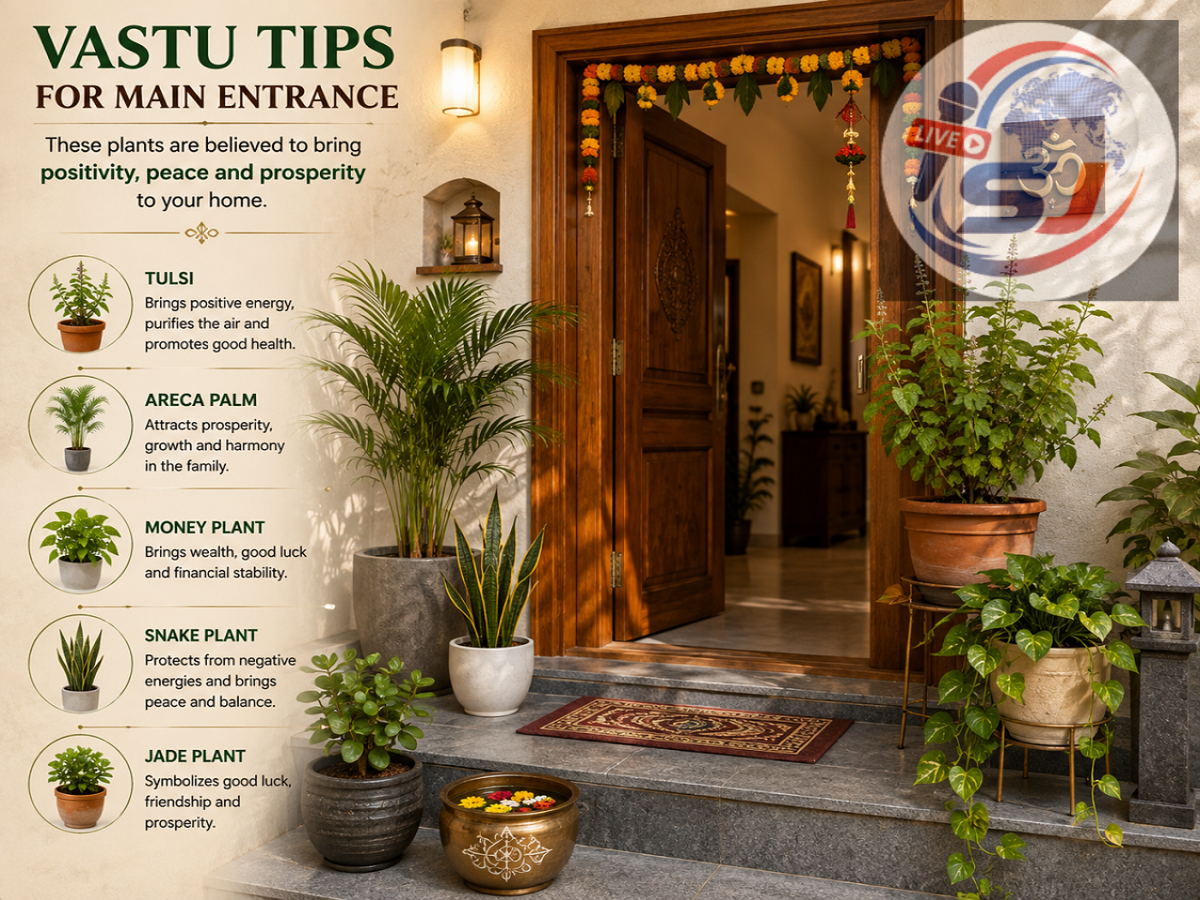
The main entrance of a house has special significance in Vastu Shastra. According to traditional Vastu beliefs, the entrance is not merely a way to enter or leave the home; it is also considered an important point through which energy flows into the living space. This is why people often pay attention to the direction, cleanliness, lighting and decoration of their main door.
Plants are also commonly used around the entrance to create a welcoming atmosphere. Vastu traditions associate certain plants with positivity, prosperity and harmony, while some are believed to be less suitable for placement near the main door.
Apart from these beliefs, healthy green plants can naturally make an entrance look fresher and more attractive. Here are some plants traditionally considered suitable for the main entrance and what you should know before choosing them.
1. Tulsi Plant
Tulsi, or holy basil, holds an important place in many Indian households. According to traditional Vastu beliefs, keeping a healthy Tulsi plant near the entrance can help create a positive and peaceful environment.
The plant should ideally be kept in a clean and well-maintained spot where it receives sufficient sunlight. A dried or neglected Tulsi plant should not be left at the entrance for long.
Since Tulsi requires regular care, make sure the location receives appropriate light and that excess water can drain properly.
2. Money Plant
Money plant is another popular choice for homes. As its name suggests, it is traditionally associated with financial growth and prosperity.
According to Vastu beliefs, a healthy money plant near the entrance may represent growth and abundance. However, the plant should not be allowed to become dry, damaged or excessively tangled.
Money plants can grow in soil as well as water, making them relatively easy to maintain. Their trailing leaves can also enhance the appearance of an entrance.
3. Jade Plant
The jade plant has become increasingly popular in modern homes because of its compact size and attractive green leaves.
In traditional Vastu and Feng Shui practices, jade is commonly associated with prosperity, good fortune and financial stability. It can be placed near the entrance in a suitable pot, provided the area receives enough light for the plant to remain healthy.
Its small size also makes it convenient for apartments where there may not be much space around the front door.
4. Areca Palm
If there is sufficient space near the main entrance, an areca palm can add greenery without making the area look overcrowded.
Vastu traditions often associate green, healthy plants with positive energy and balance. The areca palm's soft foliage can also make an entrance appear more welcoming.
However, its practical requirements should come first. Make sure the plant receives suitable light and is not placed where it obstructs the doorway.
5. Lucky Bamboo
Lucky bamboo is frequently used as a decorative indoor plant and is traditionally associated with good fortune, growth and positive energy.
Its compact appearance makes it suitable for smaller entrances, shelves or console tables close to the front door.
If kept in water, the container should be cleaned regularly and the water changed when necessary. A neglected plant or dirty container can make the entrance look untidy, which goes against the broader Vastu emphasis on cleanliness.
6. Jasmine
Fragrant flowering plants such as jasmine can also be considered for an entrance where growing conditions are suitable.
Jasmine is traditionally associated with pleasantness, purity and a peaceful environment. Its fragrance can make the area around the entrance more inviting.
However, sunlight requirements vary depending on the variety, so choose the placement according to the plant's actual growing needs rather than Vastu considerations alone.
Should Thorny Plants Be Kept Near the Main Door?
Traditional Vastu recommendations generally advise against keeping thorny or sharply pointed plants immediately around the main entrance.
Cactus and similar thorny varieties are sometimes believed to represent tension or obstacles when placed near the entryway.
There is no scientific evidence that thorny plants create negative energy. From a practical perspective, however, keeping plants with sharp thorns away from a frequently used doorway can reduce the possibility of accidental scratches or injuries.
Avoid Dry and Dead Plants
One of the most frequently mentioned Vastu principles regarding plants is to avoid keeping dead, dried or badly damaged plants at the entrance.
A healthy plant represents growth in traditional symbolism, while a dried plant is often associated with stagnation.
There is also a straightforward aesthetic reason for removing dead plants. The main entrance creates the first impression of a home, and healthy greenery generally looks more welcoming than neglected pots and dried leaves.
Do Not Block the Entrance With Too Many Plants
Adding plants does not mean filling every available space with pots. The entrance should remain open, clean and easy to access.
Large planters should not obstruct the door, walkway, stairs or emergency access. Smaller homes can use compact plants or vertical arrangements instead.
The goal should be to create a pleasant entrance without making the area crowded.
Keep the Main Entrance Bright and Clean
Vastu traditions place considerable importance on cleanliness around the front door. Dusty pots, stagnant water, fallen leaves and broken planters should therefore be avoided.
Regularly remove dried leaves, clean the surrounding floor and ensure that water does not collect in plant trays. This is particularly important during the monsoon because stagnant water can become a breeding ground for mosquitoes.
Adequate lighting can further improve the appearance of the entrance, especially during the evening.
Which Plant Is Best for Your Main Entrance?
Tulsi, money plant, jade, lucky bamboo, jasmine and areca palm are among the plants commonly considered favourable under different traditional beliefs. However, the best choice ultimately depends on the amount of sunlight, available space and your ability to maintain the plant.
It is also important to remember that claims about plants attracting wealth, luck or positive energy are based on traditional Vastu beliefs and are not scientifically proven.
Even without those beliefs, adding healthy plants to the entrance can make a home look greener, cleaner and more welcoming. The most useful rule is therefore simple: choose plants suited to the location, care for them properly and keep the main entrance uncluttered and well maintained.