
Solar Eclipse August 2026: Is It on August 12 or 13? Check Date, Visibility in India and Key Details
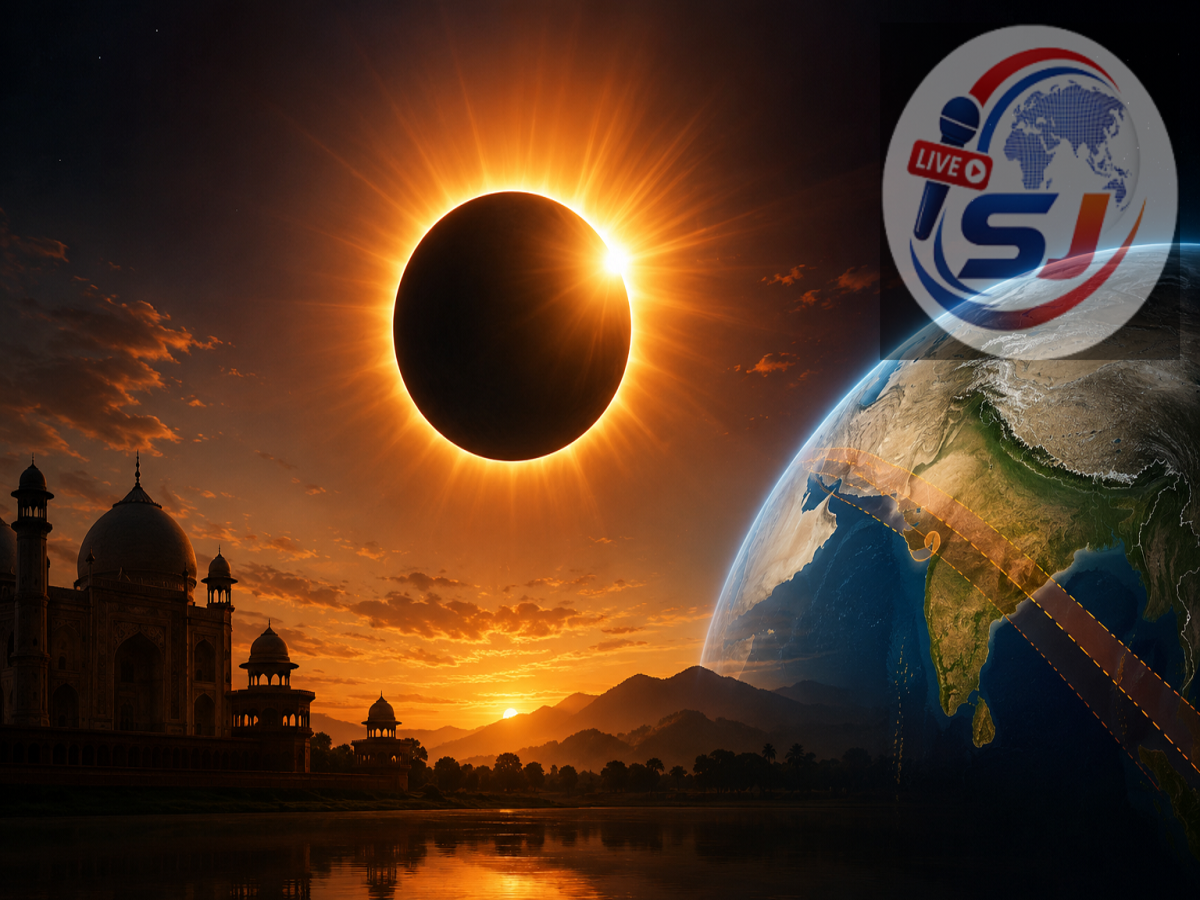
A major astronomical event is set to take place this week as a total solar eclipse occurs on August 12, 2026. The celestial event is expected to attract considerable attention from skywatchers because people in several parts of Europe and the North Atlantic region will be able to witness the Sun being completely covered by the Moon.
However, there is some confusion over whether the solar eclipse falls on August 12 or August 13. This is largely because the eclipse will continue past midnight according to Indian Standard Time (IST). While the main event takes place on August 12, some of its final stages extend into the early hours of August 13 in India.
Here is a detailed look at the date of the August 2026 solar eclipse, where it will be visible and whether people in India will get an opportunity to watch it.
When Is the Solar Eclipse in August 2026?
The total solar eclipse will take place on Wednesday, August 12, 2026. Therefore, August 12 is considered the official date of the astronomical event.
The confusion surrounding August 13 is related to differences in time zones. According to Indian time, the eclipse's later phases may continue beyond midnight and enter August 13.
This does not mean that two separate solar eclipses will occur on consecutive days. It is a single astronomical event whose timing crosses over into the next calendar date in some parts of the world.
Will the August 12 Solar Eclipse Be Visible in India?
People in India will not be able to directly witness the August 12 total solar eclipse. India does not fall within the geographical region from which this eclipse will be visible.
This means skywatchers in cities such as Delhi, Mumbai, Jaipur, Kolkata, Bengaluru, Chennai and Hyderabad will not see the Sun being covered by the Moon during this particular event.
Those interested in following the eclipse can instead look for live broadcasts or online streams from astronomical organisations and observatories located in regions where the event is visible.
Where Will the Total Solar Eclipse Be Visible?
The August 2026 eclipse will be visible from selected regions across the Northern Hemisphere.
The total phase is expected to be observable from areas including Greenland, Iceland and parts of Spain, while different stages of the eclipse will also be visible across other parts of Europe and nearby regions.
Locations that fall within the path of totality will offer the most dramatic view. During totality, the Moon completely blocks the bright surface of the Sun for a brief period, causing daylight to dim significantly.
Areas outside the path of totality may experience a partial eclipse, depending on their geographical location.
Why Does a Total Solar Eclipse Occur?
A solar eclipse happens when the Moon passes between Earth and the Sun. When the alignment is precise enough, the Moon blocks some or all of the Sun from the perspective of observers on Earth.
During a total solar eclipse, the Moon appears to cover the Sun completely for observers positioned within a relatively narrow path on Earth's surface. This region is known as the path of totality.
People outside this path may see only part of the Sun covered, resulting in a partial solar eclipse.
Although solar eclipses occur periodically, total eclipses are relatively rare for any specific location because the path of totality covers only a limited portion of Earth.
Why Are August 12 and August 13 Both Being Mentioned?
The difference is primarily due to time zones.
The eclipse officially occurs on August 12, 2026, but when its stages are converted into Indian Standard Time, the event can extend beyond midnight into August 13.
Therefore, people searching for the eclipse date may encounter both dates online. The important point is that the total solar eclipse is associated with August 12, 2026, while August 13 appears in India-based timing references because some later stages occur after midnight.
Is It Safe to Look Directly at a Solar Eclipse?
Anyone travelling to a location where the eclipse is visible should follow proper eye-safety precautions.
Looking directly at the Sun during the partial phases of a solar eclipse can seriously damage the eyes. Regular sunglasses are not designed to provide adequate protection. Viewers should use certified solar-viewing glasses or another approved solar observation method.
Special precautions are also necessary when using cameras, binoculars or telescopes because concentrated sunlight can cause severe eye injury and may also damage optical equipment.
What Should Skywatchers in India Know?
For viewers in India, the key takeaway is simple: the much-discussed total solar eclipse will take place on August 12, 2026, but it will not be directly visible from the country.
The mention of August 13 is due to the eclipse timeline extending past midnight in Indian Standard Time, rather than the occurrence of another eclipse.
While Indian skywatchers will miss the direct spectacle, the event can still be followed through live coverage from locations such as Iceland, Greenland, Spain and other regions where the eclipse is visible.