
Shardiya Navratri 2026: October 10 or 11? Check Correct Date and Ghatasthapana Muhurat
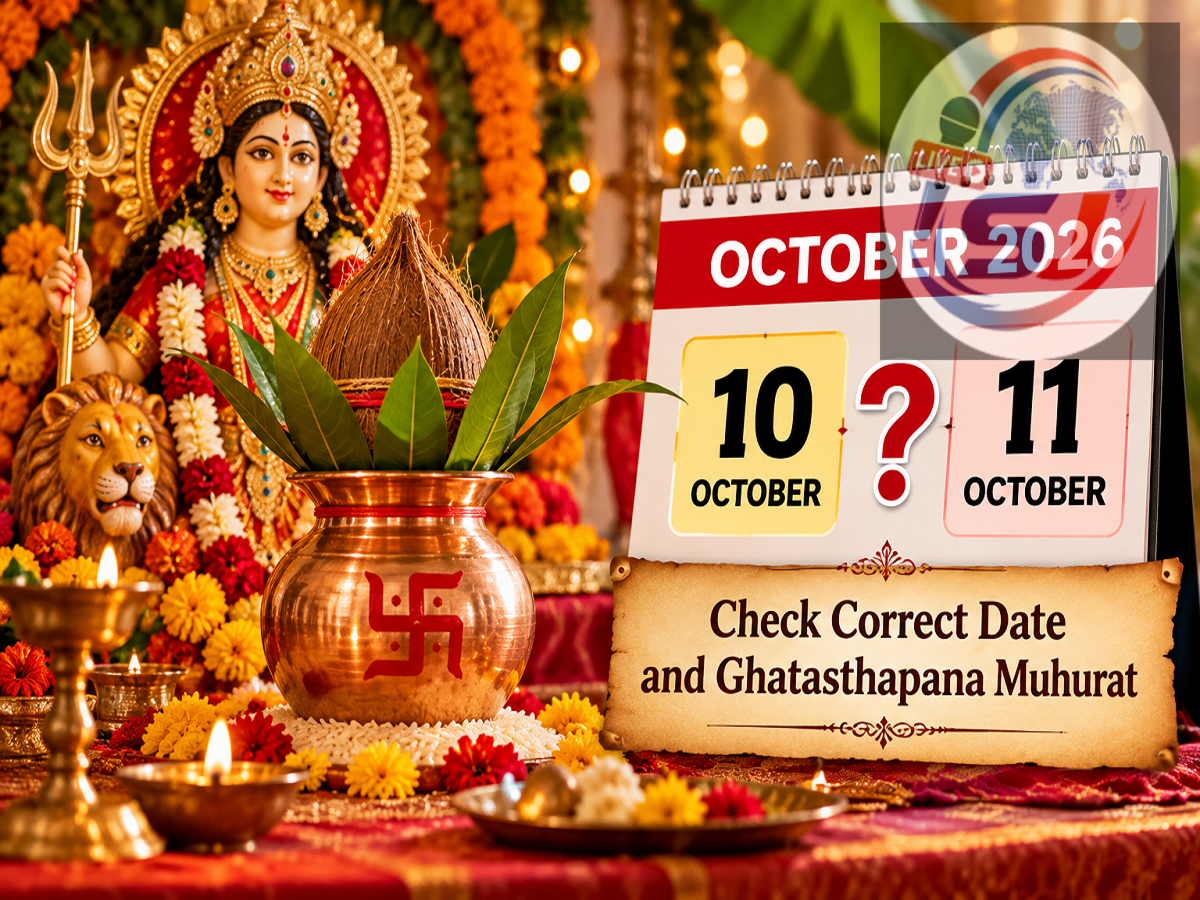
With Shardiya Navratri 2026 approaching, many devotees are confused about whether the nine-day festival begins on October 10 or October 11. The confusion arises because the Pratipada Tithi starts on the night of October 10 but continues into the following day.
According to the Panchang details cited in the source, Shardiya Navratri will begin on Sunday, October 11, 2026. Ghatasthapana, also known as Kalash Sthapana, will therefore be performed on October 11.
Navratri is traditionally observed during the Shukla Paksha of the Ashwin month and is dedicated to the worship of different forms of Goddess Durga. Religious practices and timings can vary by tradition and location, so devotees may also follow the Panchang or guidance used by their family or local temple.
Why Is There Confusion Between October 10 and 11?
The confusion is mainly connected to the timing of Pratipada Tithi.
According to the Drik Panchang timings cited in the report, Ashwin Shukla Pratipada begins at approximately 9:19 PM on October 10 and continues until 9:30 PM on October 11.
Since Pratipada prevails at sunrise on October 11, the source applies the Udaya Tithi convention and considers October 11 as the first day of Shardiya Navratri.
So, although Pratipada technically begins on the night of October 10, the festival's first-day observances and Ghatasthapana are scheduled for October 11 according to the cited Panchang.
Shardiya Navratri 2026 Ghatasthapana Muhurat
Ghatasthapana is one of the main rituals performed on the first day of Navratri.
According to the timings cited in the source, the main Ghatasthapana window on October 11, 2026 will be:
Ghatasthapana Muhurat: 6:19 AM to 10:12 AM
This provides devotees with a window of nearly four hours for performing Kalash Sthapana.
The report also lists an Abhijit Muhurat from 11:44 AM to 12:31 PM.
These timings are based on the Panchang referenced by the source. Muhurat calculations can differ by location, sunrise time and Panchang tradition, so devotees may wish to confirm the locally applicable timing before performing the ritual.
When Are Maha Ashtami and Maha Navami?
The source says Maha Ashtami will be observed on October 18, 2026.
According to its cited Panchang details, Ashtami Tithi continues until 10:51 AM on October 19, after which Navami begins.
The transition between Ashtami and Navami is significant in several Navratri traditions, particularly for rituals such as Sandhi Puja, Kanya Pujan and Havan.
For Maha Navami Havan on October 19, the source gives a timing of approximately 11:44 AM to 12:30 PM.
Devotees should remember that the precise timing of individual rituals can depend on the religious tradition being followed and the location-specific Panchang.
How Is Ghatasthapana Traditionally Performed?
According to the religious practice described in the source, devotees begin by cleaning the place where the Kalash and Goddess Durga will be worshipped.
The northeast direction of the home is traditionally considered suitable for setting up the worship space. Devotees may sprinkle Gangajal as part of the purification ritual.
A wooden platform is then traditionally covered with a clean red cloth, after which an idol or picture of Goddess Durga may be placed on it.
A wide earthen container is prepared separately with clean soil. Barley seeds are spread over the soil, covered lightly with another layer and sprinkled with water.
The Kalash is then established according to the family's religious customs and the Navratri worship begins.
These steps represent traditional religious practices rather than scientific requirements, and customs may differ between regions and families.
Why Is Ghatasthapana Important During Navratri?
In Hindu religious tradition, Ghatasthapana marks the formal beginning of Navratri worship.
Devotees establish the Kalash and begin nine days of prayers and rituals dedicated to different forms of Goddess Durga.
Many people also observe fasting, perform daily aarti and recite prayers or sacred texts during this period. The exact customs followed during Navratri can vary significantly across different parts of India.
Shardiya Navratri 2026: Important Dates at a Glance
| Event | Date/Time Cited in Source |
|---|---|
| Pratipada begins | October 10, 9:19 PM |
| Pratipada ends | October 11, 9:30 PM |
| Shardiya Navratri begins | October 11, 2026 |
| Main Ghatasthapana Muhurat | 6:19 AM–10:12 AM |
| Abhijit Muhurat | 11:44 AM–12:31 PM |
| Maha Ashtami | October 18, 2026 |
| Ashtami continues until | October 19, 10:51 AM |
| Maha Navami observances | October 19, 2026 |
| Navami Havan timing cited | 11:44 AM–12:30 PM |
October 10 or 11: What's the Final Date?
According to the Panchang information cited in the source, Shardiya Navratri 2026 begins on October 11, not October 10.
The reason October 10 also appears in discussions is that Pratipada Tithi begins that night at 9:19 PM. Since the Tithi continues through sunrise on October 11, the Udaya Tithi convention cited in the report places the first day of Navratri on Sunday, October 11.
Devotees planning Ghatasthapana can note the main cited window of 6:19 AM to 10:12 AM on October 11, with the Abhijit Muhurat listed from 11:44 AM to 12:31 PM.
As Panchang and Muhurat calculations can vary according to location and tradition, devotees may also confirm the timing applicable to their city before performing time-specific rituals.