
Ravan Dahan History: How Did Burning Ravana's Effigy Become a Dussehra Tradition? Know the Story Behind It
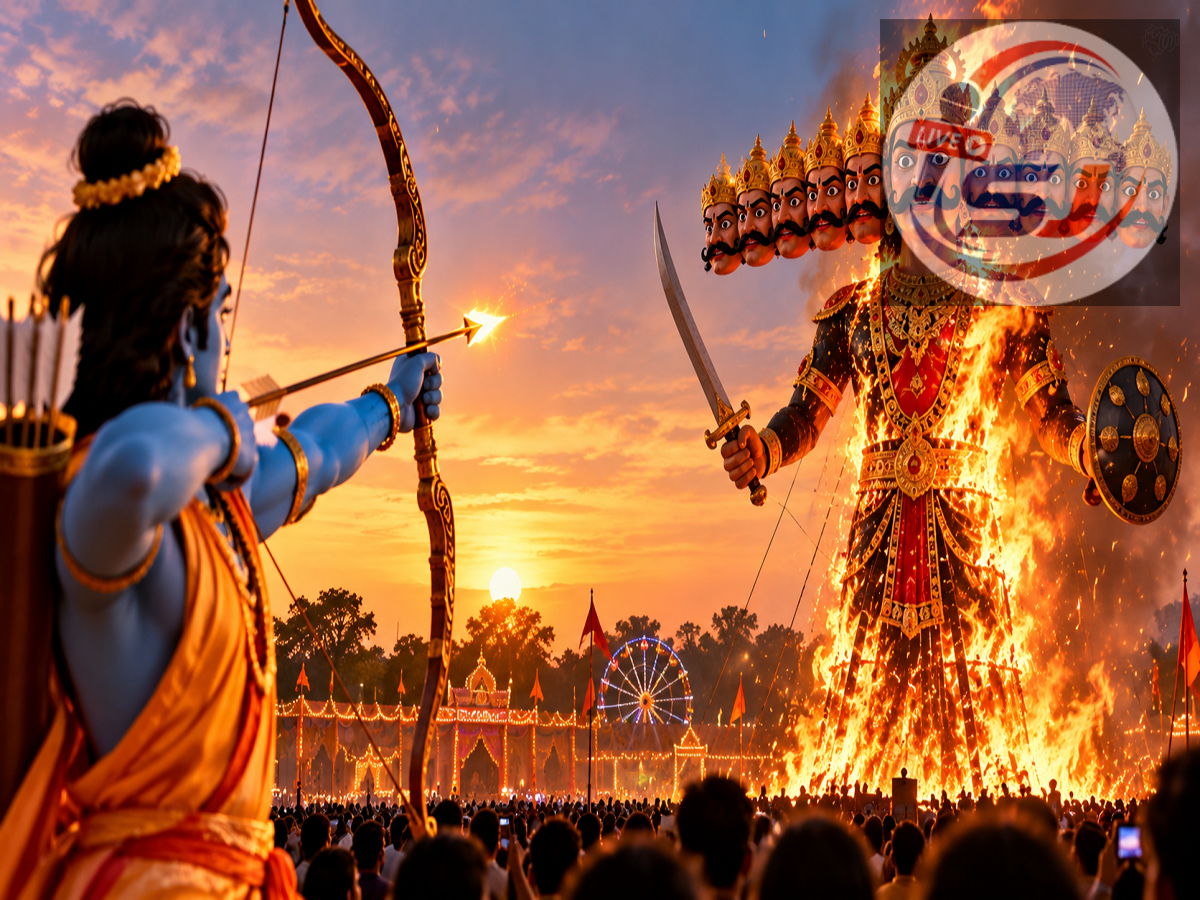
Ravan Dahan History 2026: Dussehra, also known as Vijayadashami, is being celebrated across India on Tuesday, October 20, 2026. The festival marks the victory of good over evil and holds deep religious and cultural significance in Hindu traditions. Every year, large crowds gather at public grounds to witness the burning of towering effigies of Ravana, Kumbhakarna and Meghnad, often accompanied by spectacular fireworks and performances of the Ramayana.
However, an interesting question surrounds this centuries-old celebration: When did the tradition of Ravan Dahan actually begin, and how did it become such a popular part of Dussehra festivities?
Although the burning of Ravana's effigy is closely connected with Lord Rama's victory over the king of Lanka, historians have not established a single date or location where the custom first originated.
Over time, public Ramleela performances, regional religious practices and community celebrations helped transform Ravan Dahan into one of the most recognisable traditions associated with Vijayadashami.
The festival also celebrates Goddess Durga's victory over Mahishasura, giving Dussehra a broader spiritual meaning beyond the Ramayana.
When Did the Tradition of Ravan Dahan Begin in India?
The precise historical origin of Ravan Dahan remains uncertain.
There is no universally accepted historical record identifying the first occasion on which an effigy of Ravana was publicly burned as part of Dussehra celebrations.
Researchers and cultural historians generally associate the development of this tradition with the growing popularity of Ramleela performances and community-based religious festivals.
Ramleela, which presents episodes from Lord Rama's life through theatrical performances, gradually became an important part of religious and cultural life in several regions of northern India.
As these performances became more elaborate, the defeat of Ravana began to be represented through dramatic public celebrations.
Burning an effigy provided a powerful visual symbol of the destruction of evil and the triumph of righteousness.
Local communities, traditional performers, religious organisations and regional rulers contributed to the development of different Dussehra customs.
As a result, Ravan Dahan evolved gradually rather than emerging from one clearly documented historical event.
How Did Ravan Dahan Become Popular Across the Country?
The increasing popularity of Ramleela played an important role in spreading Dussehra celebrations.
Public performances allowed people to experience the story of Lord Rama through dialogue, music, costumes and dramatic scenes.
The final episode, depicting Ravana's defeat, became a major attraction.
Over time, communities began constructing increasingly elaborate effigies of Ravana, Kumbhakarna and Meghnad.
These structures were displayed in open grounds and burned during the concluding celebrations.
The participation of local communities helped turn Dussehra into a large public festival.
Traditional royal patronage also supported major Dussehra celebrations in different regions, although not all such celebrations included the same effigy-burning customs.
Did the Partition of India Influence Dussehra Celebrations?
The Partition of India in 1947 brought significant population movements and cultural changes.
Families relocating to new cities carried their religious practices, festivals and community traditions with them.
In several urban areas, migrant communities helped establish or expand Ramleela performances and public Dussehra celebrations.
These developments contributed to the visibility of Ravan Dahan in some places.
However, the tradition existed before Partition, and it would be historically inaccurate to suggest that public effigy burning began only after 1947.
Its development reflects a much longer process involving regional customs and changing forms of community celebration.
Why Is Ravana's Effigy Burned on Dussehra?
Ravan Dahan is rooted in the story of Lord Rama and Ravana as narrated in the Ramayana tradition.
According to the epic, Ravana was the powerful ruler of Lanka.
He possessed considerable knowledge and strength, but his pride and actions ultimately led to his downfall.
The central conflict began when Ravana abducted Sita, the wife of Lord Rama.
Rama then set out to rescue her, receiving assistance from his brother Lakshmana, Lord Hanuman and the Vanara army.
After a major battle in Lanka, Rama defeated Ravana and rescued Sita.
The victory is traditionally interpreted as the triumph of dharma, or righteousness, over adharma, meaning injustice and wrongdoing.
The burning of Ravana's effigy symbolically represents the destruction of arrogance, greed, anger and other negative qualities.
For devotees, the ritual serves as a reminder that power and knowledge should be accompanied by humility and ethical conduct.
Why Are Kumbhakarna and Meghnad Effigies Also Burned?
During many Dussehra celebrations, three large effigies are placed together.
These commonly represent Ravana, his brother Kumbhakarna and his son Meghnad, also known as Indrajit.
All three figures play significant roles in the Ramayana's account of the battle in Lanka.
Kumbhakarna is remembered for his extraordinary physical strength, while Meghnad is portrayed as a formidable warrior.
Their effigies are burned alongside Ravana's in many regional traditions to symbolise the defeat of the forces opposing Lord Rama.
However, not every Dussehra celebration follows the same format.
Some communities burn only Ravana's effigy, while others organise different religious performances or rituals.
What Is the Connection Between Dussehra and Goddess Durga?
Although Ravan Dahan is closely associated with Lord Rama, Vijayadashami also has a strong connection with Goddess Durga.
According to Hindu religious traditions, Goddess Durga fought the demon Mahishasura, who had become a threat to divine and cosmic order.
The battle is traditionally associated with the nine nights of Navratri.
The goddess ultimately defeated Mahishasura, symbolising the victory of divine power over destructive forces.
This is why Vijayadashami is also regarded as a celebration of strength, courage and justice.
The two traditions emphasise a similar spiritual message: righteousness ultimately prevails over evil.
In many parts of eastern India, particularly West Bengal, Vijayadashami is associated with bidding farewell to Goddess Durga following the conclusion of Durga Puja.
Devotees participate in traditional rituals and idol immersion ceremonies, marking the end of the festival.
Dussehra and Durga Puja: How Are the Celebrations Different?
Although both festivals are connected with Vijayadashami, their customs differ across regions.
| Aspect |
Ravan Dahan Tradition |
Durga Vijay Tradition |
|---|---|---|
| Main religious association |
Lord Rama's victory over Ravana |
Goddess Durga's victory over Mahishasura |
| Major symbolic message |
Triumph of righteousness over arrogance and injustice |
Victory of divine strength over evil |
| Common celebrations |
Ramleela, effigy burning and public gatherings |
Durga Puja, prayers and idol immersion |
| Prominent regions |
Many parts of northern India |
West Bengal and several eastern regions |
| Festival conclusion |
Symbolic destruction of Ravana |
Farewell rituals and Durga Visarjan |
Both traditions celebrate the triumph of good over evil, even though their stories and rituals are different.
How Is Dussehra Celebrated in Different Parts of India?
Dussehra celebrations reflect India's diverse cultural traditions.
In Delhi, Uttar Pradesh and several northern states, Ramleela performances and public effigy burning are major attractions.
In Mysuru, Karnataka, the festival is celebrated through grand processions and royal traditions associated with the worship of Goddess Chamundeshwari.
In West Bengal, Vijayadashami marks the conclusion of Durga Puja, with devotees participating in farewell ceremonies and idol immersion.
Kullu Dussehra in Himachal Pradesh is known for its distinctive religious gatherings and processions involving local deities.
These regional variations show that Dussehra is not limited to a single ritual or celebration style.
The festival has developed through different historical, cultural and religious traditions.
What Do the Ten Heads of Ravana Symbolise?
Ravana is traditionally depicted with ten heads, making his image one of the most recognisable symbols of the Ramayana.
Different religious interpretations associate these heads with various aspects of knowledge, personality and human behaviour.
In popular moral explanations, they are sometimes linked with negative qualities such as anger, greed, pride, jealousy and attachment.
However, these interpretations vary between traditions and should not be treated as a single universally accepted scriptural explanation.
For many devotees, the burning of Ravana's ten-headed effigy represents the need to overcome destructive tendencies within oneself.
This gives the celebration a personal and ethical dimension beyond its public spectacle.
Why Does Ravan Dahan Still Hold Cultural Importance?
Ravan Dahan continues to attract large gatherings because it combines religious storytelling, theatre, community participation and cultural heritage.
For many families, attending a Ramleela or watching the effigy-burning ceremony is an annual tradition.
Children learn about characters from the Ramayana, while older generations pass down stories and customs.
The event also supports local artisans, performers and craftspeople who contribute to making costumes, stage decorations and effigies.
At the same time, the symbolic message remains central to the celebration.
Dussehra encourages reflection on honesty, courage, responsibility and the importance of standing against injustice.
Dussehra 2026: The Message Behind Ravana's Defeat
Vijayadashami is being observed on October 20, 2026, with religious and cultural celebrations taking place across India.
Although the exact beginning of Ravan Dahan cannot be traced to a single documented date, its popularity developed through Ramleela traditions, community participation and regional celebrations over generations.
The burning of Ravana's effigy commemorates Lord Rama's victory, while the festival also honours Goddess Durga's triumph over Mahishasura.
Ultimately, Dussehra represents more than the defeat of mythological figures. Its enduring message is that truth, courage, humility and righteousness should guide human actions, even during difficult times.