
Ramayana Mystery: Why Did Ravana Kill Shurpanakha’s Husband Vidyutjihva? The Story Behind His Death
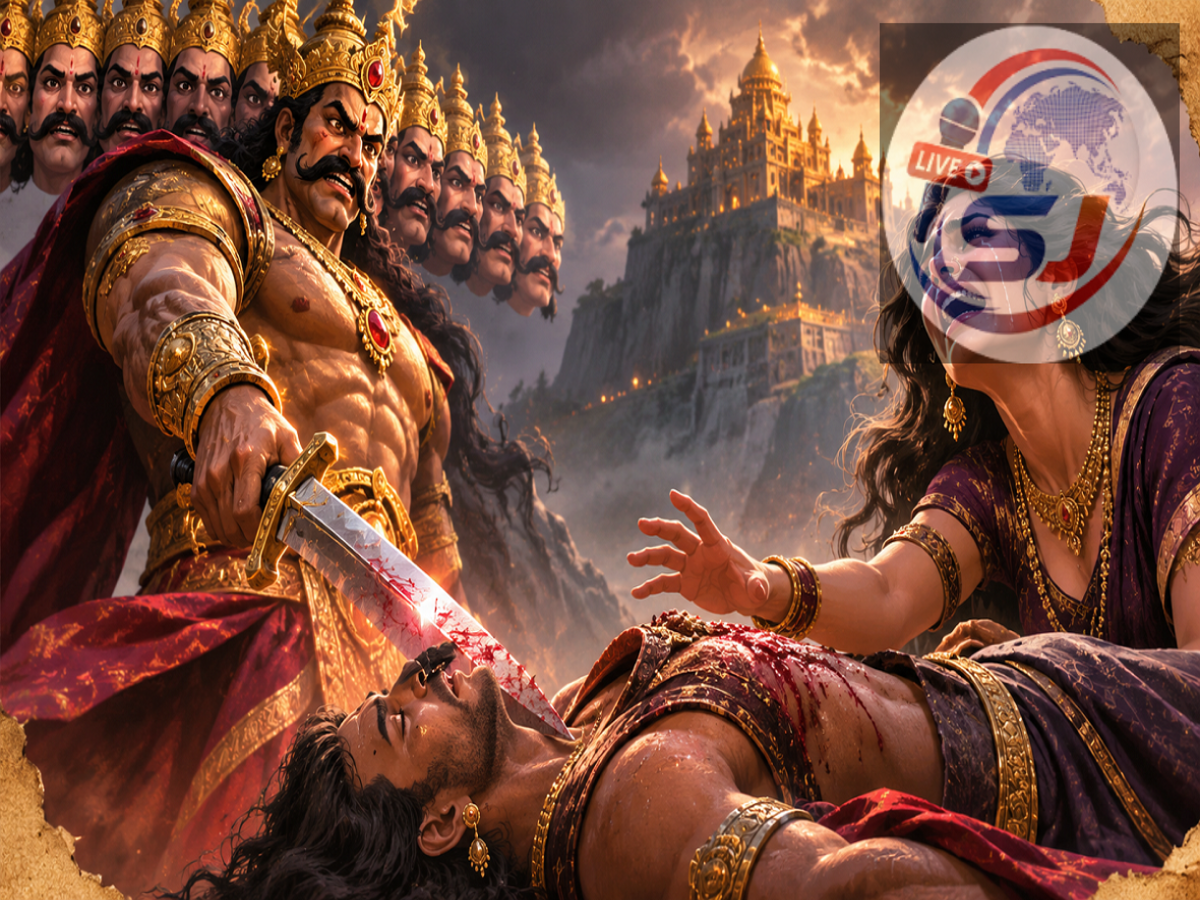
Ramayana Untold Story: The Ramayana contains numerous fascinating stories about Ravana, the powerful ruler of Lanka, and his family. While most people know about Ravana's conflict with Lord Rama and the role of his sister Shurpanakha in the epic, fewer are familiar with the story of her husband, Vidyutjihva. According to certain traditional narratives, Vidyutjihva was a formidable Asura warrior who belonged to the Kalakeya clan. His death is linked to a military confrontation involving Ravana, raising an intriguing question: Why did the king of Lanka kill his own brother-in-law?
The story offers a different perspective on Ravana's family relationships and the circumstances that allegedly left Shurpanakha a widow. However, it is important to understand that different versions of the Ramayana contain variations of this episode.
Who Was Vidyutjihva, Shurpanakha's Husband?
Vidyutjihva is described in traditional accounts as a powerful Asura associated with the Kalakeya lineage. The Kalakeyas were known in Hindu mythological literature as formidable warriors who frequently appeared in conflicts involving gods, demons and powerful rulers.
According to some retellings, Vidyutjihva held an important military position within the Kalakeya forces. He is sometimes described as a commander who possessed considerable knowledge of warfare and battlefield strategy.
His reputation as a capable fighter made him an important figure among the Asuras. However, his association with the Kalakeya clan eventually placed him in a difficult position when Ravana's military ambitions brought the two sides into conflict.
How Did Vidyutjihva Become Ravana's Brother-in-Law?
Shurpanakha was Ravana's sister and a member of Lanka's royal family. According to several traditional narratives, she developed a relationship with Vidyutjihva and eventually married him.
The marriage connected Ravana's family with the Kalakeya lineage. Nevertheless, family ties did not necessarily guarantee political or military cooperation between the two groups.
Some regional versions of the story suggest that Ravana was unhappy with the relationship, while other accounts focus primarily on the later battle that resulted in Vidyutjihva's death.
These differences highlight the importance of distinguishing between individual Ramayana traditions rather than treating every popular retelling as part of a single, universally accepted narrative.
Why Did Ravana Kill Vidyutjihva?
According to a widely circulated version of the story, Ravana launched a military campaign against various powerful kingdoms and Asura groups as part of his efforts to expand his influence.
During one such campaign, Ravana's forces encountered the Kalakeyas. Vidyutjihva, who was associated with the opposing army, became involved in the confrontation.
The battle reportedly resulted in heavy fighting between the two sides. Vidyutjihva was eventually killed during the conflict.
In some versions, Ravana killed Vidyutjihva without recognising him amid the fighting. Other retellings describe the incident as a consequence of Ravana's military campaign rather than a deliberate attempt to punish his sister's husband.
Therefore, the claim that Ravana intentionally murdered Vidyutjihva simply because he opposed the marriage is not established across all traditional accounts.
How Did Shurpanakha React to Her Husband's Death?
The death of Vidyutjihva reportedly caused considerable grief to Shurpanakha. According to certain traditional narratives, she confronted Ravana and blamed him for destroying her married life.
The episode is particularly significant because it presents a personal conflict within Ravana's family.
Although Ravana was celebrated for his military strength and authority over Lanka, his campaigns could also have consequences for his relatives.
Some retellings suggest that Ravana attempted to console Shurpanakha following the incident. She was subsequently associated with the Dandaka forest region, where important events connected with Lord Rama's exile later unfolded.
However, the precise conversations and emotional details differ across versions of the story.
What Was Shurpanakha's Role in the Ramayana?
Shurpanakha is best known for her encounter with Lord Rama and Lakshmana during their stay in the forest.
According to the familiar Ramayana narrative, Shurpanakha approached Rama and expressed her desire to marry him. After being rejected, she turned her attention towards Lakshmana.
The confrontation eventually escalated, and Lakshmana disfigured her by cutting off her nose and ears.
Shurpanakha subsequently sought help from her relatives, leading to further confrontations involving Rama and the Rakshasa forces.
These developments form an important part of the narrative leading towards Ravana's abduction of Sita and the eventual war between Rama and Ravana.
The earlier story of Vidyutjihva provides additional background to Shurpanakha's life in traditions that include the episode.
Is Vidyutjihva's Story Mentioned in Every Ramayana?
The Ramayana has been narrated and interpreted through numerous literary, regional and devotional traditions over centuries.
Valmiki's Ramayana, Tulsidas's Ramcharitmanas and various regional adaptations do not always contain identical episodes or descriptions.
The account of Vidyutjihva and his death is associated with particular traditions, including narratives connected with Ravana's earlier military campaigns. Some versions provide more detailed descriptions of the conflict, while others place greater emphasis on Shurpanakha's later encounter with Rama.
Readers should therefore approach the story as part of the broader Ramayana tradition rather than assuming that every detail appears in every version of the epic.
What Does the Story Reveal About Ravana's Character?
In traditional interpretations, Ravana is portrayed as a ruler possessing extraordinary knowledge, strength and military capabilities. At the same time, his ambition and pride frequently become central themes in stories about his downfall.
The account of Vidyutjihva illustrates how military conflict could create personal tragedy, even within the family of a powerful king.
It also adds another dimension to Shurpanakha's character, presenting her not only as Ravana's sister but also as a woman whose married life was affected by a violent confrontation.
The episode remains an interesting example of how lesser-known characters contribute to the larger narrative of the Ramayana.
Conclusion
The story of Vidyutjihva offers a lesser-known perspective on Ravana's family history. According to certain Ramayana traditions, Shurpanakha's husband was a powerful warrior connected with the Kalakeya Asuras who lost his life during a battle involving Ravana.
While some versions describe the death as an unintended consequence of warfare, other popular retellings offer different explanations.
The central point is that Vidyutjihva's death is traditionally connected with Ravana's military campaign, although the circumstances and motives vary between narratives.