
Pitru Paksha 2026: Which Direction Should You Face During Shraddha, Tarpan and Daan?
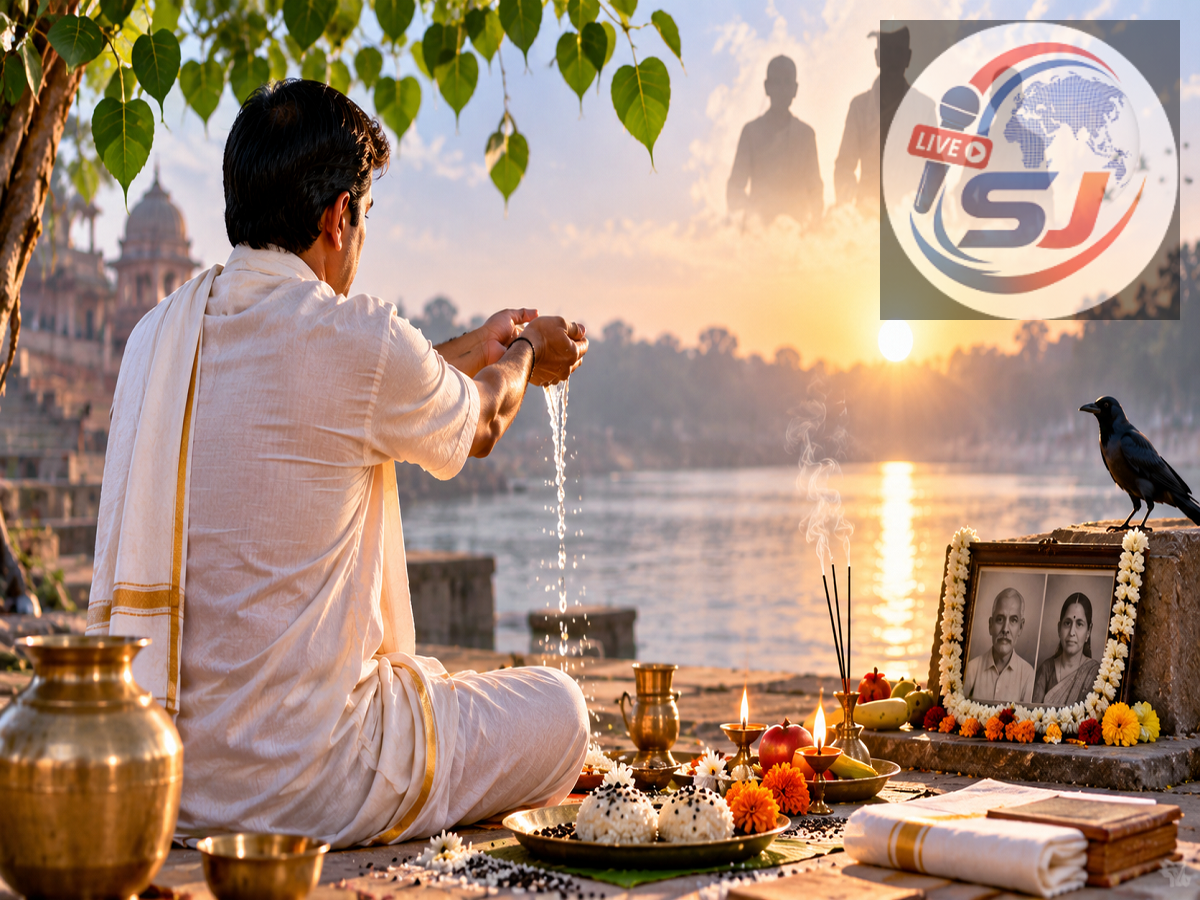
Pitru Paksha 2026: Pitru Paksha holds special significance in Hindu tradition as a period dedicated to remembering and honouring ancestors. Families perform rituals such as Shraddha, Tarpan, Pind Daan and charitable offerings with the belief that these acts express gratitude towards departed family members and bring peace to their souls.
Along with the rituals themselves, traditional practices also attach importance to the direction in which a person sits or faces while performing them. In particular, the south direction has a special association with ancestors in Hindu religious belief.
Anyone preparing to observe Pitru Paksha may therefore want to understand the traditional directional rules associated with Shraddha, Tarpan and Daan before beginning the rituals.
Why Is Direction Important During Pitru Paksha?
Directions have symbolic importance in several Hindu religious practices. Different directions are traditionally associated with particular deities, energies and rituals.
When it comes to rites performed for ancestors, the south direction, or Dakshin Disha, is considered especially significant.
According to traditional Hindu belief, the south is associated with Yama, the deity connected with death and the afterlife. For this reason, many ancestral rituals are performed while facing south.
This practice is different from several regular puja rituals, where devotees may commonly face east or north.
Which Direction Should You Face During Tarpan?
Tarpan is one of the major rituals performed during Pitru Paksha.
During Tarpan, water is traditionally offered in remembrance of departed ancestors. Depending on family customs, ingredients such as black sesame seeds may also be used in the ritual.
For Pitru Tarpan, tradition generally recommends performing the offering while facing south.
The south-facing position symbolically directs the offering towards the ancestors.
The procedure can vary according to family tradition, region and the instructions of the priest conducting the ceremony. Therefore, families following a particular religious tradition should give priority to their established customs.
What Is the Right Direction for Shraddha?
Shraddha ceremonies are performed to honour departed family members and express gratitude for the legacy they have left behind.
The south direction again receives particular importance in rituals directly associated with the Pitrs, or ancestors.
Depending on the specific stage of the Shraddha ceremony, the person performing the ritual may be instructed to face a particular direction. This is why it is advisable not to assume that every step of a detailed Shraddha ceremony must be performed in exactly the same position.
If the ceremony is being conducted with the help of a priest, follow the direction specified for each ritual.
For the ancestral offering itself, however, south is traditionally regarded as the principal direction associated with Pitru rituals.
What About Pind Daan?
Pind Daan is another important ancestral rite. Pinds, traditionally prepared from prescribed food ingredients, are offered in memory of departed ancestors.
As with Tarpan and other ancestral offerings, the south direction carries special significance.
The precise procedure for Pind Daan can differ depending on whether it is being performed at home or at a pilgrimage destination such as Gaya and according to the family's religious tradition.
Rather than modifying the ritual solely on the basis of general online instructions, devotees undertaking a formal Pind Daan ceremony may prefer to follow a knowledgeable priest familiar with their tradition.
Which Direction Is Considered Appropriate for Daan?
Charitable giving, or Daan, is also considered an important part of Pitru Paksha observances.
People may donate food, clothes, money or other useful items according to their ability and family customs.
Unlike Tarpan, however, Daan should not automatically be reduced to a single universal directional rule. Traditions can differ depending on the type of donation, recipient and ritual being performed.
If Daan forms part of a formal Shraddha ceremony, it is best to follow the procedure prescribed by the priest or family tradition.
More important than focusing exclusively on direction is the traditional emphasis on giving respectfully and without arrogance or expectation of personal reward.
Why Is the South Associated With Ancestors?
The connection between the south direction and ancestral rites comes from long-established Hindu religious symbolism.
In traditional belief, Yama is regarded as the guardian of the southern direction. Because Yama is associated with death and the journey after life, south consequently became closely connected with rituals performed for departed ancestors.
This explains why a person may face a different direction during a regular daily puja but turn south while performing Pitru Tarpan.
The directional change reflects the different spiritual purpose of the ritual.
Shraddha and Tarpan Are Not Exactly the Same
The terms Shraddha and Tarpan are sometimes used interchangeably in everyday conversation, but they refer to different elements of ancestral worship.
Tarpan broadly involves making water offerings to ancestors, while Shraddha can involve a more elaborate set of rites performed for departed family members.
Pind Daan, feeding eligible recipients according to tradition, and making charitable offerings may form part of broader ancestral observances.
Because procedures can vary considerably, a single set of instructions may not apply to every family.
Family Traditions Should Also Be Respected
India has enormous diversity in religious practices.
Pitru Paksha rituals followed by a family in Rajasthan may not be identical in every detail to customs observed in Uttar Pradesh, Bihar, Bengal, Maharashtra or southern India.
Even within the same region, family traditions can differ.
Therefore, directional guidance should be understood as a broad traditional principle rather than a substitute for the customs followed by a particular family.
If your family has traditionally performed Shraddha under the guidance of a priest or follows a specific procedure passed down through generations, continuing that established tradition may be appropriate.
Keep These Points in Mind During Pitru Paksha
For people preparing for Pitru Paksha, the simplest principle to remember is that south is traditionally regarded as the direction of the ancestors.
Accordingly, Pitru Tarpan and several direct ancestral offerings are generally performed while facing south.
At the same time, Shraddha is a multi-stage ritual, and the appropriate direction can vary during different parts of the ceremony. Daan practices can also differ according to local and family customs.
Therefore, devotees performing an elaborate Shraddha, Pind Daan or Tarpan ceremony for the first time may wish to seek guidance from a knowledgeable priest familiar with their family tradition.
The Meaning Behind Pitru Paksha Rituals
Beyond the individual rules, Pitru Paksha is fundamentally a period of remembrance and gratitude.
Shraddha, Tarpan and Daan provide families with traditional ways to remember previous generations and acknowledge their contribution to the family.
Direction is one element of these rituals, but devotion, remembrance and respectful observance remain central to the tradition.
For anyone preparing for Pitru Paksha 2026, the key directional point is easy to remember: the south has special significance in rituals dedicated directly to ancestors, particularly Pitru Tarpan. For detailed ceremonies, however, follow the specific customs of your family, region or priest.