
Janmashtami Puja at Home: Simple Step-by-Step Krishna Worship Guide, Bhog and Midnight Rituals
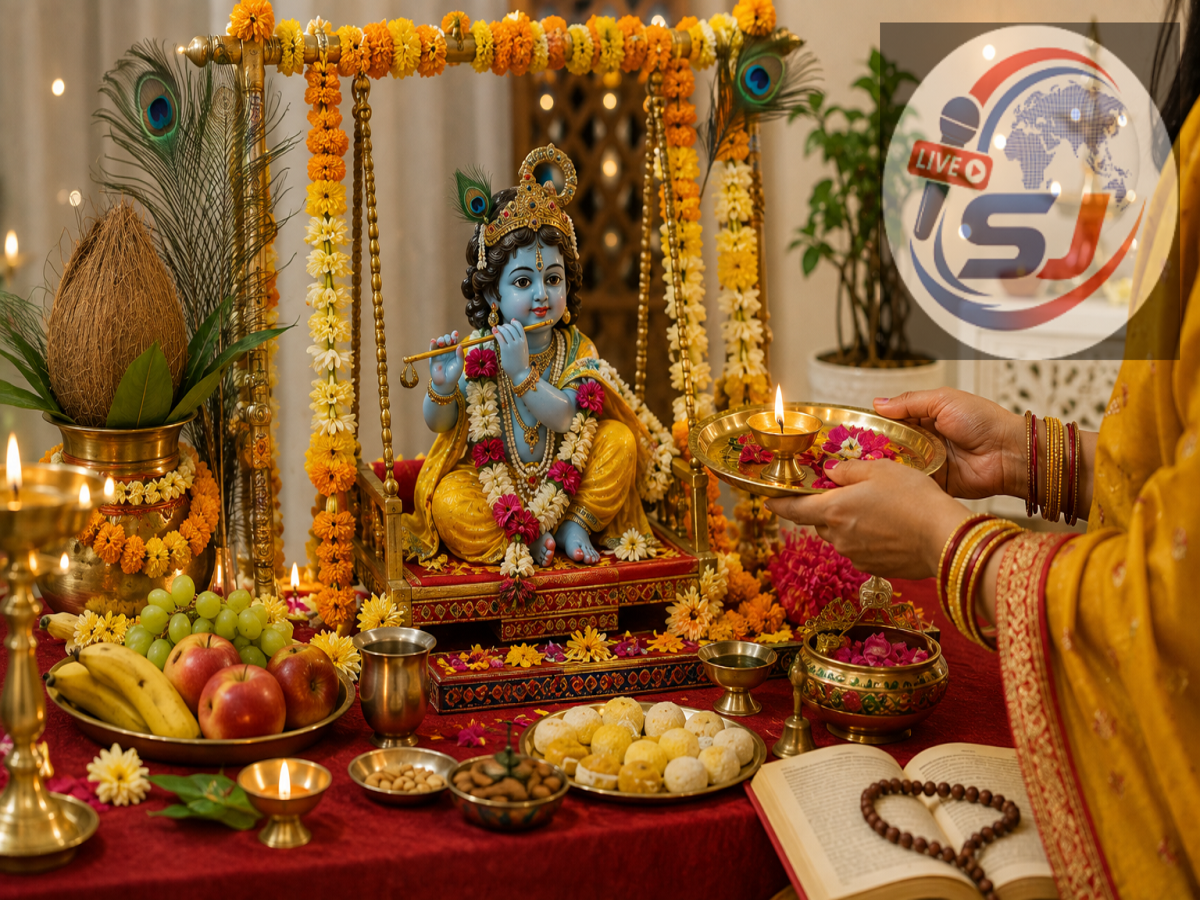
Janmashtami Puja at Home: Krishna Janmashtami is celebrated with devotion and enthusiasm as devotees mark the birth of Lord Krishna. Across India, families decorate their prayer spaces, worship the child form of Krishna known as Laddu Gopal, prepare traditional offerings and celebrate Krishna Janmotsav around midnight.
While some households follow elaborate rituals, worship at home does not necessarily need to be complicated. According to traditional beliefs, cleanliness, devotion and sincerity are considered more important than expensive decorations or a long list of puja items.
If you are planning to celebrate Janmashtami at home, here is a simple way to prepare for the festival, perform Laddu Gopal's abhishek, offer bhog and celebrate Krishna's birth.
How to Prepare for Janmashtami Puja at Home
Begin by cleaning the area where you plan to perform the puja. A clean platform or chowki can be covered with a fresh cloth before placing an idol of Laddu Gopal or a picture of Lord Krishna on it.
Families who have a Laddu Gopal idol may also decorate a small jhula or swing. Flowers, decorative fabric and other traditional items can be used according to personal preference.
Commonly used puja items include clean water or Gangajal, panchamrit, flowers, Tulsi leaves, sandalwood paste, akshat or unbroken rice, incense, a diya, fruits and bhog.
Makhan-mishri is among the most popular offerings associated with Krishna.
However, devotees do not need to worry if every traditional item is unavailable. The emphasis is generally placed on offering whatever is available with cleanliness and devotion.
How to Perform Laddu Gopal Abhishek
According to tradition, a ceremonial bath or abhishek is an important part of Janmashtami worship.
The ritual can begin by bathing the Laddu Gopal idol with clean water. Panchamrit prepared from ingredients such as milk, curd, ghee, honey and sugar is then traditionally used for the abhishek.
After the panchamrit bath, the idol can be bathed again with clean water and gently dried using a fresh cloth.
Devotees can then dress Laddu Gopal in clean or new clothes.
A sandalwood tilak can be applied, followed by offerings of flowers and Tulsi leaves. Many households also decorate Krishna with a crown, peacock feather and flute to represent his familiar childhood form.
Why Is Midnight Important on Janmashtami?
Midnight has special religious significance in Janmashtami celebrations.
According to Hindu tradition, Lord Krishna was born at midnight. This is why many devotees observe the main worship and Krishna Janmotsav around this time.
A diya and incense can be lit during the worship, followed by the chanting of Krishna mantras, devotional songs or bhajans.
After the prayers, devotees perform the aarti and gently swing Laddu Gopal in the decorated jhula as part of the birth celebration.
In many homes, a conch or shankh is also blown to mark the arrival of Krishna.
The exact puja timing can differ according to local traditions and the applicable Panchang. Devotees who want to follow a specific muhurat should therefore consult the Panchang used in their region.
What Bhog Can You Offer to Lord Krishna?
Food offerings are an important part of Janmashtami celebrations, and makhan-mishri is perhaps the most closely associated with the festival.
Other commonly prepared offerings include:
-
Dhaniya panjiri
-
Kheer
-
Peda
-
Fresh fruits
-
Satvik sweets and dishes
The connection between Krishna and milk-based foods is deeply rooted in traditions surrounding his childhood in Gokul and Braj.
Stories of Bal Krishna's fondness for butter and curd remain an important part of popular devotional culture. This is why dairy-based preparations continue to occupy a special place in Janmashtami bhog.
Can You Perform Janmashtami Puja Without Elaborate Arrangements?
Yes. A simple home puja can be performed even without elaborate decorations or a large collection of religious items.
Devotees can clean their prayer space, place an image or idol of Krishna, light a diya, offer flowers or available satvik food, chant Krishna's name and perform aarti.
Families who have Laddu Gopal can perform the traditional abhishek and dress the idol before the midnight celebration.
The idea is to focus on devotion rather than turning the festival into a competition over decorations or expenditure.
Include Children in Krishna Janmotsav Celebrations
Janmashtami can also become an opportunity to introduce children to Indian cultural and devotional traditions.
Children can participate by decorating the jhula, arranging flowers, helping prepare prasad or listening to stories from Krishna's childhood.
Parents and grandparents can share stories about Krishna's life in Gokul, his childhood adventures and the traditions associated with Janmashtami.
Such family participation can make the celebration meaningful beyond the rituals themselves.
What to Do After the Midnight Puja
After celebrating Krishna's birth, devotees can perform aarti and distribute the offered food as prasad among family members.
Families may also spend some time singing bhajans or quietly remembering Lord Krishna.
Those observing a Janmashtami fast generally follow their family or regional traditions regarding when and how the fast is concluded.
Because fasting customs can vary significantly between regions and religious traditions, devotees should follow the practice observed by their family or spiritual tradition.
Janmashtami Puja at Home: A Simple Sequence to Remember
For those performing the puja for the first time, the basic sequence can be kept straightforward: clean and prepare the worship area, establish Laddu Gopal or Krishna's image, perform the traditional abhishek if appropriate, dress and decorate the deity, offer flowers and Tulsi, present bhog, chant Krishna's name or sing bhajans, perform the midnight aarti and celebrate Krishna Janmotsav by gently swinging Laddu Gopal.
The exact sequence may vary from one household or tradition to another.
The Meaning Behind Janmashtami Celebrations
Janmashtami is more than a collection of rituals. For many families, it is a way of bringing generations together through devotion, stories, music, food and cultural traditions.
A beautifully decorated temple and an elaborate bhog can certainly add to the festive atmosphere, but they are not the only ways to celebrate.
Even a simple diya, a few flowers, a small offering and a few quiet moments spent remembering Lord Krishna can form a meaningful home celebration.
Ultimately, the essence of Janmashtami lies in the devotion with which devotees welcome Bal Krishna and celebrate his birth with their families.