
Janmashtami Bhog Ideas: 10 Traditional Foods to Offer Lord Krishna, From Makhan Mishri to Kheer
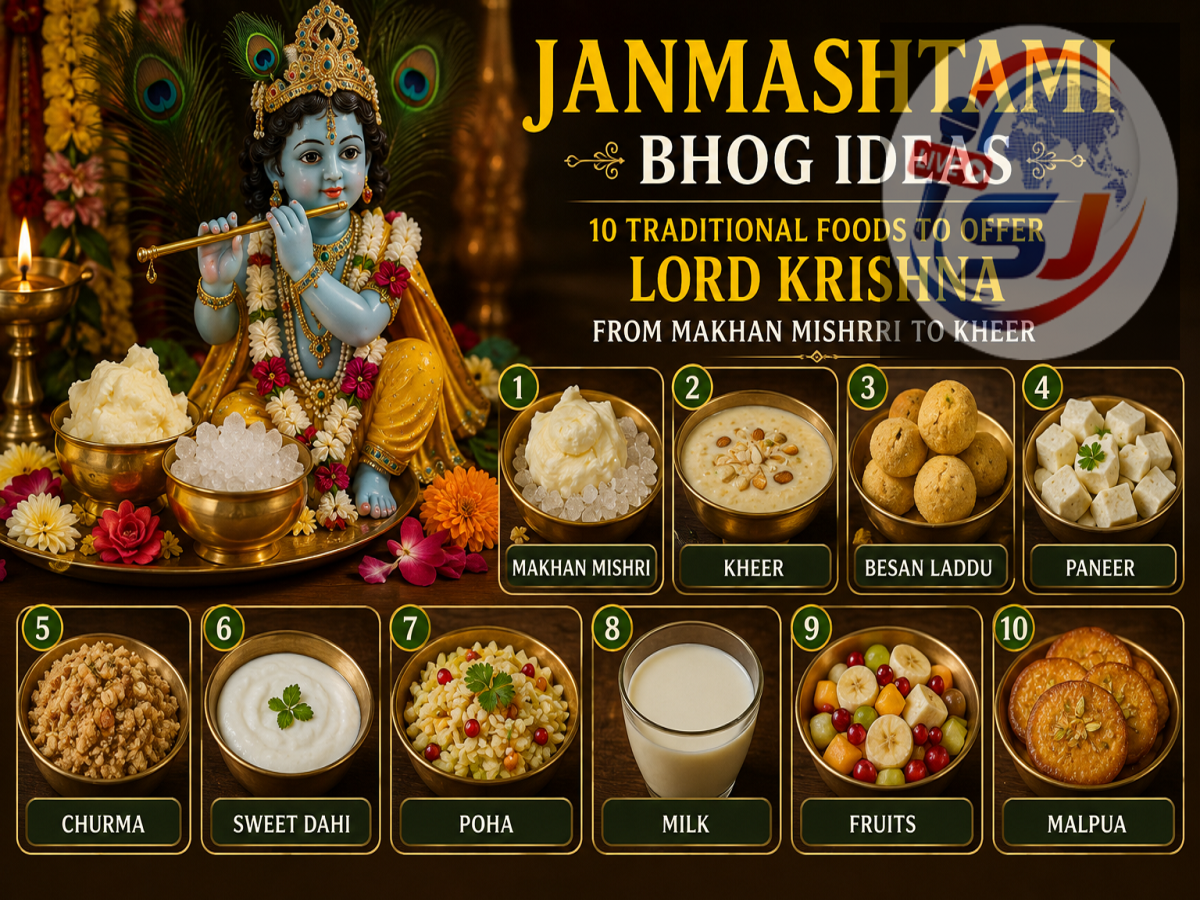
Janmashtami Bhog Ideas: As Krishna Janmashtami approaches, preparations for welcoming Bal Gopal begin in many homes. Families decorate small temples, prepare a jhula for Laddu Gopal, arrange flowers and lights, and plan special food offerings for the midnight celebration.
Among these traditions, bhog holds a special place. Lord Krishna's childhood stories are closely associated with milk, curd and butter, which is why dairy-based foods remain popular offerings on Janmashtami. From the classic makhan-mishri to dhaniya panjiri and kheer, several traditional dishes can be prepared at home without complicated ingredients.
If you are deciding what to offer Kanha this Janmashtami, here are 10 traditional bhog options.
1. Makhan Mishri
Few foods are as closely associated with Bal Krishna as makhan-mishri.
Stories about Krishna's childhood love for butter have been passed down for generations, making this simple preparation one of the most popular Janmashtami offerings.
It can be prepared by combining fresh white butter with mishri or crystallised sugar. Its simplicity also makes it a convenient option for families who do not want to prepare an elaborate menu.
2. Dhaniya Panjiri
Dhaniya panjiri is another traditional preparation commonly associated with Janmashtami celebrations.
It is generally prepared using coriander powder, ghee, powdered sugar and dry fruits. Ingredients and preparation methods may differ depending on family and regional customs.
In many households, dhaniya panjiri is first offered to Lord Krishna and later distributed among family members as prasad.
It is also commonly associated with families observing a Janmashtami fast.
3. Makhana Kheer
If you want to prepare a sweet dish for Laddu Gopal, makhana kheer can be a suitable option.
The dish is primarily prepared using milk and fox nuts or makhana. Cardamom and dry fruits can be added for extra flavour and texture.
Makhana is widely used in fasting recipes, which makes this kheer a popular choice for festival menus in households observing traditional vrat rules.
4. Sabudana Khichdi
Sabudana khichdi is particularly popular among people observing a fast.
It is commonly prepared with soaked sabudana, peanuts, sendha namak and mild seasonings. Depending on household traditions, it can also be included among the dishes offered during Janmashtami.
Because fasting rules differ across families and regions, ingredients should be selected according to the customs followed at home.
5. Shrikhand
Thick, creamy and mildly sweet, shrikhand is another option for Krishna's bhog.
Popular particularly in Maharashtra and Gujarat, shrikhand is made primarily from thick or strained curd and sugar.
Cardamom and saffron may be added to enhance its aroma and flavour, while nuts can be used as a garnish.
Its dairy base also connects naturally with the milk-and-curd traditions associated with Krishna's childhood.
6. Panjiri Laddoo
Traditional panjiri can also be shaped into laddoos for the festive offering.
Depending on the family's recipe, these laddoos may be prepared with flour or coriander along with ghee, sugar and dry fruits.
One practical advantage is that panjiri laddoos can generally be prepared in advance and stored for longer than some fresh milk-based desserts.
After being offered as bhog, they can be shared as prasad.
7. Roasted Makhana Prasad
Those looking for something quick and simple can prepare roasted makhana.
Makhana can be lightly roasted in ghee and prepared according to the fasting traditions followed by the family. The source suggests using sendha namak for a savoury preparation or adding some sweetness for a different version.
This makes it one of the easier Janmashtami offerings for households that do not have time to prepare multiple elaborate dishes.
8. Peda
Peda has a particularly strong association with Mathura and the wider Braj region, places closely linked with Krishna traditions.
These milk-based sweets are therefore commonly chosen as Janmashtami bhog.
Devotees can buy peda or prepare it at home using milk and sugar. Homemade versions can be kept simple and offered to Laddu Gopal before being distributed as prasad.
For families wanting a traditional dairy-based sweet without preparing an elaborate dessert menu, peda can be a convenient choice.
9. Fresh Fruits and Panchamrit
Bhog does not always need to consist of cooked dishes or sweets.
Fresh seasonal fruits such as bananas, apples and grapes can also be offered.
Another important preparation is panchamrit, traditionally made using milk, curd, honey, ghee and sugar.
Panchamrit is associated with religious rituals and can form part of the Janmashtami puja and prasad.
Using fresh ingredients and maintaining cleanliness during preparation is particularly important.
10. Traditional Kheer
No festive food list feels complete without kheer, one of India's most familiar traditional desserts.
A simple version can be prepared by slowly cooking rice with milk and sugar. Cardamom, saffron and dry fruits can be added according to preference.
The finished kheer can first be offered to Lord Krishna and later served to the family as prasad.
Households observing strict fasting rules should follow their own tradition regarding whether rice-based kheer is appropriate for their Janmashtami vrat.
Janmashtami Bhog List at a Glance
| Bhog | Main Ingredients |
|---|---|
| Makhan Mishri | Fresh butter, mishri |
| Dhaniya Panjiri | Coriander powder, ghee, sugar, dry fruits |
| Makhana Kheer | Makhana, milk, cardamom, nuts |
| Sabudana Khichdi | Sabudana, peanuts, sendha namak |
| Shrikhand | Thick curd, sugar, cardamom, saffron |
| Panjiri Laddoo | Panjiri, ghee, sugar, dry fruits |
| Makhana Prasad | Makhana, ghee, fasting-friendly seasoning |
| Peda | Milk, sugar |
| Fruits and Panchamrit | Fruits, milk, curd, honey, ghee, sugar |
| Kheer | Rice, milk, sugar, cardamom, nuts |
What Should You Keep in Mind While Preparing Janmashtami Bhog?
Cleanliness and satvik preparation are traditionally considered important when preparing food for Janmashtami worship.
Fasting practices, however, are not identical everywhere.
Some devotees avoid grains and ordinary salt during the fast, while others follow different family or regional customs. For this reason, there is no need to treat one menu as compulsory for every household.
If your family follows specific vrat rules, prepare the bhog accordingly.
Why Milk, Butter and Curd Are So Popular
The prominence of dairy products in Janmashtami celebrations is closely connected with popular traditions surrounding Krishna's childhood in Gokul and Braj.
Stories of young Krishna enjoying butter, milk and curd remain an integral part of devotional culture. That connection is reflected in popular offerings such as makhan-mishri, peda, shrikhand and kheer.
At the same time, Janmashtami food traditions vary considerably across India. Local fruits, sweets and fasting dishes are often incorporated into the celebration, giving each region and household its own distinctive menu.
Keep the Celebration Simple and Meaningful
A Janmashtami bhog does not need to include all 10 dishes. Families can select one or several preparations depending on their time, traditions and available ingredients.
Preparing makhan-mishri with children, making panjiri together or cooking a simple bowl of kheer can also turn the festival into an opportunity to pass family traditions to the next generation.
Ultimately, devotees traditionally place greater importance on the devotion and care behind the offering than on the number or cost of dishes.
Even a simple homemade preparation can become a meaningful Janmashtami bhog when offered to Lord Krishna with faith and shared with the family as prasad.