
Garuda Purana Explains the Soul's Journey After Death: What Hindu Scriptures Say About Yamlok and Karma
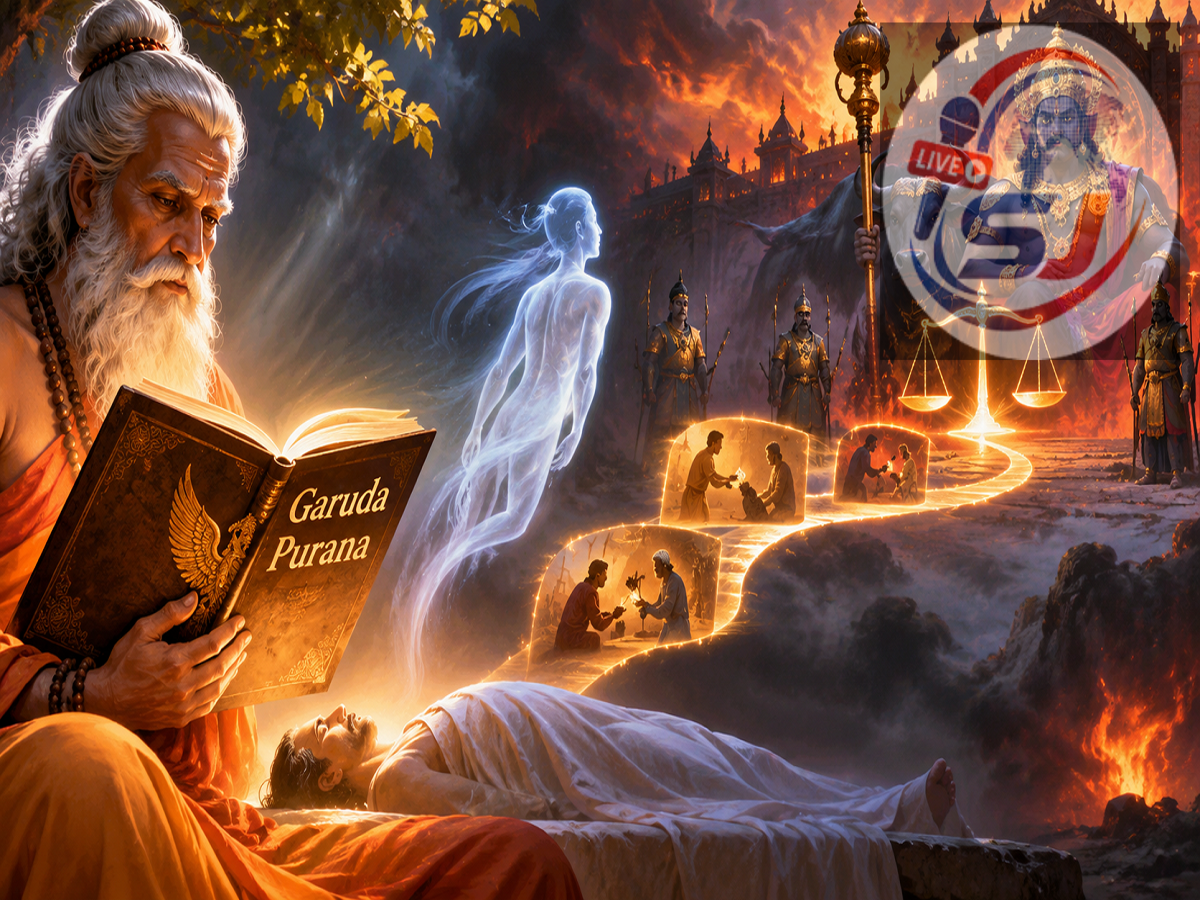
Garuda Purana and Life After Death: What happens to a person after death? Does the soul immediately leave the physical world, or does it undertake a journey before reaching its next destination? These questions have fascinated people for centuries. Hindu religious literature offers several spiritual interpretations of death, rebirth, karma, and the soul's existence beyond the human body.
Among the important Hindu scriptures discussing these subjects is the Garuda Purana, a sacred text traditionally presented as a conversation between Lord Vishnu and Garuda, his divine vehicle.
The scripture describes the soul's journey after death, the significance of funeral rituals, the concept of Yamlok, and the consequences of actions performed during a person's lifetime.
According to the religious beliefs described in the Garuda Purana, death marks the end of physical existence but does not necessarily represent the end of the soul's spiritual journey.
What Does the Garuda Purana Say About Death?
The Garuda Purana is one of the eighteen major Puranas in Hindu religious literature. It contains teachings about spirituality, ethical conduct, karma, religious duties, death, and liberation.
Its sections dealing with death and the afterlife are especially significant in many Hindu funeral traditions.
According to these teachings, the physical body is temporary, while the soul, or Atman, is understood as continuing beyond bodily death.
The scripture describes how a person's actions during life influence their experiences after death. Good deeds, compassion, charity, and righteous behaviour are traditionally associated with favourable spiritual consequences, while harmful actions are linked with suffering and karmic accountability.
These descriptions represent religious and philosophical beliefs rather than scientifically verified accounts of what occurs after death.
What Happens to the Soul Immediately After Death?
In the traditional narrative of the Garuda Purana, the soul separates from the physical body at death and begins a journey associated with the consequences of its past actions.
The text describes the involvement of Yamadutas, the messengers of Yama, who is regarded in Hindu mythology as the deity associated with death and justice.
According to these accounts, the Yamadutas guide or escort the departed being towards the realm of Yama, where its actions are evaluated.
The nature of this journey is described differently depending on the person's accumulated karma.
Those who have lived according to principles of righteousness are traditionally believed to experience different consequences from those who have committed harmful or unethical acts.
The central spiritual message is that human actions carry consequences extending beyond immediate worldly experiences.
Why Are Funeral Rituals Important in the Garuda Purana?
Funeral ceremonies and prayers for departed family members occupy an important place in Hindu religious traditions.
The Garuda Purana discusses the significance of rites performed after death, including offerings and ceremonies intended to support the departed soul's onward journey.
These practices are traditionally associated with Antyeshti, Shraddha, Tarpan, and Pind Daan.
Pind Daan involves offering ritual food, commonly prepared using rice or other prescribed ingredients, as part of ceremonies dedicated to departed ancestors.
Many Hindu families perform such rituals to honour the deceased, express gratitude, and pray for the departed soul's peace.
The precise procedures, timing, and interpretation of these ceremonies differ among regions, communities, and family traditions.
Can the Departed Soul Remain Near Its Family?
One of the most widely discussed beliefs associated with the Garuda Purana concerns the soul's attachment to its home and loved ones after death.
According to traditional interpretations, the departed being may retain emotional connections with family members and familiar surroundings for some time.
Some accounts suggest that the soul can observe relatives but cannot communicate with them because it no longer possesses a physical body.
The resulting separation is described as a source of emotional distress for the departed being.
However, religious traditions differ on how long the soul is believed to remain near its former home. These accounts should be understood as spiritual narratives, not established facts about consciousness after death.
Why Are Rituals Performed on the 10th, 11th and 12th Days?
In many Hindu communities, the days immediately following a death are marked by specific religious ceremonies.
The tenth, eleventh, and twelfth days are particularly important in several funeral traditions.
According to interpretations of the Garuda Purana, offerings performed during this period are associated with the formation or nourishment of the departed being's subtle body, known in some traditions as the Preta Sharira.
Families may offer food, water, prayers, and other ritual items as part of these ceremonies.
The rituals are traditionally believed to help the departed being continue its spiritual journey towards Yamlok.
However, not all Hindu communities follow identical funeral customs, and the meaning of individual ceremonies may vary.
What Is the Journey to Yamlok Like?
The Garuda Purana contains elaborate descriptions of the route towards Yamlok, the realm associated with Lord Yama.
According to the scripture's traditional narratives, this journey may involve difficult terrain, challenging conditions, and experiences influenced by the departed person's actions during life.
One prominent element is the Vaitarani River, which is described as a formidable obstacle along the spiritual route.
In religious interpretations, individuals who have accumulated negative karma may experience greater difficulties, while those associated with righteous actions are believed to encounter more favourable conditions.
These descriptions communicate a central moral teaching: people's conduct towards others matters, and ethical responsibility should guide their actions throughout life.
Does the Soul Experience Hunger and Thirst After Death?
Some traditional interpretations of the Garuda Purana describe the departed being as experiencing hunger and thirst during its journey.
This belief is connected with the practice of offering food and water through Pind Daan and Tarpan.
Families perform these ceremonies as expressions of remembrance, respect, and spiritual support for deceased relatives.
From a scientific perspective, however, there is no verified evidence that a soul continues to experience physical sensations such as hunger or thirst after death.
How Does Karma Influence the Soul's Destination?
The concept of karma is central to the Garuda Purana's teachings about the afterlife.
The scripture emphasises that actions motivated by honesty, kindness, generosity, and compassion are spiritually meaningful.
Conversely, cruelty, dishonesty, exploitation, and violence are presented as actions carrying negative karmic consequences.
In traditional accounts, Lord Yama evaluates the departed being's actions, and the consequences are understood within the broader Hindu concepts of rebirth, spiritual progress, and liberation.
Rather than focusing exclusively on what happens after death, these teachings encourage people to live responsibly and treat others with dignity.
The Spiritual Message Behind the Garuda Purana
Although the Garuda Purana contains vivid descriptions of death, Yamlok, and the soul's journey, its teachings also address the importance of ethical living.
The scripture encourages reflection on the temporary nature of material possessions, the importance of family responsibilities, and the value of compassion.
Its discussions of funeral rites also demonstrate the cultural significance of remembering ancestors and maintaining spiritual connections across generations.
For many Hindu families, these traditions provide a framework for mourning, remembrance, and honouring loved ones.
Ultimately, the Garuda Purana presents death as part of a larger spiritual understanding of existence, with karma and righteous conduct playing central roles.
Disclaimer: This article explains traditional Hindu religious beliefs and interpretations associated with the Garuda Purana. Descriptions of the soul, Yamlok, and experiences after death are matters of faith and have not been scientifically verified.