
Garuda Purana Explained: Why Do People Fear This Sacred Hindu Text Despite Its Teachings on Life and Karma?
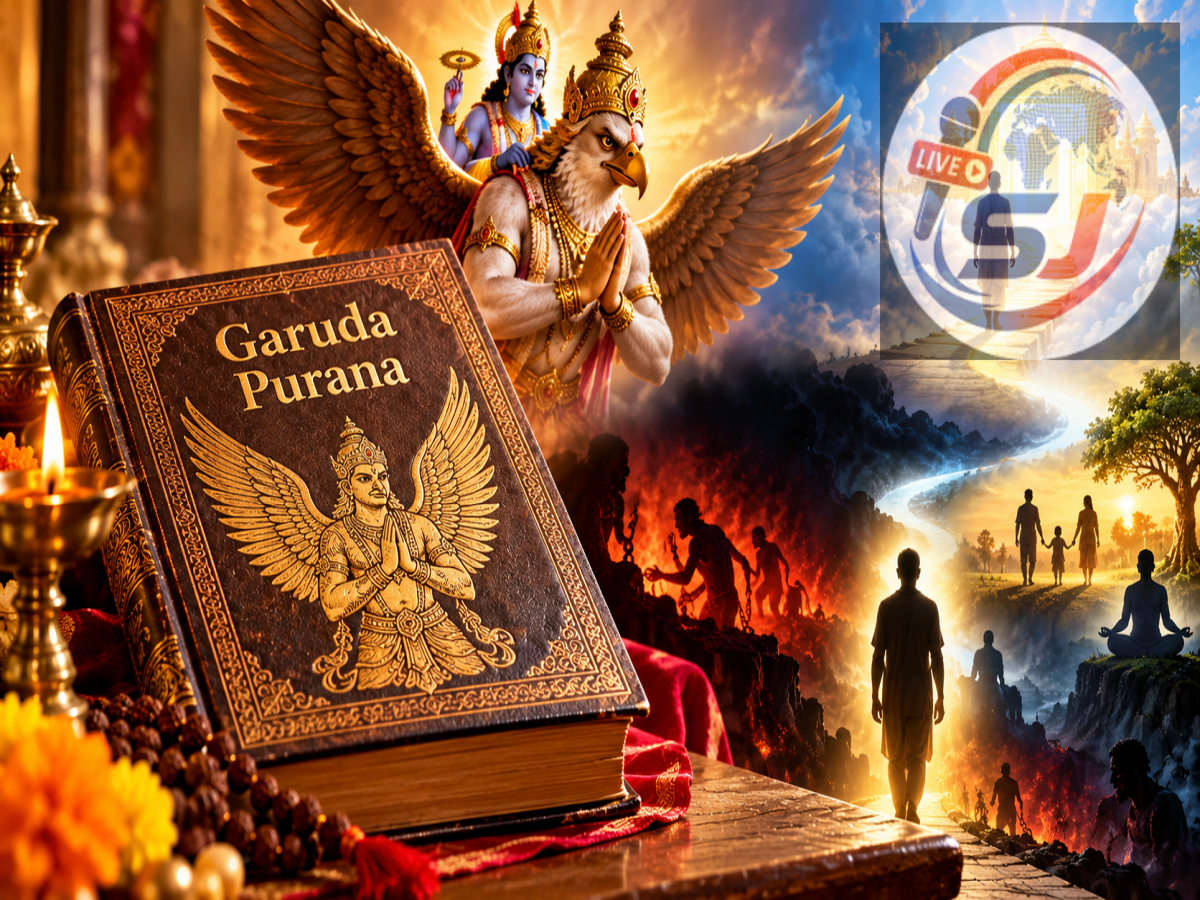
Garuda Purana in Hinduism: Among the sacred scriptures of Hinduism, the Garuda Purana holds a unique place because of its detailed discussions about life, death, karma, and spiritual liberation. Although the scripture contains valuable teachings about righteous living, religious duties, and the traditional sixteen Hindu samskaras, many people associate it primarily with death and the afterlife.
In several Hindu households, the mention of the Garuda Purana creates a sense of uneasiness. Some people believe that the scripture should only be read after someone passes away, while others hesitate to keep a copy at home.
However, religious scholars and traditional interpretations suggest that understanding the Garuda Purana solely as a book about death overlooks its much broader spiritual and philosophical teachings.
The scripture explores human responsibilities, moral conduct, the consequences of actions, and the importance of living a meaningful life.
What Is the Garuda Purana and Why Is It Important?
The Garuda Purana is traditionally counted among the eighteen Mahapuranas of Hindu literature. It is presented as a conversation between Lord Vishnu and Garuda, his divine mount.
In this dialogue, Garuda asks questions about human existence, the soul, death, religious practices, and the consequences of karma. Lord Vishnu explains these subjects through teachings that combine spirituality, ethics, and religious philosophy.
The text covers several areas of Hindu tradition, including religious observances, charity, moral responsibilities, spiritual knowledge, and liberation.
Certain sections also discuss the soul's journey after death and the relationship between an individual's actions and their consequences.
The Garuda Purana therefore addresses not only what happens after death according to Hindu belief but also how people should conduct themselves while alive.
Why Are People Afraid of the Garuda Purana?
One of the main reasons behind the fear associated with the Garuda Purana is its description of death, Yamalok, and the consequences of sinful actions.
The scripture includes accounts of Yama, traditionally regarded as the deity associated with death and justice, along with descriptions of the experiences awaiting souls after their earthly lives.
Some passages describe punishments for wrongdoing and different forms of suffering associated with negative karma.
These accounts can appear frightening, particularly when they are heard without an explanation of their broader religious and philosophical context.
Over time, the practice of reciting sections of the Garuda Purana during mourning ceremonies has strengthened its association with death.
As a result, many people are more familiar with its descriptions of the afterlife than with its teachings about ethical behavior and spiritual development.
However, these descriptions are part of Hindu religious cosmology and should be understood as scriptural beliefs rather than scientifically established accounts of the afterlife.
Garuda Purana and the 16 Sanskaras of Hindu Life
An important aspect of Hindu religious tradition is the concept of the sixteen samskaras, or sacred rites of passage.
These ceremonies traditionally mark significant stages of human life, beginning before birth and continuing until the final rites after death.
The samskaras are intended to provide religious and cultural guidance throughout different phases of life.
The traditional list includes:
-
Garbhadhana – A rite associated with conception.
-
Pumsavana – A prenatal ceremony.
-
Simantonnayana – A ritual performed during pregnancy.
-
Jatakarma – A ceremony associated with childbirth.
-
Namakarana – The naming ceremony.
-
Nishkramana – The child's first ceremonial outing.
-
Annaprashana – The introduction of solid food.
-
Chudakarana – The first ceremonial haircut.
-
Karnavedha – Ear-piercing ceremony.
-
Vidyarambha – The beginning of education.
-
Upanayana – Initiation into traditional spiritual learning.
-
Vedarambha – Commencement of Vedic studies.
-
Keshanta – A rite associated with adolescence.
-
Samavartana – Completion of formal education.
-
Vivaha – Marriage.
-
Antyeshti – Funeral and final rites.
The exact enumeration and performance of these ceremonies vary across Hindu traditions.
Although the sixteen samskaras are discussed throughout Hindu religious literature and are not exclusive to the Garuda Purana, they help illustrate the broader Hindu understanding of life as a journey shaped by responsibilities and spiritual development.
What Does the Garuda Purana Say About Karma?
Karma is one of the central ideas explored in the Garuda Purana.
According to Hindu philosophy, a person's actions carry consequences. Good deeds are associated with positive spiritual outcomes, while harmful behavior may lead to suffering.
The scripture emphasizes the importance of truthfulness, compassion, charity, self-discipline, and fulfilling one's responsibilities.
Its descriptions of rewards and punishments are traditionally understood as reminders that human behavior has moral significance.
For example, helping people in need, respecting others, and avoiding dishonest practices are consistent with the ethical values emphasized in the text.
Rather than focusing only on what might happen after death, readers can understand these teachings as encouragement to lead a responsible and compassionate life.
Is It Wrong to Read the Garuda Purana at Home?
A common belief in some communities is that the Garuda Purana should not be read during ordinary days because it is associated with death.
However, there is no single universally followed Hindu rule that prohibits reading the entire scripture at home.
The association largely comes from regional customs and the traditional recitation of particular sections during funeral and mourning rituals.
Different families and religious traditions may follow different practices.
Some people prefer reading selected passages for spiritual understanding, while others reserve certain portions for specific ceremonies.
Those wishing to follow a particular family tradition can consult a knowledgeable priest or religious teacher.
The scripture itself is not limited to funeral rituals and includes subjects relevant to everyday religious and ethical life.
What Is the Connection Between Garuda Purana and Yamalok?
Yamalok is traditionally described in Hindu religious literature as the realm associated with Yama.
Certain passages of the Garuda Purana describe the soul's journey after death and the consequences of actions performed during earthly life.
These accounts include symbolic and vivid descriptions of suffering, judgment, and spiritual consequences.
Within the religious framework of the text, such narratives reinforce the importance of righteous conduct.
They also reflect broader Hindu beliefs concerning rebirth, karma, and the continuing journey of the soul.
The descriptions should be approached within their theological and cultural context rather than treated as verified descriptions of physical places or events.
The Deeper Message of the Garuda Purana
The Garuda Purana is frequently remembered for its discussions of death, but its wider message concerns the choices people make during their lives.
It encourages reflection on the temporary nature of material existence and the importance of developing spiritual awareness.
The scripture also highlights charitable behavior, religious duties, self-control, and the pursuit of liberation, known as moksha.
Its teachings suggest that human life should not be guided entirely by material desires or fear of death.
Instead, individuals are encouraged to recognize the significance of their actions and develop a greater sense of responsibility toward themselves and others.
Why Understanding the Complete Garuda Purana Matters
Reading only the frightening descriptions of the afterlife can create an incomplete impression of the Garuda Purana.
Like many ancient religious texts, it contains several layers of teachings that address different aspects of human existence.
Its discussions of death are connected to broader ideas about morality, spiritual growth, and the relationship between actions and consequences.
Understanding this context can help readers appreciate why the scripture continues to hold an important place in Hindu religious literature.
Conclusion: The Garuda Purana is far more than a scripture associated with funeral ceremonies or the fear of Yamalok. Its teachings extend to karma, ethical responsibilities, religious traditions, and spiritual liberation. While its descriptions of the afterlife may appear unsettling, their traditional purpose is also to encourage reflection on human conduct and the value of living a righteous life.
Source reference: Aaj Tak, October 8, 2026. This is an independently written English expansion of the supplied summary, with additional general religious context. Interpretations and practices can vary among Hindu traditions.