
Dussehra 2026: Why Is Shastra Puja Performed on Vijayadashami? Know Muhurat, Rituals and Mahabharata Story
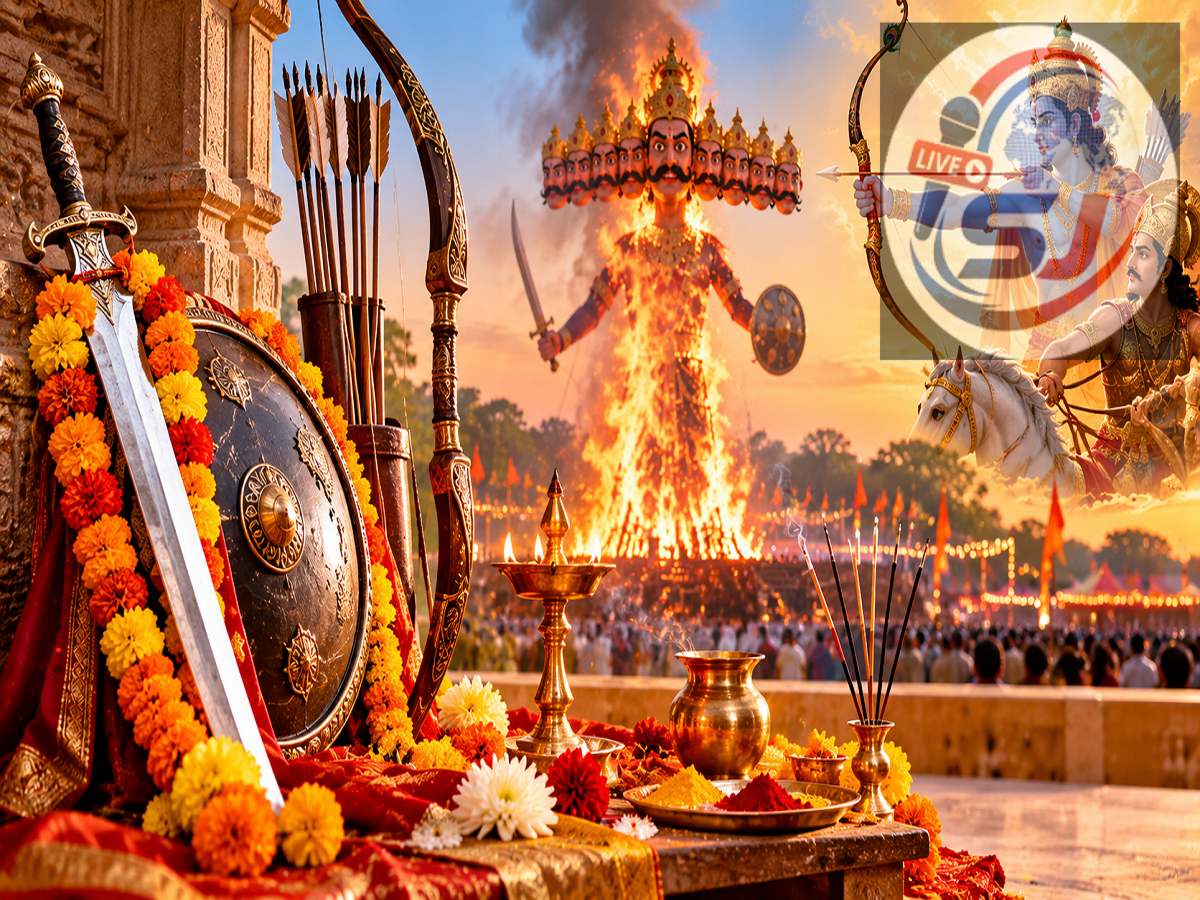
Dussehra 2026 Shastra Puja: Vijayadashami, popularly known as Dussehra, is being celebrated on Tuesday, October 20, 2026. The festival symbolises the victory of good over evil and holds special religious significance in Hindu traditions. While many people celebrate the occasion through Ravan Dahan and prayers to Goddess Durga, another important custom associated with this day is Shastra Puja, also known as Ayudha Puja.
On Vijayadashami, devotees traditionally worship weapons, tools, machinery and instruments used in their daily lives. The practice represents respect for strength, protection, responsibility and the resources that support people's livelihoods.
According to Hindu religious beliefs, performing Shastra Puja during the auspicious Vijaya Muhurat is associated with blessings for courage, success and victory over difficulties.
The tradition is also linked to an episode from the Mahabharata involving the Pandavas and the sacred Shami tree.
Here is a detailed explanation of the significance of Shastra Puja, its connection with the Mahabharata, the reported auspicious timings for October 20 and the traditional worship procedure.
Dussehra 2026 Shastra Puja Muhurat: Check Auspicious Timings
According to the Panchang details provided in the report, Vijayadashami is being observed on October 20, 2026.
The Dashami Tithi begins in the afternoon on October 20 and continues until October 21.
Several auspicious periods are associated with different Vijayadashami rituals.
| Ritual or Panchang Detail |
Reported Date and Time |
|---|---|
| Vijayadashami Festival |
Tuesday, October 20, 2026 |
| Dashami Tithi Begins |
October 20 at 12:50 PM |
| Dashami Tithi Ends |
October 21 at 2:11 PM |
| Vijaya Muhurat |
1:59 PM to 2:45 PM |
| Aparajita Puja Muhurat |
1:14 PM to 3:30 PM |
| Ravan Dahan Muhurat |
5:47 PM to 8:21 PM |
Note: These timings are based on the supplied article and have not been independently verified. Panchang calculations and auspicious periods can vary by city and religious tradition. Devotees should consult a location-specific Panchang before performing time-sensitive rituals.
Why Is Shastra Puja Performed on Dussehra?
Shastra Puja is a traditional form of worship in which weapons and tools are honoured as symbols of strength, protection and responsibility.
The word Shastra generally refers to weapons, while Puja means worship or reverential offering.
In Hindu traditions, Vijayadashami is associated with the triumph of righteousness over injustice.
Worshipping weapons on this occasion symbolically reinforces the idea that strength should be used responsibly and for the protection of others.
According to religious beliefs, devotees perform Shastra Puja to seek blessings for courage, discipline and success in their duties.
The tradition is not limited to swords or other weapons. In many communities, people also worship agricultural equipment, professional tools, vehicles and machinery.
This broader interpretation reflects gratitude toward the instruments that support daily work and livelihoods.
Mahabharata Connection: Why Did the Pandavas Worship Their Weapons?
One of the best-known religious stories associated with Shastra Puja comes from the Mahabharata.
According to the epic, the Pandavas were required to spend twelve years in exile followed by one year living without revealing their identities.
During their period of concealment, they reportedly hid their weapons in a Shami tree.
The weapons were kept there to prevent others from identifying them while they lived in disguise.
According to popular Vijayadashami traditions, the Pandavas later retrieved their weapons from the tree after completing their period of concealment.
The episode is associated with their return to a life of duty and preparation for future challenges.
In some regional accounts, the retrieval and worship of the weapons are connected specifically with Vijayadashami.
However, the precise relationship between this Mahabharata episode and the historical beginning of Shastra Puja differs across traditions.
The story remains an important part of the religious explanation for worshipping weapons and the Shami tree during Dussehra.
Why Is the Shami Tree Worshipped on Vijayadashami?
The Shami tree holds a special place in several Hindu religious traditions.
Its association with the Pandavas has made it a symbol of protection, auspicious beginnings and victory.
In many regions, devotees offer prayers to the Shami tree during Vijayadashami.
Some families also exchange Shami leaves as part of traditional Dussehra celebrations.
The practice is particularly meaningful in communities where the festival is associated with prosperity, courage and successful new beginnings.
Religious beliefs surrounding the tree vary from one region to another.
For many devotees, Shami Puja serves as a reminder of the importance of patience, determination and preparation before undertaking difficult responsibilities.
Shastra Puja Vidhi 2026: How to Perform the Ritual at Home
The procedure for Shastra Puja may differ according to family customs, regional practices and religious traditions.
However, a simple form of worship generally involves cleaning the objects, offering traditional puja materials and praying for protection and success.
Step 1: Clean the Worship Area
Begin by cleaning the place where the ritual will be performed.
Take a bath and wear clean clothes before preparing the puja arrangements.
Choose a suitable location where the worship can be conducted peacefully.
Step 2: Prepare the Tools or Symbolic Objects
Place the tools, equipment or other objects intended for worship in a clean and secure location.
Weapons, if included in the ritual, must be handled in accordance with applicable laws and safety requirements.
Firearms should remain unloaded and secured, and sharp objects should not be handled unnecessarily during the ceremony.
Step 3: Apply Tilak and Offer Flowers
Apply a small amount of sandalwood paste, roli or kumkum to the worshipped objects where appropriate.
Offer fresh flowers and akshat according to family tradition.
Step 4: Light a Diya and Offer Prayers
Light a diya at a safe distance from any equipment or flammable materials.
Offer incense, fruits or sweets as part of the worship.
Devotees may pray to Goddess Durga or their family deity for courage, protection and success.
Step 5: Pray for the Responsible Use of Strength
Shastra Puja is traditionally associated with the responsible use of power.
During worship, devotees may resolve to use their skills, tools and resources for constructive purposes.
Step 6: Conclude the Puja
Complete the ritual by offering a final prayer and distributing prasad among family members.
The worship can also include prayers for peace, prosperity and the well-being of loved ones.
What Items Are Needed for Shastra Puja?
The materials used during the ritual depend on regional customs and family traditions.
Common offerings include:
-
Roli or kumkum
-
Sandalwood paste
-
Akshat (unbroken rice)
-
Fresh flowers
-
A diya with ghee or oil
-
Incense sticks
-
Fruits and sweets
-
A clean worship plate
-
Water for ritual offerings
Devotees may also include Shami leaves or other traditional items where customary.
The ritual does not require elaborate arrangements, and many families perform a simple symbolic worship of their everyday tools.
Who Performs Shastra Puja on Vijayadashami?
Shastra Puja is observed by different communities and professional groups.
Traditionally, warriors and soldiers worshipped weapons as symbols of protection and duty.
Over time, the custom expanded to include equipment used in different occupations.
Farmers may worship agricultural implements, while artisans honour the tools used in their crafts.
Business owners may perform prayers for machinery and workplace equipment.
In some regions, vehicles and professional instruments are also included in Ayudha Puja celebrations.
The underlying idea is to express gratitude toward the resources that support work and daily life.
Is Shastra Puja Different From Ayudha Puja?
Shastra Puja and Ayudha Puja share a similar religious foundation, although their customs can vary across regions.
Shastra Puja is commonly associated with the worship of weapons, particularly in northern Indian traditions.
Ayudha Puja, observed prominently in parts of southern India, often includes the worship of tools, machinery, vehicles and professional equipment.
Both practices emphasise respect for instruments used in work, protection and daily responsibilities.
Their observance dates may differ depending on regional calendars and festival customs.
Spiritual Significance of Shastra Puja on Dussehra
The religious meaning of Shastra Puja extends beyond the physical worship of weapons.
In Hindu philosophy and traditional interpretations, strength is considered meaningful when guided by righteousness and self-control.
Vijayadashami celebrates the victory of Lord Rama over Ravana and is also associated with Goddess Durga's triumph over Mahishasura.
Both stories are interpreted as reminders that courage and power should be directed toward protecting justice and overcoming wrongdoing.
Shastra Puja reinforces this message through the symbolic worship of instruments associated with strength and responsibility.
For farmers, workers and artisans, the ceremony also represents respect for the tools that make their livelihoods possible.
Dussehra 2026: Why Is Vijaya Muhurat Considered Auspicious?
The Vijaya Muhurat is traditionally regarded as a favourable period for activities associated with success and new beginnings.
According to the supplied Panchang, the reported Vijaya Muhurat on October 20, 2026, falls between 1:59 PM and 2:45 PM.
Devotees may choose this period for Shastra Puja or other religious observances, depending on their customs.
However, auspicious timings are calculated using specific astronomical and traditional calendar methods.
As a result, the exact muhurat may differ according to geographical location.
People planning to perform Shastra Puja at a particular time should confirm the local Panchang rather than assuming that a single timing applies across India.
Dussehra 2026 Shastra Puja: Key Takeaway
Vijayadashami 2026 is being celebrated on Tuesday, October 20, with Shastra Puja remaining an important tradition for many Hindu families.
The custom is associated with the Mahabharata account of the Pandavas hiding their weapons in a Shami tree and later retrieving them.
It is also connected with the broader spiritual message of Dussehra, which celebrates the victory of righteousness over evil.
According to the supplied report, the Vijaya Muhurat falls between 1:59 PM and 2:45 PM, although local timings should be verified.
Shastra Puja ultimately represents respect for strength, responsibility and the tools used in everyday life, while encouraging devotees to follow the path of righteousness and use their abilities for constructive purposes.