
Diwali Lakshmi Puja 2026: Auspicious Timings, Essential Items and Step-by-Step Worship Guide for November 8
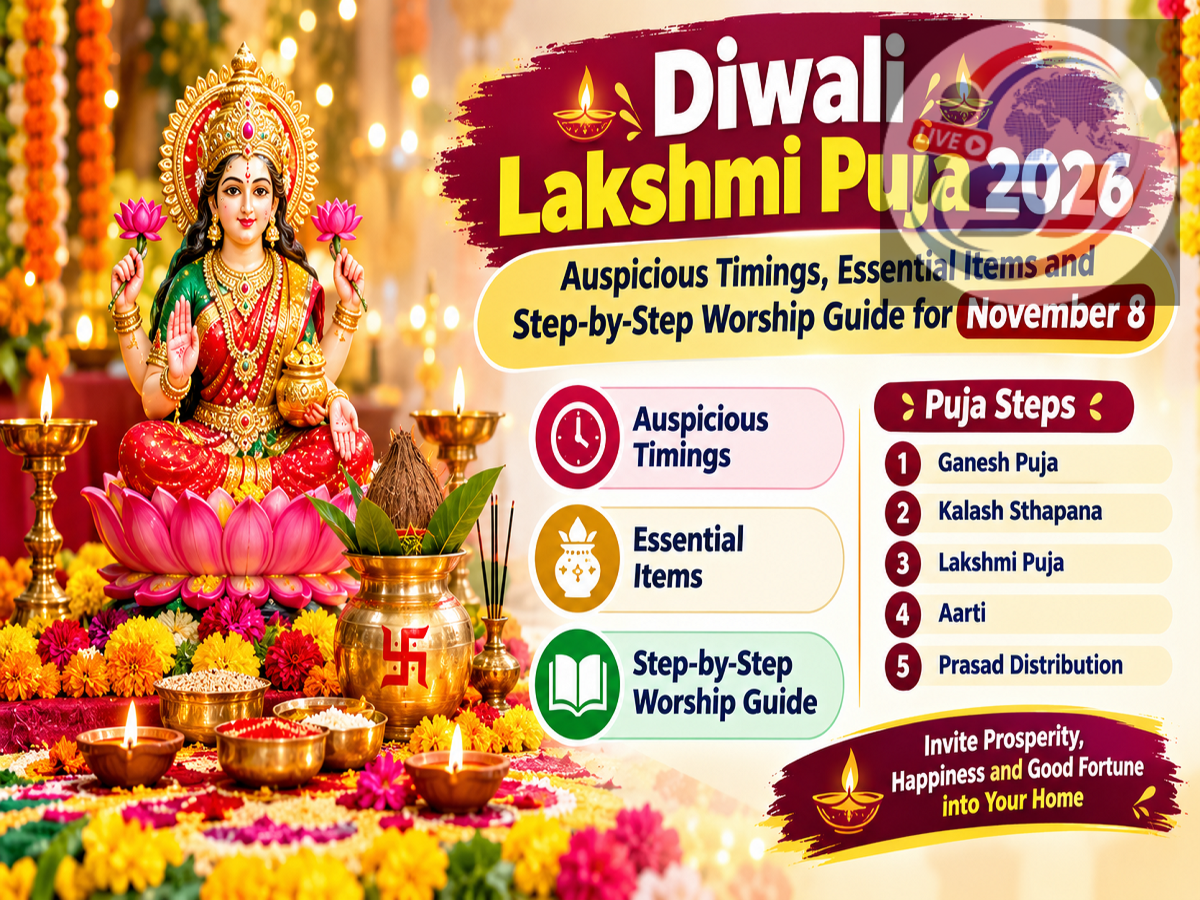
Diwali Lakshmi Puja 2026: Diwali, one of India's most widely celebrated Hindu festivals, will be observed on Sunday, November 8, 2026, according to the festival schedule cited in the report. The occasion is traditionally associated with worshipping Goddess Lakshmi and Lord Ganesha, decorating homes with colourful rangoli, lighting diyas and sharing festive sweets with family members.
Lakshmi Puja holds special religious significance during Diwali, as devotees seek the blessings of Goddess Lakshmi, who represents prosperity and well-being, and Lord Ganesha, who is traditionally worshipped for wisdom and the removal of obstacles.
Many families prefer performing Lakshmi-Ganesha Puja during the auspicious evening period known as Pradosh Kaal. However, the exact worship time varies depending on the city and local Panchang calculations.
Here is a detailed guide covering Diwali 2026 Lakshmi Puja timings, required materials, traditional worship procedures and important precautions.
Diwali 2026 Lakshmi Puja Muhurat: Auspicious Timings for Delhi and Mumbai
According to the Panchang details provided in the source report, the auspicious period for Lakshmi Puja on November 8 differs between Delhi and Mumbai.
| City |
Lakshmi Puja Muhurat |
|---|---|
| New Delhi |
5:54 PM to 7:50 PM |
| Mumbai |
6:27 PM to 8:27 PM |
These timings are based on the reported local calculations and should be confirmed against a reliable city-specific Panchang before performing the rituals.
Traditionally, worshippers consider Pradosh Kaal, the period following sunset, particularly suitable for Diwali Lakshmi Puja.
The selection of an auspicious time may also depend on the prevailing Amavasya Tithi and other Panchang factors.
Diwali 2026 Amavasya Tithi: When Does It Begin and End?
Diwali Lakshmi Puja is traditionally performed during Kartik Amavasya, the new moon phase of the Hindu lunar calendar.
According to the reported Panchang:
| Panchang Event |
Date and Time |
|---|---|
| Amavasya Tithi Begins |
November 8, 2026, at 11:27 AM |
| Amavasya Tithi Ends |
November 9, 2026, at 12:31 PM |
| Diwali Lakshmi Puja Date |
Sunday, November 8, 2026 |
These details help devotees plan their evening worship according to traditional religious customs.
Since Hindu festival timings may differ based on geographical location and Panchang methodology, devotees should verify the date and muhurat with their local religious calendar.
Essential Puja Samagri for Diwali Lakshmi-Ganesha Worship
Preparing the required worship materials in advance can make the ceremony more organised and peaceful.
The following items are commonly used during Diwali Lakshmi Puja:
-
Idols or pictures of Goddess Lakshmi and Lord Ganesha.
-
A clean wooden platform or puja chowki.
-
Red or yellow cloth for covering the platform.
-
Roli, kumkum, turmeric and unbroken rice grains (akshat).
-
Fresh flowers, garlands and durva grass.
-
Betel leaves, betel nuts and cardamom.
-
Incense sticks, dhoop and camphor.
-
Earthen or metal lamps with ghee or oil.
-
Cotton wicks for lighting diyas.
-
Fresh fruits, sweets and other offerings.
-
Panchamrit, traditionally prepared using milk, curd, honey, ghee and sugar.
-
A kalash containing clean water.
-
Mango leaves and a coconut, where customary.
-
Coins, a puja thali and a small bell.
The exact list may vary depending on regional customs and family traditions. Not every household uses all these items.
Diwali Lakshmi Puja Vidhi 2026: How to Perform Worship at Home
Devotees can perform Lakshmi-Ganesha Puja at home by following their family traditions and the general sequence of worship described below.
Step 1: Clean and Prepare the Worship Area
Begin by cleaning the house and arranging a dedicated space for the puja.
Place a clean red or yellow cloth over a wooden platform and arrange the idols or pictures of Goddess Lakshmi and Lord Ganesha.
Decorate the surrounding area with flowers and rangoli if desired.
Keep the puja materials nearby so that the ceremony can proceed without unnecessary interruptions.
Step 2: Begin With Lord Ganesha's Worship
In many Hindu traditions, Lord Ganesha is worshipped before other deities.
Devotees may begin by offering prayers to Lord Ganesha and seeking blessings for a peaceful and obstacle-free ceremony.
Apply a tilak, offer flowers and durva grass, and recite a familiar Ganesha prayer or mantra.
Step 3: Worship Goddess Lakshmi
After completing the initial Ganesha worship, devotees offer prayers to Goddess Lakshmi.
Kumkum, flowers, akshat, fruits and sweets may be offered according to family customs.
Devotees can recite traditional Lakshmi mantras and pray for happiness, prosperity and harmony in the household.
Step 4: Establish the Kalash
Kalash Sthapana is included in many traditional worship practices.
Fill a clean kalash with water and decorate it with mango leaves and a coconut, if this forms part of the family's customary procedure.
The kalash is traditionally regarded as a symbol of auspiciousness and purity.
Step 5: Light the Diya and Offer Prayers
Light a ghee or oil lamp in a safe location near the worship area.
Incense may also be offered while prayers are recited.
Families can chant familiar devotional mantras or perform silent prayers according to their beliefs.
Step 6: Perform Lakshmi-Ganesha Aarti
After completing the main offerings, perform the aarti of Goddess Lakshmi and Lord Ganesha.
Family members may participate together in the ceremony.
The aarti traditionally marks an important concluding part of the worship.
Step 7: Distribute Prasad and Light Diwali Lamps
Once the puja is completed, distribute prasad among family members.
Many households also light diyas near entrances, courtyards and other suitable locations as part of their Diwali celebrations.
All lamps should be positioned safely, away from curtains, decorations and other flammable materials.
Important Precautions During Diwali Lakshmi Puja
Devotees should keep several practical considerations in mind while preparing for the ceremony.
The worship area should be clean and organised, and all necessary materials should be arranged before the selected muhurat.
Families should avoid rushing through the rituals and follow the religious practices traditionally observed in their households.
Special attention should be given to fire safety when lighting diyas, incense sticks or camphor.
Children should be supervised around open flames, and burning lamps should never be left unattended.
Devotees should also remember that worship procedures may differ between regions and communities. There is no need to abandon established family customs simply because another guide describes a different sequence.
Why Are Goddess Lakshmi and Lord Ganesha Worshipped Together on Diwali?
In Hindu tradition, Goddess Lakshmi is associated with wealth, prosperity and good fortune, while Lord Ganesha represents wisdom, auspicious beginnings and the removal of obstacles.
Their combined worship during Diwali symbolises the importance of both prosperity and wisdom.
The festival is also an occasion for families to come together, decorate their homes, exchange gifts and strengthen personal relationships.
For many devotees, Lakshmi Puja represents more than a prayer for financial success. It is also an opportunity to express gratitude and seek peace, stability and happiness.
Diwali 2026: Celebrate With Devotion, Family and Safety
Diwali Lakshmi Puja is an important part of the festival's spiritual and cultural traditions. Preparing the worship materials in advance, checking the local auspicious time and following familiar family customs can help make the celebration more meaningful.
Devotees planning to perform the ceremony on November 8 should verify their city-specific Panchang timings, particularly the Amavasya Tithi and Pradosh Kaal.
Whether performed through an elaborate ceremony or simple prayers at home, Lakshmi-Ganesha worship remains a cherished tradition associated with Diwali.
The festival also offers an opportunity to celebrate kindness, gratitude, togetherness and the symbolic victory of light over darkness.