
Diwali 2026: Why Goddess Lakshmi Cursed Sage Bhrigu and How the Legend Connects Wealth With Knowledge
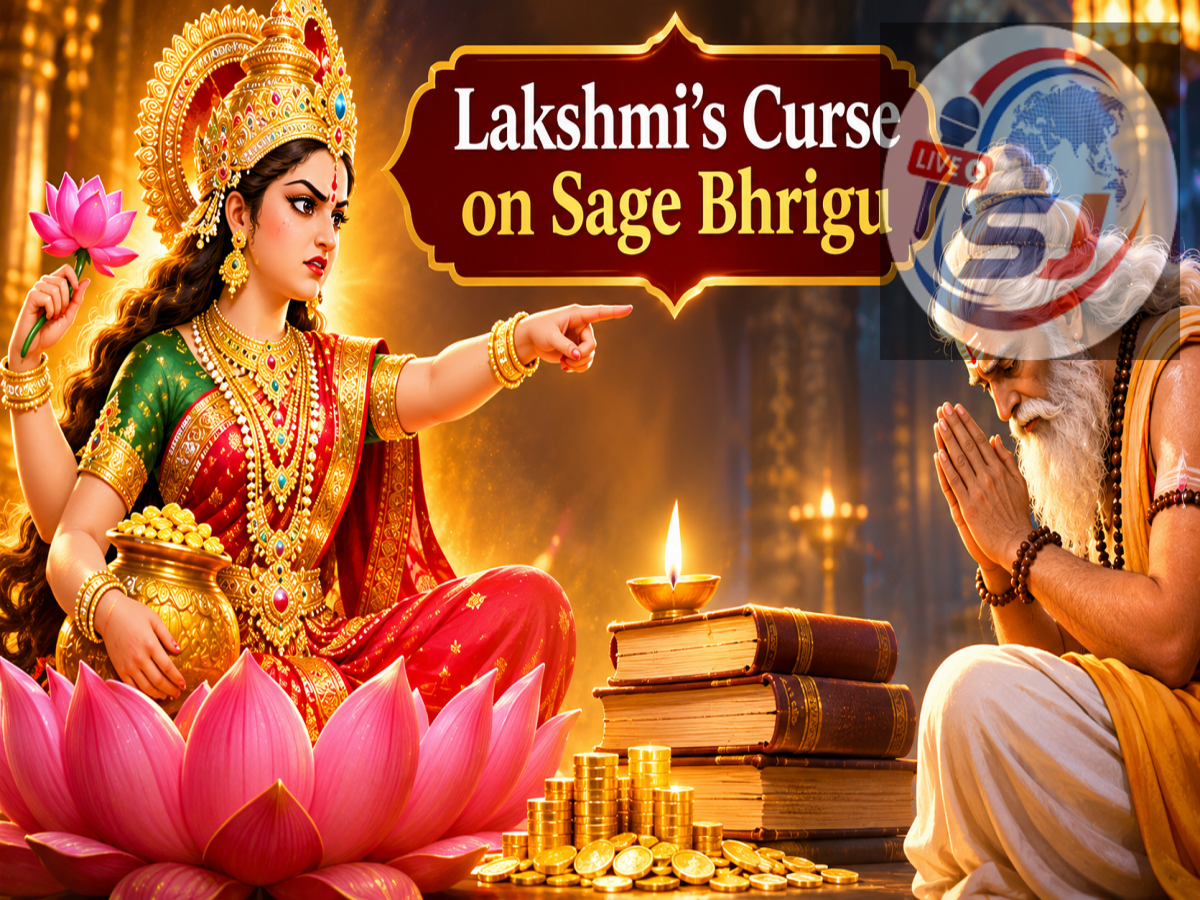
Goddess Lakshmi and Sage Bhrigu Story: Diwali is a festival dedicated to light, prosperity and the worship of Goddess Lakshmi. While devotees seek her blessings for financial stability and happiness, Hindu mythology contains several fascinating stories explaining the relationship between wealth, wisdom, humility and human behaviour. One such legend describes an incident involving Sage Bhrigu, Lord Vishnu and Goddess Lakshmi.
According to traditional Hindu narratives, Sage Bhrigu once struck Lord Vishnu on the chest while attempting to test his patience and divine qualities. Instead of responding angrily, Lord Vishnu showed remarkable compassion towards the sage. However, Goddess Lakshmi was deeply offended by the incident and reportedly pronounced a curse that later became associated with the financial difficulties experienced by certain learned individuals.
The story is often discussed during Diwali because it highlights the importance of respecting others, controlling pride and understanding the relationship between knowledge and prosperity.
Who Was Sage Bhrigu in Hindu Mythology?
Sage Bhrigu is regarded as one of the prominent ancient sages in Hindu tradition. He is associated with spiritual knowledge, Vedic teachings and several religious narratives.
In Hindu mythology, Bhrigu is also connected with the tradition of astrology and is considered an important figure among the great sages.
One popular legend describes how the sage was assigned the responsibility of determining which member of the Hindu Trinity—Lord Brahma, Lord Vishnu or Lord Shiva—possessed the greatest qualities of patience and compassion.
To make this assessment, Bhrigu decided to visit the three deities and observe their reactions to his behaviour.
The incident involving Lord Vishnu eventually became one of the most widely discussed episodes associated with the sage.
Why Did Sage Bhrigu Strike Lord Vishnu on the Chest?
According to the traditional account, Sage Bhrigu approached Lord Vishnu while the deity was resting in Vaikuntha, his divine abode.
Rather than greeting him respectfully, the sage struck Lord Vishnu on the chest with his foot.
The act was intended to test whether Lord Vishnu would become angry or respond with patience.
Instead of expressing resentment, Lord Vishnu remained calm and showed concern for the sage.
In a gesture of humility, he reportedly held Bhrigu's foot and asked whether it had been hurt by the impact.
This unexpected reaction left the sage astonished.
Lord Vishnu's conduct is traditionally interpreted as a demonstration of forgiveness, compassion and freedom from ego.
The story presents the idea that true greatness is reflected not only in strength or authority but also in the ability to remain composed when confronted with disrespect.
Why Did Goddess Lakshmi Become Angry With Sage Bhrigu?
Although Lord Vishnu forgave the sage, Goddess Lakshmi was deeply disturbed by what had happened.
According to the legend, Goddess Lakshmi resides on Lord Vishnu's chest, making the sage's action particularly offensive to her.
She regarded the incident as an insult to her divine consort and an unacceptable act of disrespect.
The fact that Lord Vishnu responded with kindness did not immediately reduce her anger.
In some traditional retellings, Goddess Lakshmi's displeasure led her to pronounce a curse affecting Sage Bhrigu and those associated with his lineage.
This episode is used in religious storytelling to illustrate how a single act of arrogance can have consequences even when forgiveness is offered.
What Curse Did Goddess Lakshmi Give Sage Bhrigu?
According to a popular version of the legend, Goddess Lakshmi declared that she would not readily reside in the homes of Brahmins, the community traditionally associated with religious learning and priestly duties.
The curse is interpreted in some retellings as a reason why individuals possessing considerable knowledge and education may still experience financial hardship.
However, the story should be understood within its mythological and historical context.
It does not mean that every educated person, Brahmin or scholar is destined to face poverty. Nor does it establish any connection between caste, education and financial outcomes in the modern world.
Different religious traditions preserve different versions of the episode, and the details of the curse are not identical across all retellings.
How Is the Curse Connected With Educated People?
The central idea behind this interpretation is the distinction between knowledge and material wealth.
In Hindu religious symbolism, Goddess Saraswati represents learning, wisdom and artistic knowledge, while Goddess Lakshmi represents prosperity and abundance.
The legend is sometimes used to explain why intellectual achievement does not always lead to financial success.
A person may possess exceptional academic qualifications, spiritual knowledge or professional skills without necessarily enjoying financial prosperity.
However, modern economic circumstances depend on many practical factors, including employment opportunities, income, access to resources, financial planning and broader social conditions.
The mythological story offers a spiritual explanation rather than a factual account of why educated individuals may struggle financially.
Did Lord Vishnu Help Reduce the Effects of the Curse?
In certain versions of the narrative, Lord Vishnu intervenes after Goddess Lakshmi expresses her anger.
The story describes how the deity's compassion and concern for devotees become important in understanding the consequences of the curse.
Some retellings suggest that Goddess Lakshmi's blessings can still be received through sincere devotion, humility, ethical conduct and religious observances.
These interpretations emphasise that divine grace is not presented as being permanently beyond the reach of individuals devoted to spiritual learning.
The broader message focuses on balancing knowledge with humility and treating others respectfully.
What Does This Story Teach During Diwali 2026?
The legend of Sage Bhrigu and Goddess Lakshmi carries several moral and spiritual lessons that remain relevant during Diwali celebrations.
First, Lord Vishnu's response highlights the importance of patience and forgiveness. Even when confronted with an insulting act, he chose compassion rather than anger.
Second, the story reminds devotees that knowledge should not become a source of arrogance. Wisdom is traditionally associated with humility, discipline and respect.
Third, the narrative encourages people to understand prosperity in a broader sense. Financial wealth is important for everyday life, but kindness, learning, relationships and personal integrity also contribute to well-being.
During Diwali, many families worship Goddess Lakshmi and Lord Ganesha together, symbolising the traditional relationship between prosperity and wisdom.
The festival also provides an opportunity to practise generosity, express gratitude and support those facing difficulties.
Why Is This Legend Remembered During Lakshmi Puja?
Lakshmi Puja is among the central religious observances of Diwali. Devotees traditionally clean their homes, decorate worship areas, light diyas and offer prayers for happiness and prosperity.
The story involving Sage Bhrigu is remembered in some devotional discussions because it connects the worship of Goddess Lakshmi with themes of respect, humility and responsible behaviour.
Rather than viewing the legend as a literal explanation for poverty, readers can understand it as part of the rich storytelling tradition through which Hindu religious values have been passed down across generations.
Conclusion
The story of Goddess Lakshmi's curse on Sage Bhrigu remains an intriguing episode in Hindu mythology. It begins with the sage testing Lord Vishnu's patience and develops into a narrative about divine compassion, anger, knowledge and prosperity.
While certain traditional interpretations connect the curse with financial difficulties among learned individuals, such claims belong to religious folklore and should not be treated as explanations for real-world economic hardship.
As Diwali 2026 is celebrated, the legend offers a reminder that humility, compassion, respect and responsible conduct are valuable qualities alongside education and material success.