
Diwali 2026: 8 Auspicious Places to Light Diyas After Lakshmi Puja and the Best Directions According to Vastu
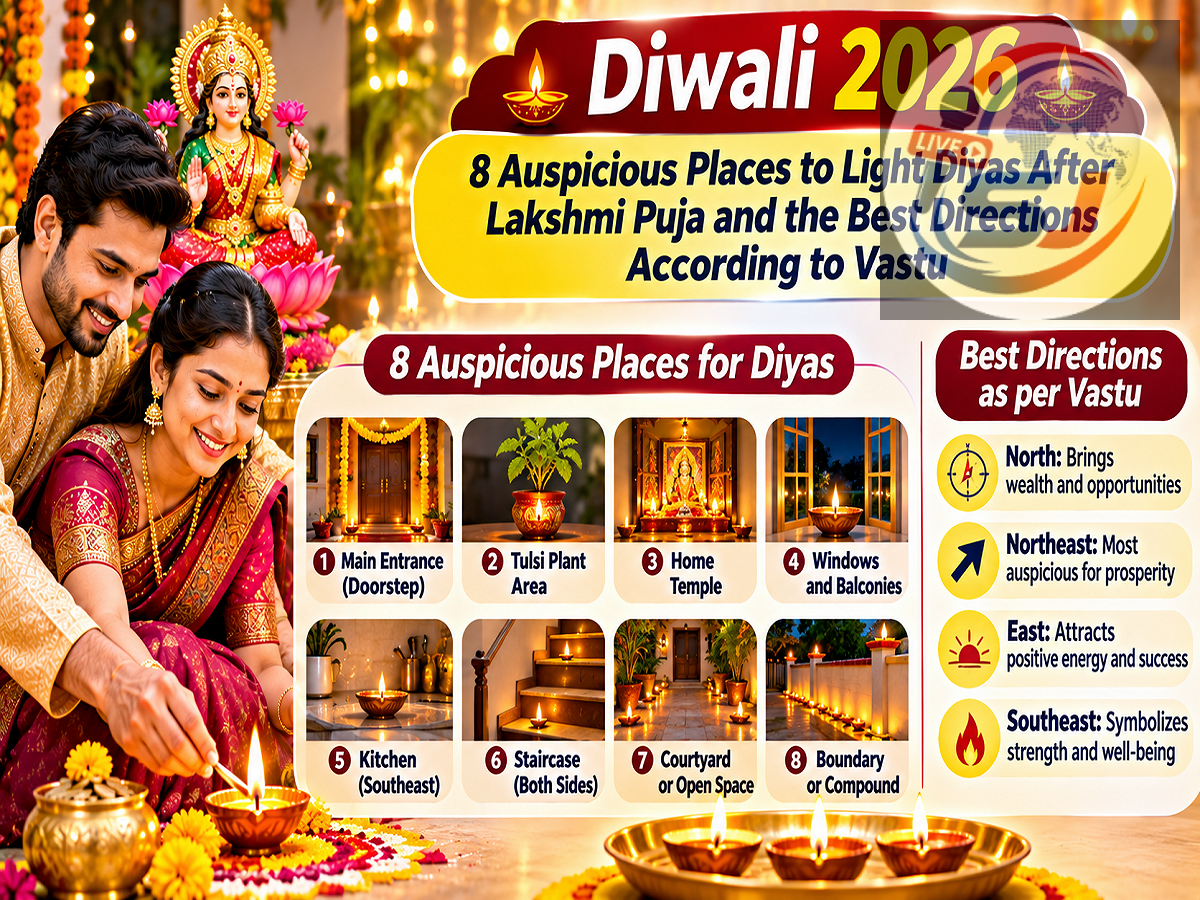
Diwali Diya Lighting Tips 2026: Diwali, the festival of lights, is celebrated with prayers, decorations, rangoli and the lighting of traditional earthen lamps. After performing Lakshmi-Ganesha Puja, many Hindu families follow the custom of placing diyas in different parts of their homes to symbolically welcome happiness, prosperity and positive energy.
According to traditional religious beliefs, lighting diyas represents the removal of darkness and the triumph of knowledge over ignorance. The practice is also associated with welcoming Goddess Lakshmi, who is worshipped during Diwali as the deity of wealth and prosperity.
While most families light lamps in their prayer rooms, several other locations, including the main entrance, courtyard, kitchen and Tulsi plant, are also considered significant in different traditions.
Here are eight places where people traditionally light diyas after Lakshmi Puja, along with the religious significance of different directions and important safety precautions.
Diwali 2026: Where Should You Light Diyas After Lakshmi Puja?
1. Main Entrance: Place Two Diyas Near the Door
The main entrance is considered an important location for Diwali decorations.
According to popular Hindu traditions, placing lamps on either side of the main door symbolises welcoming Goddess Lakshmi into the home.
Many families also decorate their entrances with colourful rangoli, flowers and small earthen lamps.
The illuminated entrance is associated with hospitality, auspiciousness and festive happiness.
When placing diyas near the door, ensure they do not obstruct movement or create a tripping hazard.
2. Puja Room: Light a Ghee Diya Near Lakshmi-Ganesha Idols
The prayer room holds special significance during Diwali celebrations.
After completing Lakshmi-Ganesha Puja, devotees traditionally keep a lamp near the worship area.
Many families prefer using ghee for the puja diya, although the choice of oil or ghee may depend on household customs.
In religious traditions, the flame represents devotion, knowledge and spiritual awareness.
The lamp should be placed on a stable, heat-resistant surface, away from decorative fabrics, flowers and other flammable materials.
3. Tulsi Plant: Follow the Tradition of Deepdaan
The Tulsi plant has an important place in many Hindu households.
It is traditionally associated with devotion, purity and religious observances.
During the Hindu month of Kartik, lighting a diya near the Tulsi plant is a customary practice in several regions.
On Diwali evening, some families offer prayers and place a small lamp near the plant.
The practice is regarded as auspicious according to their religious beliefs.
However, the diya should be positioned safely so that the flame does not damage the plant or nearby decorations.
4. Kitchen: Symbolic Worship of Food and Nourishment
The kitchen is another location where some families traditionally light a diya during Diwali.
In Hindu beliefs, the kitchen is associated with food, nourishment and Goddess Annapurna.
Lighting a lamp in this area symbolises gratitude for food and the well-being of the household.
However, safety is particularly important in kitchens.
Never place a burning diya near an LPG cylinder, gas stove, cooking oil, paper towels or other combustible materials.
A secure, heat-resistant location away from cooking equipment should be selected.
If adequate safety cannot be ensured, an LED diya can be used instead.
5. Courtyard: Decorate the Space With Traditional Earthen Lamps
Lighting rows of diyas in the courtyard is a popular Diwali custom.
In many Indian homes, families arrange small clay lamps in decorative patterns to create a festive atmosphere.
The practice is traditionally associated with spreading light and welcoming auspiciousness.
Courtyards can also provide an attractive setting for rangoli and floral decorations.
However, lamps should be kept away from dry leaves, fabrics and areas where people frequently walk.
6. Windows and Balconies: Illuminate the Home Safely
Many households decorate their windows and balconies with diyas during Diwali.
These lamps help illuminate the exterior of the home and contribute to the festival's traditional appearance.
However, open flames on window ledges and balconies require additional precautions.
Strong winds can overturn lamps, while falling diyas may create a risk for people or property below.
Residents of apartment buildings should avoid placing lamps on narrow or unsecured ledges.
Battery-operated LED diyas may be a safer option for elevated or windy locations.
7. Near the Safe or Money Storage Area
Some families follow the tradition of lighting a diya near the place where valuables, cash or important financial documents are kept.
This practice is associated with the worship of Goddess Lakshmi and prayers for financial well-being.
In certain Vastu traditions, the north direction is linked with Lord Kubera, who is associated with wealth.
However, these are religious and cultural beliefs rather than scientifically established methods of increasing wealth.
Important: Never place a burning lamp inside a cupboard, safe or enclosed storage compartment, or near currency notes and important documents.
A symbolic electric lamp placed safely nearby is a more practical alternative.
8. Rooftop and Staircase Areas
During Diwali, many families decorate terraces, rooftops and stairways with lamps.
The tradition helps create a festive atmosphere throughout the house.
However, these locations can be hazardous if diyas are placed carelessly.
Lamps should never obstruct stairs, emergency exits or walking paths.
On rooftops, strong winds can cause open flames to spread or lamps to fall.
If a safe location is unavailable, decorative LED lights can be used instead.
Which Direction Is Considered Auspicious for Lighting Diyas on Diwali?
Traditional Vastu beliefs associate different directions with particular forms of energy, symbolism and religious significance.
However, interpretations vary across regions and families.
| Direction |
Traditional Religious or Vastu Association |
|---|---|
| East |
Associated with sunrise, positive beginnings and well-being |
| North |
Traditionally linked with Lord Kubera and prosperity |
| Northeast (Ishan Kon) |
Considered auspicious for prayer and spiritual activities |
| South |
Associated with certain ancestral and Yam Deepdaan traditions |
These associations are based on cultural and religious beliefs.
There is no scientific evidence that placing a lamp in a particular direction directly increases wealth, improves health or guarantees prosperity.
Families should follow their established religious practices while prioritising safety.
How Many Diyas Should Be Lit After Lakshmi Puja?
There is no single universally prescribed number of diyas that every household must light after Lakshmi Puja.
Some families prefer lighting two lamps at the entrance, while others arrange several diyas throughout the home.
The number may depend on family traditions, regional customs, available space and personal preferences.
For many devotees, the symbolic meaning of the lamp is more important than the number of diyas used.
Households should avoid placing more lamps than they can safely supervise.
Should You Use Ghee or Oil for Diwali Diyas?
Both ghee and oil lamps are used in traditional Hindu worship.
Many devotees prefer ghee lamps in the puja room, while oil lamps are commonly used for decorating entrances and courtyards.
The choice may vary according to family traditions and regional customs.
From a practical perspective, both types involve open flames and require careful handling.
Lamps should be placed in appropriate holders, and excess oil or ghee should not be allowed to spill.
Electric diyas can be considered for locations where open flames would create unnecessary risks.
Important Diwali Diya Safety Tips for 2026
While decorating the house with lamps, families should follow basic fire safety precautions.
-
Place diyas on stable, non-flammable surfaces.
-
Keep lamps away from curtains, paper decorations and furniture.
-
Do not leave burning diyas unattended.
-
Keep children and pets away from open flames.
-
Avoid placing lamps near electrical wiring and decorative light connections.
-
Do not use open flames near LPG cylinders or other fuel sources.
-
Avoid placing diyas on narrow balcony railings or window ledges.
-
Extinguish lamps before leaving home or going to sleep.
These precautions are particularly important in homes with young children, elderly residents or pets.
Why Is Lighting Diyas Important During Diwali?
Diwali is traditionally associated with the victory of light over darkness and good over evil.
Lighting diyas symbolises hope, knowledge, positivity and spiritual awareness.
The practice is also linked with the worship of Goddess Lakshmi and prayers for happiness and prosperity.
For many families, decorating the home with lamps is a way to preserve cultural traditions and bring relatives together.
Different regions of India follow their own customs regarding the placement, number and type of lamps.
These variations reflect the diversity of Diwali celebrations across the country.
Diwali 2026: Follow Family Traditions and Celebrate Safely
Lighting diyas after Lakshmi Puja remains one of the most cherished traditions of Diwali.
From the main entrance and puja room to the Tulsi plant and courtyard, different locations carry symbolic importance in Hindu religious practices.
According to traditional beliefs, the east, north and northeast directions are considered auspicious for different purposes, while the south is associated with certain specific rituals.
However, the placement of diyas should ultimately depend on household traditions and practical safety considerations.
The true significance of Diwali lies not in the number or direction of lamps, but in the celebration of light, faith, gratitude and togetherness.
By combining traditional customs with sensible fire precautions, families can enjoy a meaningful and safe Diwali celebration.