
Dhanteras 2026: When and Where to Light Yam Deepak? Know the Auspicious Time, Rituals and Mantra
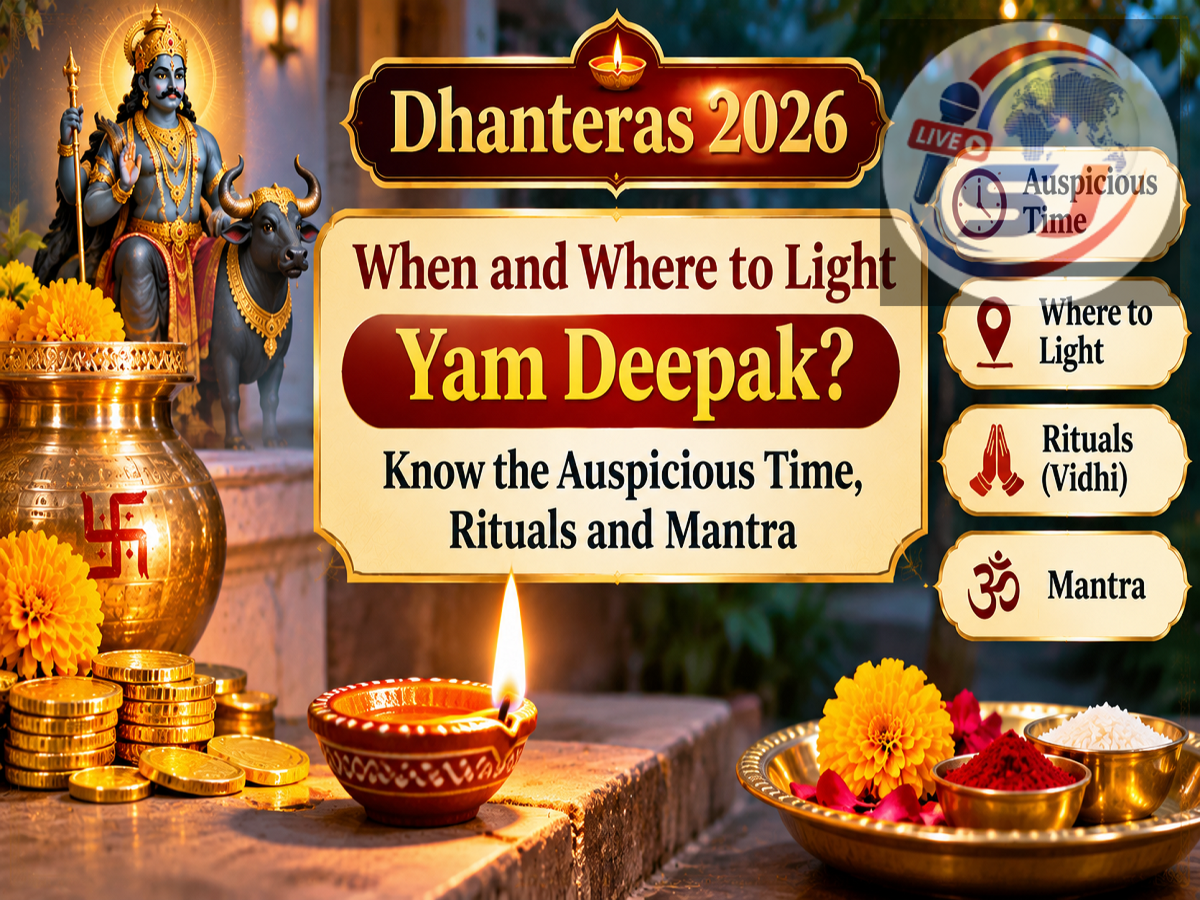
Dhanteras 2026 Yam Deepak Puja: Dhanteras, which marks the beginning of the Diwali festivities, will be celebrated on Friday, November 6, 2026. While the festival is widely associated with purchasing gold, silver, utensils and other valuable items, it also holds special religious importance because of the traditional practice of Yam Deep Daan.
According to Hindu beliefs, lighting a special earthen lamp dedicated to Lord Yama on Dhanteras evening is considered auspicious. Devotees perform this ritual to seek blessings for the long life, safety and well-being of their family members.
The practice, commonly known as Yam Deepak or Yam Deep Daan, is performed after sunset during Pradosh Kaal. The direction in which the lamp is placed, the type of oil used and the timing of the ritual are considered important in traditional customs.
Here is everything devotees should know about the Yam Deepak ritual, including the auspicious timing, correct direction, worship procedure and religious significance.
Dhanteras 2026 Date and Yam Deepak Shubh Muhurat
According to the Hindu Panchang, Dhanteras is observed on the Trayodashi Tithi of Krishna Paksha in the Kartik month.
In 2026, the Trayodashi Tithi begins on November 6 and concludes on November 7. However, Dhanteras will be celebrated on November 6 because the Trayodashi Tithi prevails during the evening worship period.
The important dates and timings are as follows:
| Particulars |
Date and Time |
|---|---|
| Dhanteras 2026 |
Friday, November 6 |
| Trayodashi Tithi Begins |
November 6 at 10:30 AM |
| Trayodashi Tithi Ends |
November 7 at 10:47 AM |
| Yam Deep Daan Date |
November 6, 2026 |
| Pradosh Kaal (New Delhi) |
5:32 PM to 8:09 PM |
| Recommended Ritual Period |
After sunset during Pradosh Kaal |
| Direction for Yam Deepak |
South |
The timing of Pradosh Kaal may differ depending on the city and local sunset. Devotees should refer to their regional Panchang before performing the ritual.
Why Is Yam Deepak Lit on Dhanteras?
In Hindu religious traditions, Lord Yama is regarded as the deity associated with death, justice and the consequences of human actions.
Lighting a lamp in his honour on Dhanteras is believed to symbolise prayers for protection against untimely death and misfortune.
The ritual has been followed in many Hindu households for generations and is regarded as an expression of devotion and concern for the family's well-being.
According to traditional religious beliefs, offering a lamp to Lord Yama during the auspicious evening period brings spiritual merit and blessings for longevity.
However, these benefits are based on religious faith and should not be interpreted as scientifically proven protection against illness, accidents or other risks.
Which Direction Should Yam Deepak Face on Dhanteras?
The direction of the lamp is one of the most important aspects of the Yam Deep Daan tradition.
According to Hindu beliefs, the southern direction is associated with Lord Yama and ancestors.
Therefore, devotees traditionally place the Yam Deepak outside the main entrance of their home, with the lamp or its flame directed towards the south.
Some households position the lamp near the left side of the main entrance, depending on their family customs.
The lamp is generally placed outside rather than inside the main worship area.
While performing the ritual, devotees remember Lord Yama and pray for the health, happiness and long life of their loved ones.
How to Light Yam Deepak on Dhanteras 2026: Step-by-Step Puja Vidhi
The Yam Deepak ritual is relatively simple and can be performed at home using commonly available worship materials.
The traditional procedure includes the following steps:
1. Choose an earthen lamp: Take a clean four-sided clay diya, commonly known as a chaumukhi deepak. Some families also prepare a lamp using wheat flour.
2. Arrange four cotton wicks: Place one cotton wick in each of the four openings of the lamp.
3. Add oil: Fill the diya with mustard oil. Sesame oil is also used in certain regional traditions.
4. Prepare the base: Place a small quantity of unbroken rice grains, known as Akshat, beneath the lamp.
5. Select the appropriate time: Perform the ritual after sunset during Pradosh Kaal on November 6.
6. Position the lamp correctly: Place the diya outside the main entrance, ensuring that it faces the southern direction.
7. Offer prayers: Fold your hands, remember Lord Yama and seek blessings for the safety, health and longevity of your family members.
8. Complete the ritual respectfully: Follow any additional customs observed by your family or community.
The lamp should be placed on a stable, fire-resistant surface away from curtains, decorations, vehicles and other flammable materials.
Yam Deep Daan Mantra: What Should You Chant While Lighting the Lamp?
Many devotees recite a traditional Sanskrit verse while offering the lamp to Lord Yama.
Yam Deep Daan Mantra:
मृत्युना पाशदण्डाभ्यां कालेन श्यामया सह।
त्रयोदश्यां दीपदानात् सूर्यजः प्रीयतां मम॥
Meaning in English:
Through this offering of a lamp on Trayodashi, may Lord Yama, the son of the Sun God, be pleased and bestow his blessings.
The mantra expresses devotion to Lord Yama and symbolises a prayer for protection and well-being. Different traditional texts and communities may use slightly different versions of the verse.
Who Should Perform Yam Deep Daan at Home?
In many households, an elderly or senior family member traditionally lights the Yam Deepak.
However, there is no single universally followed rule regarding who must perform the ritual.
Some families prefer the head of the household to light the diya, while others allow any family member to participate.
In certain communities, family members remain indoors while the lamp is placed outside. Other households perform the ritual together.
These differences reflect regional customs rather than a single mandatory religious procedure.
Where Else Can Devotees Light Diyas on Dhanteras?
Apart from placing a Yam Deepak outside the main entrance, lighting lamps at other locations is also considered auspicious in various Hindu traditions.
| Location |
Traditional Significance |
|---|---|
| Near the Tulsi plant |
Associated with devotion and household prosperity |
| Home temple |
Symbolises worship and spiritual positivity |
| Near a Peepal tree |
Considered sacred in Hindu traditions |
| Near an Amla tree |
Associated with religious merit |
| Near a banana plant |
Connected with auspicious worship practices |
| Temple premises |
An offering of devotion to deities |
Some devotees also light lamps near rivers or ponds. However, lamps should not be released into water, and environmental safety should be maintained.
Is It Necessary to Light a Four-Wick Diya?
The four-wick earthen lamp is commonly associated with Yam Deep Daan.
Nevertheless, customs may differ between regions and households.
The four-sided diya is considered particularly significant in several North Indian traditions, while other families may use a conventional earthen lamp.
Devotion, cleanliness and respect for family customs are generally considered more important than elaborate decorations or expensive worship materials.
Dhanteras 2026: Religious Importance Beyond Buying Gold and Silver
Dhanteras is traditionally dedicated to Lord Dhanvantari, who is associated with Ayurveda and health, as well as Goddess Lakshmi and Lord Kubera, who are connected with prosperity and wealth.
The festival highlights the importance of both physical well-being and financial security.
While purchasing gold, silver or utensils remains a popular custom, rituals such as Yam Deep Daan reflect another aspect of Dhanteras celebrations: prayers for the protection and happiness of family members.
Many devotees consider the evening lamp-lighting ceremony an essential part of their annual festive observances.
Final Thoughts
Dhanteras 2026 will be celebrated on Friday, November 6, and devotees planning to perform Yam Deep Daan can light the traditional lamp after sunset during Pradosh Kaal.
According to the New Delhi Panchang timings cited above, the evening period extends from approximately 5:32 PM to 8:09 PM.
The lamp is traditionally placed outside the main entrance facing south, using mustard or sesame oil and cotton wicks.
The practice remains an important expression of religious devotion, symbolising prayers for longevity, peace and family well-being.
Disclaimer: The rituals and benefits discussed in this article are based on Hindu religious traditions and cultural beliefs. Auspicious timings vary by location, and readers should consult their local Panchang for precise Muhurat details.