
Bhai Dooj 2026: Why Do Brothers Cover Their Heads During Tilak? Know the Religious Significance
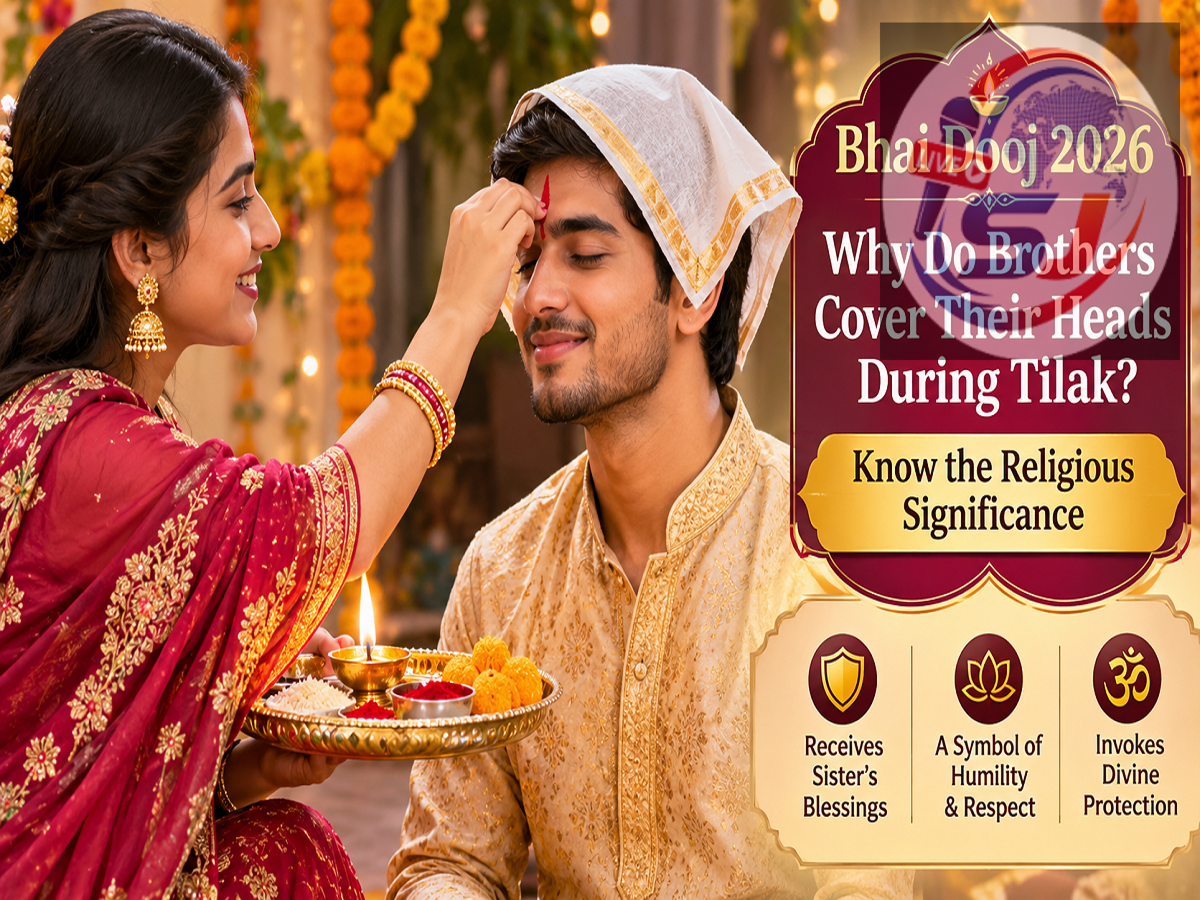
Bhai Dooj 2026: Bhai Dooj, one of the most cherished Hindu festivals celebrating the relationship between brothers and sisters, will be observed on Wednesday, November 11, 2026. On this occasion, sisters apply a sacred tilak to their brothers' foreheads and pray for their happiness, prosperity, good health and long lives. However, an interesting tradition often attracts attention during the ceremony: brothers usually place a hand, handkerchief or piece of cloth over their heads while receiving the tilak. This customary practice has a spiritual explanation rooted in Hindu religious beliefs.
Although families across India celebrate Bhai Dooj with slightly different rituals, the practice of covering the head during tilak remains common in many households. Understanding its traditional significance can help explain why this simple gesture continues to be observed during the festival.
Why Is the Brother's Head Covered During Bhai Dooj Tilak?
In Hindu religious traditions, applying tilak to the forehead is considered an auspicious practice. The mark is usually placed between the eyebrows, a region associated with the Ajna Chakra, commonly called the third-eye chakra in yogic and spiritual traditions.
According to traditional beliefs, the Ajna Chakra represents awareness, concentration, wisdom and inner consciousness.
Religious interpretations suggest that applying tilak at this location symbolizes positive energy and spiritual well-being. Covering the head with a hand or clean cloth during the ceremony is traditionally associated with maintaining balance and showing respect for the sacred ritual.
This explanation is based on spiritual beliefs rather than scientifically established effects on the body's energy.
In many families, brothers use a handkerchief, scarf or small piece of cloth to cover their heads. Others simply place one hand on their heads while their sisters apply the ceremonial mark.
The gesture is generally understood as a sign of reverence and respect for the blessings being received.
Which Finger Should Sisters Use to Apply Tilak?
Another interesting aspect of Bhai Dooj involves the finger used during the tilak ceremony.
According to the tradition described in the source report, sisters are encouraged to apply tilak using their thumbs.
In certain Hindu customs, applying tilak with the thumb is associated with strength, achievement, honor and victory.
Traditional accounts also connect this practice with ceremonies performed for kings and warriors before important battles. The ceremonial mark was believed to symbolize courage, determination and the desire for success.
During Bhai Dooj, the same symbolism is associated with a sister's wishes for her brother's successful and prosperous future.
However, customs may differ between families and regions, and not every community follows the same finger-related practice.
Bhai Dooj 2026 Date and Dwitiya Tithi Timings
Bhai Dooj is celebrated annually on the second lunar day of the waxing Moon in the Hindu month of Kartik. The festival is also known as Yama Dwitiya.
In 2026, the festival falls on November 11, although the Dwitiya Tithi begins on the previous afternoon.
Here are the important details:
| Event |
Date and Time |
|---|---|
| Bhai Dooj Festival |
Wednesday, November 11, 2026 |
| Dwitiya Tithi Begins |
November 10 at 2:00 PM |
| Dwitiya Tithi Ends |
November 11 at 3:53 PM |
| Sarvartha Siddhi Yoga |
6:40 AM to 11:38 AM |
| Afternoon Tilak Muhurat |
1:10 PM to 3:20 PM |
These timings are based on the published Panchang and may vary slightly depending on location and calculation methods.
Bhai Dooj 2026 Shubh Muhurat: Best Time for Tilak
According to the Aaj Tak report, two favorable periods have been identified for the Bhai Dooj tilak ceremony on November 11.
The first period begins at 6:40 AM and continues until 11:38 AM, coinciding with Sarvartha Siddhi Yoga. This combination is traditionally considered favorable for religious activities and important beginnings.
The second recommended period is from 1:10 PM to 3:20 PM.
Families can select a suitable time according to their traditions and convenience. Those following specific regional customs should consult a local Panchang before finalizing the ceremony.
How to Perform Bhai Dooj Tilak at Home
The Bhai Dooj ceremony is traditionally performed with devotion and affection. Although individual customs may differ, many households follow a similar sequence.
1. Prepare the puja thali: Arrange roli or kumkum, unbroken rice grains, a diya, sweets, flowers and other customary offerings.
2. Arrange a clean sitting place: The brother is invited to sit on a decorated stool or clean mat. Some families draw a traditional chowk using rice flour.
3. Cover the head: Before the tilak, the brother may place a handkerchief, scarf or hand over his head according to family tradition.
4. Apply the sacred tilak: The sister places roli or kumkum on her brother's forehead and adds akshat, or unbroken rice grains.
5. Perform aarti: A ceremonial lamp is moved before the brother while prayers are offered for his health, happiness and long life.
6. Exchange sweets and gifts: The sister offers sweets, and the brother traditionally presents a gift as an expression of affection and gratitude.
The ceremony often concludes with a family meal and time spent together.
Religious Story Behind the Bhai Dooj Festival
Bhai Dooj is closely associated with the Hindu mythological account of Yama, the deity of death, and his sister Yamuna.
According to religious tradition, Yamuna invited her brother to visit her home. When Yama accepted the invitation, she welcomed him warmly, applied a ceremonial tilak and served him a special meal.
Pleased by her affection and hospitality, Yama is believed to have granted a blessing connected with the protection and well-being of brothers who receive their sisters' tilak on this occasion.
This story forms an important part of the festival's religious significance and explains why sisters traditionally pray for their brothers' long and healthy lives.
Another popular account connects the celebration with Lord Krishna and his sister Subhadra.
What Makes Bhai Dooj Different From Raksha Bandhan?
Both Bhai Dooj and Raksha Bandhan celebrate the affection between siblings, but their traditional ceremonies differ.
During Raksha Bandhan, sisters generally tie a sacred thread called rakhi around their brothers' wrists.
Bhai Dooj, on the other hand, places greater emphasis on the tilak ceremony, aarti, blessings and sharing a meal.
The festival is also celebrated under different names across India, including Bhau Beej in Maharashtra and Bhai Phonta in West Bengal.
Despite variations in customs, the central message remains the same: strengthening family relationships through love, mutual respect and support.
Is Covering the Head Compulsory During Bhai Dooj?
Covering the head is a traditional practice followed by many families, but it is not a universal requirement across all Hindu communities.
Some households prefer using a clean handkerchief or scarf, while others follow the custom of placing a hand on the head. Certain regional traditions may not emphasize head covering at all.
The primary significance of the festival lies in the prayers, blessings and affection shared between siblings.
As Bhai Dooj is celebrated on November 11, 2026, understanding the meaning behind these rituals can make the occasion more meaningful for families observing the festival.
Disclaimer: Religious practices, auspicious timings and spiritual interpretations mentioned in this article are based on Hindu traditions and beliefs. Customs may vary across regions and families.