
Bhai Dooj 2026: The Ancient Story of Yamraj and Yamuna Behind the Festival's Name Yama Dwitiya
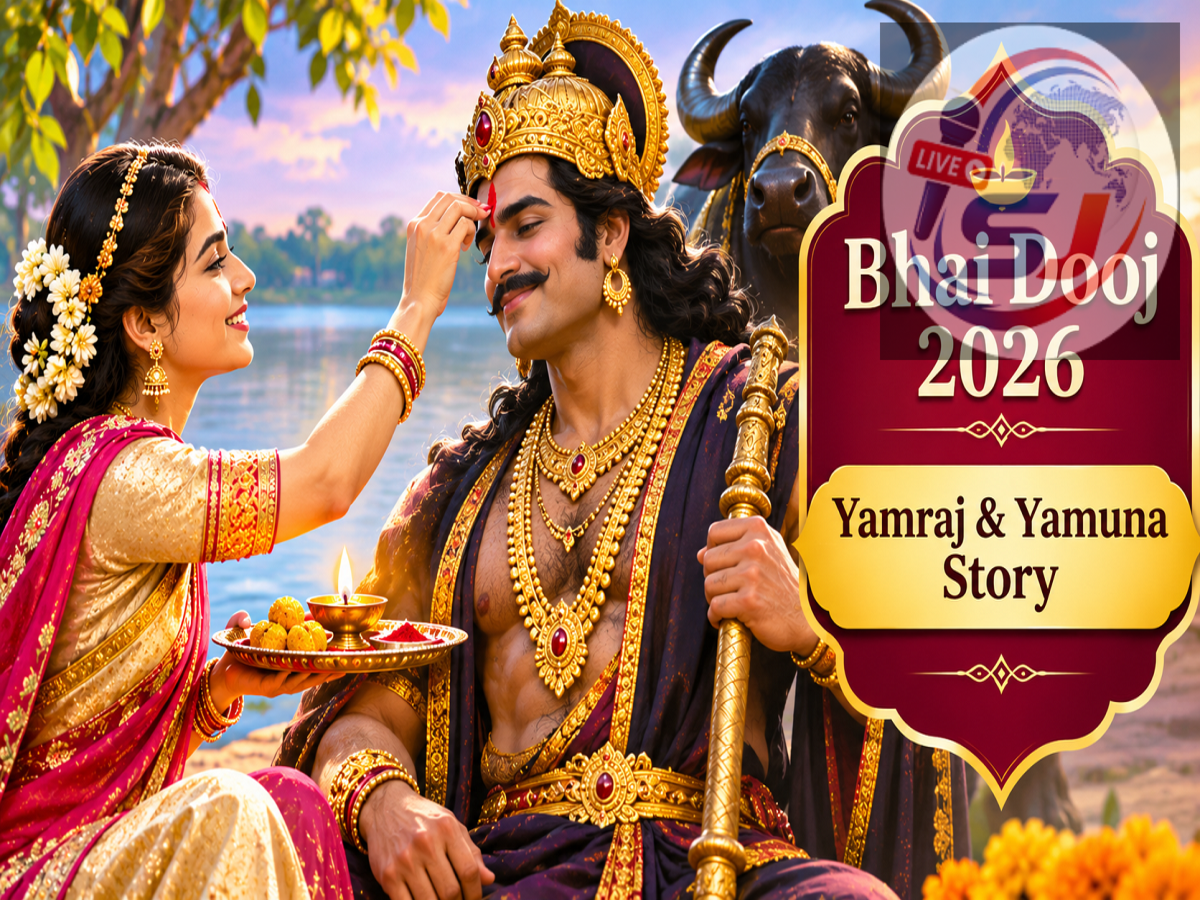
Bhai Dooj 2026: Bhai Dooj, the Hindu festival celebrating the special bond between brothers and sisters, is being observed on Wednesday, November 11, 2026. On this occasion, sisters apply a sacred tilak to their brothers' foreheads and pray for their happiness, prosperity and long lives. While the festival is widely known as Bhai Dooj, it also carries another significant name: Yama Dwitiya. This name is connected to an ancient Hindu mythological story involving Yamraj, the deity of death, and his sister Yamuna.
The religious account explains the importance of sibling affection, hospitality and blessings. According to Hindu traditions, the festival commemorates a special meeting between Yamraj and Yamuna, which is believed to have established the custom of sisters performing tilak ceremonies for their brothers.
Bhai Dooj 2026: Why Is the Festival Called Yama Dwitiya?
The name Yama Dwitiya combines two important elements of Hindu religious tradition.
The word Yama refers to Yamraj, who is regarded as the deity responsible for death and justice in Hindu mythology. Dwitiya represents the second lunar day of a fortnight in the Hindu calendar.
Bhai Dooj is celebrated on Kartik Shukla Dwitiya, the second day of the waxing lunar phase following Diwali.
According to traditional belief, Yamraj visited his sister Yamuna on this particular lunar day. She welcomed him with affection, performed his tilak and offered him a special meal.
Pleased with her devotion, Yamraj granted a blessing associated with the protection and well-being of brothers who receive tilak from their sisters on this occasion.
Because of this religious association, Bhai Dooj became popularly known as Yama Dwitiya.
The Mythological Story of Yamraj and Yamuna
According to Hindu mythology, Yamraj and Yamuna are traditionally described as the children of Surya Dev, the Sun God.
Despite their close relationship, Yamraj remained occupied with his responsibilities and was unable to visit his sister regularly.
Yamuna deeply loved her brother and repeatedly invited him to her home. She wished to welcome him, prepare food for him and spend time together.
However, Yamraj's duties prevented him from accepting her invitations for a long time.
Eventually, on Kartik Shukla Dwitiya, Yamraj decided to visit Yamuna.
His arrival brought immense happiness to his sister, who had been eagerly waiting to see him.
Yamuna welcomed Yamraj with great affection and followed the traditional customs of hospitality.
She applied a sacred tilak to his forehead, performed his aarti and prepared a special meal.
Her gesture reflected the unconditional love and respect that siblings share.
According to the legend, Yamraj was deeply pleased with the warmth and devotion shown by his sister.
He offered to grant her a boon as an expression of gratitude.
What Blessing Did Yamraj Give His Sister Yamuna?
When Yamraj asked Yamuna to express her wish, she did not seek wealth, power or personal prosperity.
Instead, she requested a blessing for brothers and sisters everywhere.
Yamuna wished that brothers who visited their sisters on Kartik Shukla Dwitiya, received tilak and shared a meal with them would receive protection and enjoy long, healthy lives.
Moved by her selfless request, Yamraj granted the blessing.
According to the traditional account, brothers who observe the occasion with affection and respect are believed to receive Yamraj's blessings.
This belief became closely associated with the annual celebration of Yama Dwitiya.
The story is a religious narrative and should be understood within the context of Hindu mythology rather than as a literal guarantee of protection from death.
Why Do Sisters Apply Tilak on Bhai Dooj?
The tilak ceremony is the central ritual of Bhai Dooj.
Sisters traditionally apply roli, kumkum or sandalwood paste to their brothers' foreheads and place unbroken rice grains over the mark.
The ritual symbolizes blessings, affection and prayers for a prosperous future.
In many families, sisters also perform aarti and offer sweets before sharing a meal with their brothers.
The ceremony reflects the legendary welcome Yamuna extended to Yamraj.
The brother may present gifts or offer blessings to his sister as an expression of appreciation and love.
Although customs vary between regions, the festival's central message remains the same: siblings should care for and support one another throughout their lives.
Bhai Dooj 2026 Date and Dwitiya Tithi Timings
Bhai Dooj is celebrated annually during the Shukla Paksha of Kartik, shortly after Diwali.
In 2026, the festival falls on Wednesday, November 11.
The important calendar details are:
| Event |
Date and Timing |
|---|---|
| Bhai Dooj 2026 |
Wednesday, November 11 |
| Dwitiya Tithi Begins |
November 10 at 2:00 PM |
| Dwitiya Tithi Ends |
November 11 at 3:53 PM |
| Sarvartha Siddhi Yoga |
6:40 AM to 11:38 AM |
| Afternoon Tilak Muhurat |
1:10 PM to 3:20 PM |
The afternoon Muhurat is based on New Delhi timings. Exact auspicious periods may differ depending on geographical location and the Panchang calculation followed.
What Is the Connection Between Bhai Dooj and the Yamuna River?
The Yamuna River holds an important place in Hindu religious traditions and is worshipped as Goddess Yamuna.
Since Yamuna is considered the sister of Yamraj, the festival is also associated with religious practices involving the sacred river.
In some traditions, bathing in the Yamuna River on Yama Dwitiya is considered auspicious.
Religious beliefs suggest that brothers and sisters who bathe together in the river on this occasion receive divine blessings.
Devotees may also offer prayers to Yamraj and Goddess Yamuna while observing the festival.
These practices reflect cultural and spiritual traditions that have been passed down through generations.
How Is Bhai Dooj Celebrated in Different Parts of India?
Although Bhai Dooj is observed across the country, its name and certain rituals vary by region.
In Maharashtra and parts of western India, the festival is commonly known as Bhau Beej. Sisters welcome their brothers, perform aarti and offer sweets.
In West Bengal, it is celebrated as Bhai Phonta. Sisters apply a ceremonial mark on their brothers' foreheads while reciting traditional blessings.
In Nepal, the occasion is known as Bhai Tika and forms an important part of the Tihar festival.
Despite regional differences, these celebrations emphasize affection, family unity and mutual responsibility.
Religious Significance of Yama Dwitiya
The story of Yamraj and Yamuna carries a message that extends beyond the traditional tilak ceremony.
It highlights the importance of maintaining family relationships despite professional responsibilities, distance and daily commitments.
Yamuna's wish for the well-being of brothers everywhere is traditionally interpreted as an example of selfless love.
Similarly, Yamraj's willingness to honor his sister's request symbolizes the respect and affection that should exist between siblings.
The festival also reminds families to spend meaningful time together and maintain emotional connections.
Bhai Dooj 2026: A Festival of Love, Blessings and Family Bonds
As families celebrate Bhai Dooj on November 11, the mythological account of Yamraj and Yamuna continues to provide the religious foundation for the festival.
The tradition of applying tilak, offering sweets, performing aarti and exchanging gifts is closely linked to this ancient story.
While Bhai Dooj is often associated with prayers for brothers' long lives, its broader significance lies in celebrating the lasting relationship between siblings.
The name Yama Dwitiya preserves the memory of Yamraj's visit to Yamuna and the blessing that, according to Hindu tradition, became associated with this sacred occasion.
Disclaimer: The mythological stories, religious interpretations and blessings described in this article are based on Hindu scriptures, customs and traditional beliefs.